Smart Course Scheduling: How Dive Centers Boost Revenue by 18% and Reclaim 15 Hours Weekly
<b>TL;DR:</b> Automated course scheduling eliminates the chaos of manual coordination, letting dive centers reclaim up to 15 hours per week while increasing boat capacity utilization by 18%. Smart systems provide real-time visibility into instructor availability, prevent costly scheduling conflicts, and create seamless booking experiences that convert more students. The result? Higher revenue, happier staff, and customers who stick around.
Key Takeaways
- <b>Automated course scheduling</b> cuts admin time by up to 15 hours weekly, freeing staff for teaching and sales
- <b>Real-time dashboards</b> reveal gaps in instructor availability and boat capacity to maximize every asset
- <b>Seamless booking experiences</b> reduce customer abandonment and build the trust that keeps students coming back
- <b>Data analytics</b> identify which courses fill fast and which ones flop, so you can adjust pricing and offerings proactively
- <b>Intelligent conflict prevention</b> flags qualification mismatches before they ruin expensive boat trips
The Hidden Revenue Drain Most Dive Centers Miss

It's Saturday morning. The smell of neoprene fills the shop. Your phone won't stop ringing.
An instructor texts that they have two classes booked at the exact same time. A student emails asking if their Open Water course conflicts with the afternoon boat dive. You're staring at a massive whiteboard trying to figure out who's actually certified to teach Rescue Diver next week.
Manual scheduling brings absolute chaos. It causes missed revenue, frustrated staff, and angry customers. Whiteboards, group texts, and scattered spreadsheets create an operational nightmare. You spend your most valuable hours just trying to keep the schedule from falling apart.
Here's the reality. Your course scheduling system isn't just administrative busywork. It's either making you money or costing you money. Efficient course scheduling acts as the central nervous system of your entire operation. When it fails, everything else suffers. Let's break down exactly how smarter scheduling boosts your bottom line.
Why Does Course Scheduling Matter for Profitability?
Course scheduling directly impacts three major revenue drivers: asset utilization, labor efficiency, and customer conversion rates. Without a tight schedule, your most expensive assets sit idle.
<b>Key takeaway:</b> Every empty seat on a boat and every idle instructor hour represents permanent lost revenue.
Dive centers using manual scheduling methods reported 23% more no-show incidents and 18% lower boat capacity utilization compared to automated systems, according to industry research. Those numbers represent a massive financial leak.
Every scheduling gap means you pay for labor without bringing in revenue. Bottlenecks push frustrated students to your competitors. Confusion over start times or prerequisites leads to last-minute cancellations and costly refunds.
Think about a real operation. A shop with three instructors running 15 courses a month. Even one preventable scheduling conflict costs between $500 and $1,200 in lost revenue. You might have an open seat on a dive boat. That boat costs the exact same in fuel, dock fees, and captain wages whether it's full or half empty.
When you optimize scheduling, you ensure every asset generates maximum yield. You match the right instructor with the right class size on the right vessel. You eliminate dead time between morning pool sessions and afternoon open water dives. Margins are often thin in this business. Recapturing that lost 18% of boat capacity can double your net profit for the month.
Efficient scheduling isn't about saving a few minutes of typing. It's about actively protecting your profit margins.
What Are the Biggest Scheduling Bottlenecks Costing You Money?
The three costliest bottlenecks are visibility problems, manual coordination overhead, and reactive management. Identifying these is the first step toward fixing your operational leaks.
<b>Common mistake:</b> Relying on disconnected systems to manage complex logistics.
The first major bottleneck is the visibility problem. Managers can't easily see instructor availability, student prerequisites, boat capacity, and equipment needs all at once. The result? Constant double-bookings. Underutilized trips. Missed upsell opportunities.
A boat goes out with four students when it could easily hold eight. An instructor sits idle in the shop because nobody realized a Discover Scuba group wanted to book a session. When you lack a single source of truth, you make decisions based on incomplete information.
The second bottleneck is administrative drain. Managers spend up to 15 hours a week on pure logistics. Text messages. Emails. Updating fragile spreadsheets. Driving from the pool to the boat dock just to deliver a paper passenger manifest.
Time spent coordinating is time not spent selling high-margin gear. Not teaching. Not building a loyal community of divers.
The third bottleneck is reactive management. You spend your entire week fighting fires instead of preventing them. Scrambling to fill last-minute gaps. Apologizing to customers and rescheduling them after conflicts arise. Reactive management destroys morale and forces your staff to operate in constant anxiety.
When you operate reactively, you can't plan for growth. You're just surviving the current weekend. These bottlenecks compound over time. They cap your revenue potential because your business can only handle the amount of chaos the manager can personally juggle.
How Does Automated Scheduling Reduce Gaps and Maximize Instructor Utilization?

Automated, centralized systems eliminate visibility gaps and remove manual coordination from your daily workflow. They replace guesswork with precise data.
<b>Bottom line:</b> Technology lets you visualize your entire operation in seconds.
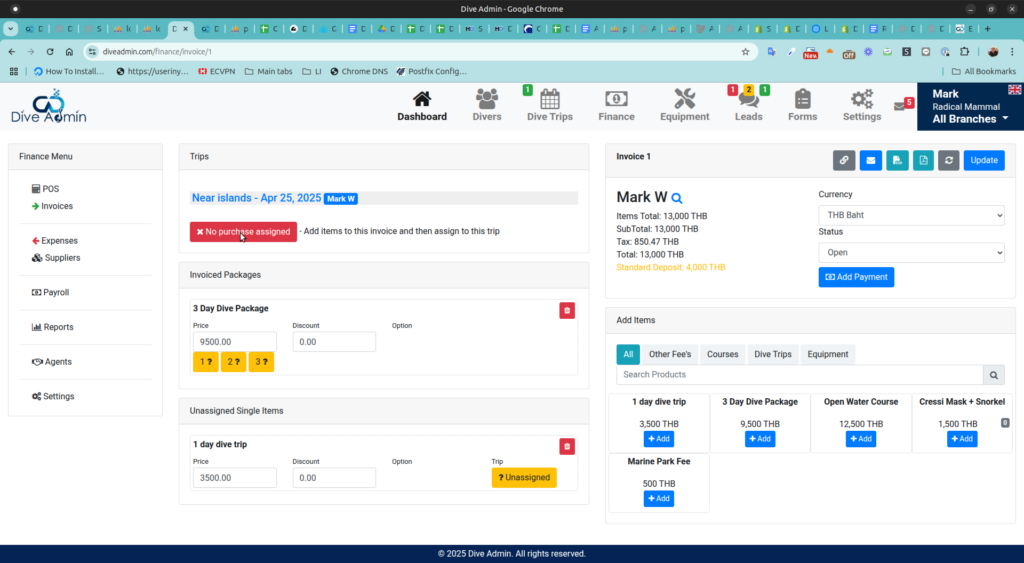
The most powerful feature is a real-time centralized dashboard. You see instructor availability, specific teaching qualifications, student bookings, and boat capacity in one single view. You spot scheduling gaps instantly.
Wednesday afternoon is completely empty for two of your instructors? Launch a targeted email campaign to fill that gap with a Discover Scuba or Nitrox session. Visual calendars show exactly what's happening. Your instructor Alex is free Tuesday morning, the main boat has three open spots, and four students need confined water training.
Smart conflict prevention stops disasters before they happen. The system automatically flags logistical issues. It warns you immediately if an instructor isn't certified for a requested specialty. It blocks the booking if the boat's over legal passenger capacity. It alerts you if a student is missing a required prerequisite. This prevents those horrible "oh crap" moments on the morning of a big dive trip.
Automated staff notifications streamline all internal communication. Instructors get schedule updates via text or email automatically. You never worry about whether someone told your lead instructor about the time change.
"Dive centers that implement integrated scheduling see immediate gains in instructor productivity, often 20 to 25% more billable hours per instructor simply by eliminating dead time and coordination friction," says James Rodriguez, Operations Consultant at Dive Business Advisors, speaking to Dive Business Magazine in March 2026.
This translates directly to better paychecks. Instructors earn more because they teach more hours. The dive center fills more seats per trip. Everyone benefits from a system that actively finds opportunities to keep staff working and boats full.
How Does Better Scheduling Improve the Student Experience?
Seamless scheduling creates clarity, builds trust, and ensures follow-through. This directly converts nervous prospects into loyal, long-term customers.
Clunky booking experiences lose students before they even hit the water. Imagine a prospective student named Sarah. She sends an email asking about Open Water availability. She waits two full days for a response. By the time the shop replies, she's already booked with a competitor down the street.
Even if she does book, confusion about start times or required gear leads to frustration. Frustration leads to cancellations.
Automated booking clarity solves this entirely. Real-time availability sits right on your website or booking portal. Students like Sarah get instant confirmations with crystal-clear details. Exact meeting time. Location. What to bring. Instructor's name. Automated reminders go out two days before the course to reduce no-shows.
<b>Step 1:</b> Give customers all the information they need before they have to ask for it.
This creates a massive trust factor. It signals professionalism. Customers think, "This shop has their act together." In a competitive market, operational excellence serves as a major brand differentiator. First-time students feel safe and well-managed. They become continuing education customers. They become your best referral sources.
Customers reward intentional, highly organized experiences with long-term loyalty. They don't want to feel like an afterthought in a chaotic operation. They want a smooth, guided journey from their first web click to their final certification dive.
What Data Should You Track to Optimize Scheduling?
Track booking patterns, course popularity, instructor productivity, and capacity utilization to make smarter revenue decisions.
Data removes emotion from business decisions. You stop guessing and start acting on what the numbers prove.
<b>Metric one:</b> Course demand patterns. Know exactly which courses fill fastest and which sit half-empty for weeks. Find your peak booking times by season and day of the week. Adjust pricing based on this data. Add extra sessions during high demand and cut low performers. If dry suit certifications always spike in October, your schedule should reflect that by September.
<b>Metric two:</b> Instructor utilization rate. Compare your staff's hours teaching versus hours available. This immediately identifies underutilized instructors and tells you exactly when current staff is maxed out and you need to hire.
<b>Metric three:</b> Boat and asset capacity. Look at average seats filled per trip. The goal is to maximize passengers per outing without compromising safety or customer comfort. This helps you decide if you need a bigger boat or simply better management of your current one.
<b>Metric four:</b> Cancellation and no-show rates. High cancellation rates point directly to process friction and communication gaps between your shop and students.
Integrated systems deliver this data effortlessly. You get automated, beautiful reports instead of manual spreadsheet nightmares. Your dashboard might show that Advanced Open Water bookings are up 30% in spring. You can immediately add a second weekly session to capture that revenue. You stop leaving money on the table.
Scaling Without the Chaos: Multi-Location and Expedition Scheduling

Growing dive centers face exponential operational complexity as they expand to manage multiple retail locations, liveaboards, and international travel expeditions.
The manual scheduling nightmare scales badly. Coordinating staff across two different retail shops gives managers massive headaches. Multi-day travel trips involving different instructors, boat charters, and hotel accommodations create spreadsheet disasters. A small error can leave a customer stranded without a hotel room in a foreign country.
Automated systems enable seamless growth. A centralized platform manages all locations and complex trips from one place. Role-based permissions keep data clean and secure. Shop managers only see their specific location's schedule. Owners see everything from a bird's-eye view. A dive center opening a second location 50 miles away doesn't need to hire double the administrative staff.
Expedition-specific wins are massive. You easily track complex logistics: lodging, dietary restrictions, airport transportation, specific dive site requests, and instructor teaching rotations. Automated passenger manifests and equipment lists generate instantly. Real-time updates push to everyone's phone immediately if weather suddenly changes travel plans.
This creates a powerful scalability dividend. You achieve revenue growth without proportional increases in administrative burden. The same shop manager can oversee significantly more operations simply by using better tools. You build a business that can handle a massive influx of new customers without collapsing under its own logistics.
How Does Smart Scheduling Improve Staff Satisfaction and Retention?
Transparent schedules, reduced chaos, and empowered autonomy make instructors vastly happier and significantly more productive.
The staff perspective is crucial. Instructors hate last-minute changes. They despise unclear expectations and communication chaos. Manual systems rely on constant text messages and phone calls. This causes confusion and makes professional staff feel disrespected.
Instructors often work as contractors or hourly employees. They need predictable schedules to manage their own income.
Automated systems give your staff exactly what they want. Full real-time visibility into their own schedules via a simple mobile app or web portal. Clear, documented assignments with all necessary details attached. They see student names, medical prerequisites, and specific rental equipment needs long before arriving at the shop. They have built-in ability to request time off or swap shifts systematically without begging a manager.
<b>When to use this:</b> Implement automated shift swapping during peak season to prevent instructor burnout.
This creates a strong productivity and satisfaction loop. Less time clarifying logistics means more energy for actual teaching quality. Feeling organized and empowered brings massive job satisfaction. Happy instructors deliver better student experiences. Better student experiences bring more revenue through tips, return visits, and glowing online reviews.
Retention brings massive ROI. Replacing an experienced, popular instructor costs thousands in recruiting, onboarding, and training. Better scheduling systems equal lower staff turnover. You build a loyal team that wants to stay with your dive center for years.
Moving from Reactive to Proactive: The 2026 Operational Mindset
Successful dive centers plan rather than react.
The old way relied on reactive management. Shop owners spent their days firefighting problems as they popped up. Scheduling conflicts were discovered on the actual day of the dive, leading to public arguments and angry customers. Business growth was limited by the manager's personal mental bandwidth. When the manager burned out, the business stopped growing.
The new way focuses entirely on proactive strategy. Modern systems flag logistical conflicts weeks before they happen. Deep data insights inform purchasing and marketing decisions months ahead of time. Automation scales the business seamlessly without creating new human bottlenecks.
This provides a massive strategic advantage in your local market. While your competitors scramble to fix double-bookings and apologize to customers, you spend your time optimizing. The time you free up goes directly toward high-value activities: digital marketing, instructor skill development, community building, and strategic upselling.
Imagine your ideal Saturday morning. Instead of spending three hours fixing a scheduling mess on a whiteboard, you're out on the boat guiding a premium trip. You're actively upselling Nitrox certifications to excited students. You're building relationships that will last for decades.
You must position course scheduling as a core business strategy. It's absolutely not a tedious back-office chore. It's a vital profit center. It serves as your primary competitive differentiator. Fix your schedule and you'll fix your profitability.
Frequently Asked Questions About Dive Course Scheduling
How much time can automated scheduling actually save a dive center?
Most dive centers using manual methods spend 10 to 15 hours per week just on scheduling coordination. Automated systems reduce this to two or three hours. This frees up eight to 12 hours weekly for revenue-generating activities like teaching, guiding, and customer engagement. Over a year, that equals 400 to 600 hours of reclaimed time that managers can use to grow the business.
What's the biggest mistake dive centers make with course scheduling?
The biggest mistake is treating scheduling as an afterthought rather than a strategic financial tool. Centers that don't track utilization rates, booking patterns, or instructor productivity miss massive opportunities. They fail to optimize pricing, miss adding high-demand courses, and fail to maximize asset use. Manual systems also create invisible costs: customer abandonment due to slow responses, high no-shows from poor communication, and severe staff burnout from constant coordination chaos.
Can small dive centers with just a few instructors benefit from scheduling software?
Absolutely. Even very small operations face scheduling conflicts, communication gaps, and lost revenue from underutilized boat capacity. Automated systems scale perfectly to any size. The ROI often comes faster for smaller centers because the owner wears multiple hats. Saving even five hours a week has immediate positive impact on their mental health and business output. It also sets a solid foundation for future growth without needing dedicated administrative staff.
How does better scheduling reduce student no-shows and cancellations?
Automated systems send booking confirmations, timely reminders, and crystal-clear instructions via email and text. They tell students exactly what to bring, where to go, and what to expect. This clarity builds confidence and keeps the upcoming course top-of-mind. Automated reminders reduce no-shows by 30 to 40%. Transparent communication drastically reduces customer anxiety. Students who feel well-informed and valued are significantly less likely to cancel.
What should I look for in a dive center scheduling system?
Prioritize real-time visibility through a unified calendar view of instructors, boats, and students. Look for automated notifications via text and email to staff and students. Ensure the platform features strong conflict prevention to flag qualification mismatches or boat capacity issues. It must integrate seamlessly with your website's booking and payment systems. You also need mobile access for staff constantly on the go, plus robust reporting and analytics for booking patterns. The system should always reduce clicks and confusion, not add new complexity.