5 Signs You've Outgrown Spreadsheets for Your Dive Center
<b>TL;DR:</b> If your dive center battles version control chaos, double bookings, overwhelmed staff, zero business insights, or clunky customer experiences, you've outgrown spreadsheets. These warning signs mean manual systems are costing you time, money, and customers. Modern dive center management platforms like Dive Admin eliminate these pain points by centralizing operations, automating tasks, and delivering the seamless digital experience today's divers expect.
<b>Key Takeaways</b>
- Version control nightmares and data silos signal you need centralized software
- Double bookings and scheduling conflicts severely damage customer trust
- Administrative automation reduces staff workload by up to 60 percent
- Real-time business insights enable data-driven operational decisions
- Modern divers expect digital-first, mobile-friendly booking experiences

Picture this. It's late on a Friday night. You're sitting at your desk, eyes burning, trying to reconcile three different spreadsheets before tomorrow morning's charter. Sound familiar?
This spreadsheet shuffle is a trap tons of dive centers fall into as they grow. What works perfectly for five bookings a week completely fails when you hit fifty.
Using spreadsheets might seem cost-effective at first. But as your operation expands, these patchwork systems start holding you back. You find yourself spending more time managing files than actually diving or interacting with customers.
If you're nodding along right now, you're not alone. We're going to look at concrete warning signs that your current manual system is failing. More importantly, we'll explore exactly how much this chaos is costing your business.
What are the warning signs you've outgrown spreadsheets?
Recognizing the symptoms of a failing system is the first step toward reclaiming your time. The transition point typically arrives when your booking volume doubles or triples from your original baseline.
Whether you run a small boutique shop or a multi-location operation, the breaking points look identical. You'll notice version control nightmares, constant double bookings, administrative overload, zero business visibility, and a dated customer experience. These five symptoms mean your business has scaled beyond the limits of manual data entry.
Recognizing these red flags early helps you avoid catastrophic failures during your busiest season.
Are you battling version control nightmares?
<b>Key takeaway:</b> Centralized platforms act as a single source of truth and eliminate conflicting documents.
"Which spreadsheet is the current one?"
If your team regularly asks this question, you have a severe version control problem. This chaos happens when your lead instructor prints Monday's boat roster, but the front desk updates the digital file on Wednesday. When Saturday morning arrives, you have three different manifests floating around the dock.
Small businesses lose significant time to data quality issues every week. For a dive center, bad data translates to missed certification checks, incorrect rental equipment counts, and embarrassing billing errors. The situation only gets worse when well-meaning staff members create their own personal working copies of the main file.
Suddenly, your inventory data lives on a thumb drive while your customer medical forms sit on a local hard drive.
Centralized management software solves this instantly. A unified platform provides a single source of truth for your entire team. Everyone looks at the same live data, whether they log in from the retail counter or their mobile phone on the boat.
<b>Bottom line:</b> Managing multiple spreadsheet versions wastes hours of staff time every week and creates massive liability issues for your business.
Why do double bookings keep happening?
<b>Common mistake:</b> Relying on manual calendar updates during peak season practically guarantees scheduling conflicts.
Picture the scene when a family of four arrives for their Discover Scuba Diving course, only to find the instructor was also assigned to an Advanced Open Water class. Double bookings happen because manual systems can't prevent conflicts in real time.
Your staff simply can't update a static file fast enough when the phone is ringing and customers are walking through the door.
These last-minute cancellations destroy trust. According to PwC's 2024 Future of Customer Experience survey, 73 percent of consumers say customer experience is an important factor in their purchasing decisions. When peak season hits, the risk of scheduling the same boat twice amplifies exponentially.
The ripple effects are brutal. You end up issuing refunds, offering complimentary dives, fighting negative reviews, and losing future referrals.
One single double-booking error easily costs between $300 and $800 in lost revenue and recovery efforts.
Automated management systems prevent this entirely. Built-in availability calendars update instantly the moment a transaction completes. If a spot on the morning charter fills up online, it disappears from the retail desk screen a second later.
<b>Bottom line:</b> Scheduling errors are entirely preventable. Staying on a manual system ensures you'll keep making expensive mistakes.
How much time is your team wasting on admin tasks?

<b>Step 1:</b> Calculate how many hours your staff spends on manual data entry every single week.
Think about the daily routine at your front desk. Your staff manually updates rosters, chases down missing liability waivers, and spends hours trying to reconcile payments against bank statements. You might have an employee spending two full hours every single day just typing names into a grid.
Research shows that the average employee spends significant time on administrative tasks rather than core work. In a busy dive shop, that translates to 10 or 15 hours weekly per staff member on jobs that software could handle instantly.
Transitioning to a dedicated platform reduces administrative workload by up to 60 percent.
What could your team do if they had those hours back? They could focus on face-to-face customer service, close more retail sales, or work on diver retention programs. The ultimate red flag appears when you have to hire an extra employee just to manage the spreadsheets.
This heavy administrative burden directly connects to staff burnout and high turnover rates. Dive professionals want to teach diving and share their passion for the ocean, not stare at cells on a screen all day.
<b>Bottom line:</b> Overburdened teams can't deliver exceptional experiences. Automating your admin tasks frees your staff to focus entirely on the customer.
Can you actually see how your business is performing?
<b>Key takeaway:</b> Modern dive operations require real-time data to optimize revenue and spot seasonal trends.
Running a business based on gut feeling is dangerous. You should be able to instantly answer basic questions about your operation. What are your peak booking times? Which courses sell best? Which instructor has the highest customer satisfaction scores?
The data exists somewhere in your spreadsheets, but it requires hours of tedious work to compile and analyze. This limitation causes you to miss massive opportunities. You can't identify seasonal trends, optimize your pricing structure, or spot cash flow problems before they hit your bank account. You might not realize your continuing education courses peak in March until halfway through April.
A modern dive shop software dashboard provides real-time key performance indicators visible to owners and managers at a glance. This business intelligence enables strategic decisions regarding staffing, retail inventory, and marketing budget allocation. You know exactly when to bring on seasonal instructors and when to run promotions on slow days.
Competitors using data-driven platforms grow much faster because they adapt to market changes instantly. They don't wait for the end of the month to see if they made a profit.
<b>Bottom line:</b> Business intelligence isn't optional anymore. Having instant access to your performance metrics is vital for survival.
Is your customer experience stuck in the past?
<b>Common mistake:</b> Forcing customers to call or email for availability pushes them toward your competitors.
Modern divers expect a frictionless, digital-first experience. They want mobile-friendly booking portals, instant email confirmations, and digital waivers they can sign from their couch. If your current process involves playing email tag, making phone calls, and handing out clipboards with paper forms on arrival, your operation feels dated.
Compare your booking flow to the experience divers get on major travel platforms. When a customer emails you to check availability, and you take four hours to respond, you create friction.
Pew Research Center data shows that 76 percent of U.S. adults buy things online using a smartphone. Statista reported in 2025 that over 45 percent of all travel bookings now occur exclusively on mobile devices.
If a huge portion of dive trip research happens on phones, your lack of a mobile booking option is costing you money. A clunky booking process signals an outdated operation to prospective divers. Gen Z and Millennial customers have particularly high expectations for seamless digital transactions.
They'll simply book with whichever center makes the process easiest.
A branded, professional booking page acts as a massive trust signal.
<b>Bottom line:</b> Your customer experience is your primary competitive differentiator. Upgrading your software modernizes your entire brand presence.
What does it cost to stay on spreadsheets?

<b>Key takeaway:</b> Free manual systems actually drain thousands of dollars from your business annually.
It's time to calculate the hidden costs of your current setup.
Start with the time cost. Multiply your team's admin hours by their hourly rate, then multiply that by 52 weeks. Next, add the cost of errors. Factor in the revenue lost to double bookings, missing deposits, and compliance issues.
You must also consider the opportunity cost. Your business can't pursue aggressive growth because your staff is maxed out manually managing the current volume.
Finally, calculate the customer cost. Think about the lifetime value of the divers you lost because your booking process was too frustrating.
A medium-sized dive center easily loses between $25,000 and $50,000 annually to these inefficiencies. You're also paying a competitive cost by falling behind centers that have already modernized. Then there's the stress and burnout cost for you as the owner, which severely impacts your quality of life.
Modern management systems typically pay for themselves within three to six months just by recovering lost revenue and saving staff time.
<b>Bottom line:</b> Spreadsheets feel free, but they're actually the most expensive software you can run.
When is the right time to upgrade your dive center management system?
<b>Step 1:</b> Assess your current booking volume and identify your quietest season for migration.
The absolute best time to upgrade is when you recognize two or three of the warning signs we just covered. You want to implement new software during your shoulder season, not in the middle of your peak summer rush.
The scale indicators are very clear. If you process more than 100 bookings a month, manage multiple instructors, or run more than one boat, you need dedicated software. Don't wait for a complete operational crisis to make the change.
It's infinitely easier to migrate your data proactively than to do it during an emergency.
> "The biggest mistake a growing dive center makes is waiting for their manual systems to completely break during peak season. You should transition your management software during the shoulder season when you're doing 100 bookings a month, not when you're drowning in 500."
> Mark Evans, Dive Operations Consultant and contributor to Sport Diver
When shopping for a solution, look for an all-in-one platform rather than a patchwork of separate add-ons. The implementation reality is much better than owners fear. It takes roughly one to two weeks to get a new system running, not months. Modern software is highly intuitive, meaning staff adoption happens quickly.
<b>Bottom line:</b> If you're reading this article and recognizing these symptoms, your business is already ready for an upgrade.
Making the switch: What to expect from modern dive center software
<b>Key takeaway:</b> Modern platforms consolidate your calendar, customer records, and payments into one intuitive dashboard.
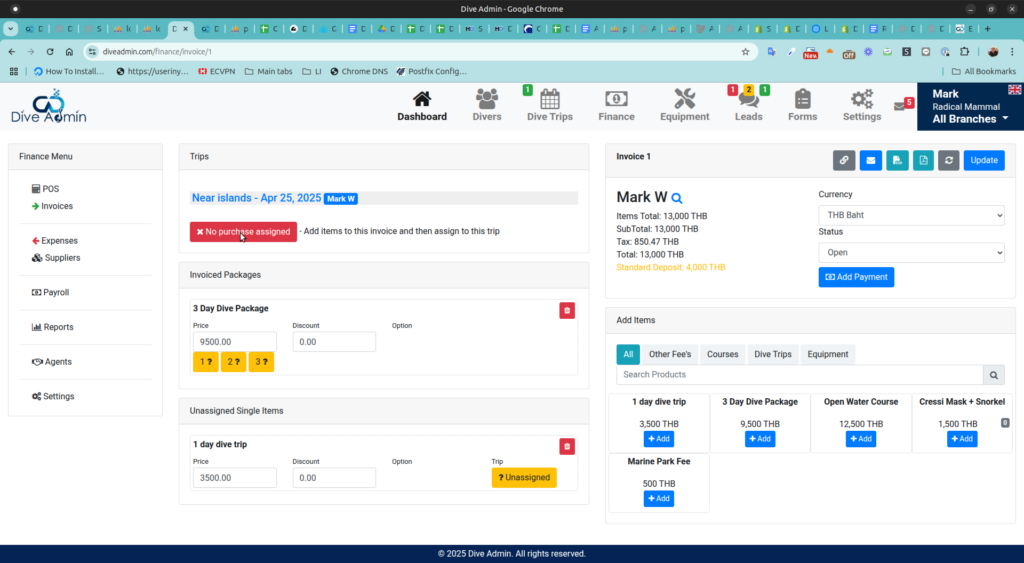
Moving to a modern platform replaces your scattered files with core features that actually talk to each other. A quality system includes a centralized booking calendar, customer relationship management tools, retail inventory tracking, and integrated payments.
The integration benefits are massive. When a customer buys a mask, your retail inventory drops by one. When they book a course, their details automatically populate your boat manifest.
Mobile accessibility means you can manage your entire business from the boat deck, the beach, or your living room couch.
Customer-facing tools like online booking portals, digital liability waivers, and automated reminders make your shop look incredibly professional. Platforms like Dive Admin handle this seamlessly without forcing you into restrictive workflows.
The migration process is surprisingly straightforward. Most platforms allow you to import your existing customer data via simple file uploads. The vendor provides onboarding training and support to ensure your staff feels confident. While there's a monthly subscription cost, it pales in comparison to the hidden expenses of your old spreadsheets.
The system effortlessly scales and grows right alongside your business.
<b>Bottom line:</b> Transitioning is simpler than you think and delivers an immediate positive impact on your daily operations.
FAQ
How much does dive center management software cost?
Typical platforms range from $50 to $300 per month depending on your specific feature needs and center size. Most providers offer tiered pricing, allowing you to start small and upgrade as your booking volume grows. Free trials are very common, giving you the chance to test the interface before committing. When you consider the revenue lost to a single double-booking mistake, the return on investment timeline is usually just three to six months.
Will my staff actually use new software or resist it?
Modern platforms are specifically designed for non-technical users. Staff members generally prefer new software because it means less manual data entry and fewer frustrating errors to fix. Involving your team in the selection process helps overcome initial hesitation. Training usually takes just a few days, and mobile access makes daily tasks much easier than dealing with clunky spreadsheets. Once they see the time savings, most employees become enthusiastic advocates.
Can I import my existing spreadsheet data?
Yes, most quality platforms offer robust data import tools. A standard file import handles your customer history, booking records, and certification levels perfectly. Some vendors even provide hands-on migration assistance to ensure nothing gets lost. You should clean your data first to remove duplicates before uploading. Expect a brief transition period of one to two weeks where you might run both systems in parallel just to be safe.
What happens if the software goes down during busy season?
Reputable cloud-based platforms boast 99.5 percent uptime guarantees, making them vastly more reliable than a local computer crashing. Quality systems often include offline modes so you can still view manifests without internet access. Automatic cloud backups constantly protect your data, unlike a spreadsheet that corrupts when your laptop dies. Mobile access also means you have multiple ways to reach the system if your main desk computer fails.
Do I need to be tech-savvy to manage dive center software?
Absolutely not. These systems are built for dive professionals, not IT experts. If you can use Facebook or WhatsApp on your phone, you can comfortably navigate modern booking software. The interfaces feature visual calendars and simple drag-and-drop mechanics. Vendors provide extensive video tutorials and responsive support teams. Countless dive center owners successfully run these systems without any technical background whatsoever.
Ignoring the warning signs of spreadsheet chaos only limits your potential. If you battle version control, deal with double bookings, exhaust your admin team, lack data visibility, and offer a dated booking experience, it's time to evolve.
Upgrading your management system is a strategic investment in your future, not just another monthly business expense. It positions your center for serious growth while significantly reducing your daily stress levels. Quality of life matters, and owners consistently report having much more time for actual diving after making the switch.
Modernization is essential for survival in 2026. Divers expect a polished, digital experience from the moment they find your website. Dive Admin offers a comprehensive solution designed specifically for the unique needs of dive professionals. Take the first step today by signing up for a demo or free trial at diveadmin.com.
Spend your time exploring the ocean, not drowning in spreadsheets.