How Do Dive Centers Handle Last-Minute Weather Changes?
When weather threatens dive trips, professional dive centers pivot quickly rather than panic. Operators protect both revenue and reputation by using automated guest notifications, maintaining flexible rescheduling policies, and offering alternative dive sites or land-based training. The secret is shifting from reactive chaos to proactive systems that keep guests informed, safe, and completely confident in your professionalism.
<b>Key Takeaways:</b>
- Automated SMS and email systems reduce communication chaos and keep guests informed in real-time.
- Flexible rescheduling policies protect revenue while building strong customer trust.
- Alternative dive sites and land-based courses turn weather delays into profitable revenue opportunities.
- Clear Standard Operating Procedures ensure staff respond calmly and consistently to disruptions.
- Transparent safety-first communication reinforces your brand as a responsible diving operator.
It is 6 AM and your phone is blowing up. The forecast you checked last night just changed. Now you have three-foot swells rolling in and twelve divers expecting to board your boat in two hours. Do you cancel the trip? Do you switch sites? How do you tell everyone without spending your entire morning on the phone?
Last-minute weather changes are the ultimate stress test for dive centers. The way you handle them separates the pros from the amateurs. It can also make or break your season's revenue. We will walk through exactly how dive centers handle last-minute weather changes using modern systems, flexible policies, and smart communication. You will learn how to keep guests happy and protect your bottom line when Mother Nature refuses to cooperate. By the end of this read, you will have a playbook for turning weather chaos into smooth operational pivots.
Why Do Weather Changes Hit Dive Centers So Hard?
Scuba diving is a safety-first industry. Unlike boat tours or snorkeling trips, diving requires strict safety margins. Wind speed, surface current, and underwater visibility directly impact diver safety.
Non-refundable costs make these weather shifts expensive. Boat fuel, crew wages, and equipment prep happen long before you know if you will actually launch. Tourists often book these trips as once-in-a-lifetime experiences with very tight vacation windows.
Revenue concentration is a massive risk factor. Many dive centers earn most of their annual revenue during a short high season. Weather impacts the bottom line faster than almost anything else. When conditions turn bad during peak season, the financial hit can be significant.

What Should You Do When Conditions Change Overnight?
Forecasts are just predictions. Real conditions matter much more. You need to look at the actual water before making a massive change to your schedule.
<b>Step 1:</b> Trust the captain's call. Boat captains know local micro-conditions like protected coves and the lee sides of islands. Lower visibility or a choppy surface might not be ideal, but that does not mean it is unsafe.
<b>Step 2:</b> Evaluate alternative dive sites. You should maintain a pre-planned list of backup sites for various conditions. If an offshore reef is rough, you can pivot to bay or lagoon sites with similar depths and features. This keeps the experience intact instead of forcing a full cancellation.
<b>Step 3:</b> Make the call early. Decide by 5 AM or 6 AM so you can notify guests before they leave their hotels. This simple step reduces wasted time and major guest frustration.
The best operators plan ahead. They talk to their captains and have three backup sites ready before the season even starts. This proactive approach turns potential disasters into smooth transitions.
How Can Dive Centers Notify Guests Quickly and Professionally?
Manual calls and texts do not scale. Calling people one by one leads to missed guests, wrong information, and a very stressed front desk staff. Staff time wasted on a phone tree equals lost productivity.
<b>Smart fix:</b> Use automated notification systems. Modern dive center management software can send mass text messages and emails in seconds. You should include key info like what changed, why safety requires it, and the next steps.
<b>Message template example:</b> "Hi [Name], today's 9 AM dive to Shark Point is postponed due to 3-foot swells. We have moved it to 2 PM at the sheltered Blue Lagoon. Same depth and great visibility! Click here to confirm: [link]"
You need to centralize guest contact information to make this work. Digital booking systems ensure phone numbers and emails are current and accessible in one single dashboard. Transparency and speed build trust. Guests appreciate knowing why things changed and what happens next before they even have to ask.
How Do You Protect Revenue When You Can't Dive?
You need concrete tactics to preserve cash flow during weather downtime. The easiest way is to encourage rescheduling over refunds. Offer trip credits valid for 12 to 24 months instead of handing back cash.
Frame the change positively. You can tell them you would love to get them in the water when conditions are perfect. Many guests prefer this if you make the process completely frictionless through a one-click reschedule link. Digital booking platforms let guests choose new dates themselves, which reduces the administrative burden on your team.
<b>Revenue pivot:</b> Switch to land-based options. Theory-based courses do not require water time. Nitrox certification, Equipment Specialty, and Emergency First Response classes can run rain or shine. You might say, "Cannot dive today? Get Nitrox certified now and enjoy deeper dives tomorrow!"
You should also educate guests on trip insurance during the booking phase. Recommend Divers Alert Network (DAN) or similar coverage. Insured guests are less stressed by cancellations because their financial recourse is clear.
You keep the booking, the guest gets a better experience later, and your cash flow stays completely healthy.

What Systems Prevent Weather Chaos Before It Starts?
You must build proactive infrastructure during calm periods. This starts with creating a formal weather Standard Operating Procedure.
Document your decision criteria clearly. At what exact wind speed or swell height do you cancel a trip? Who specifically monitors the conditions? Who contacts the guests? Who updates the website? You should rehearse this routine with your staff during the off-season.
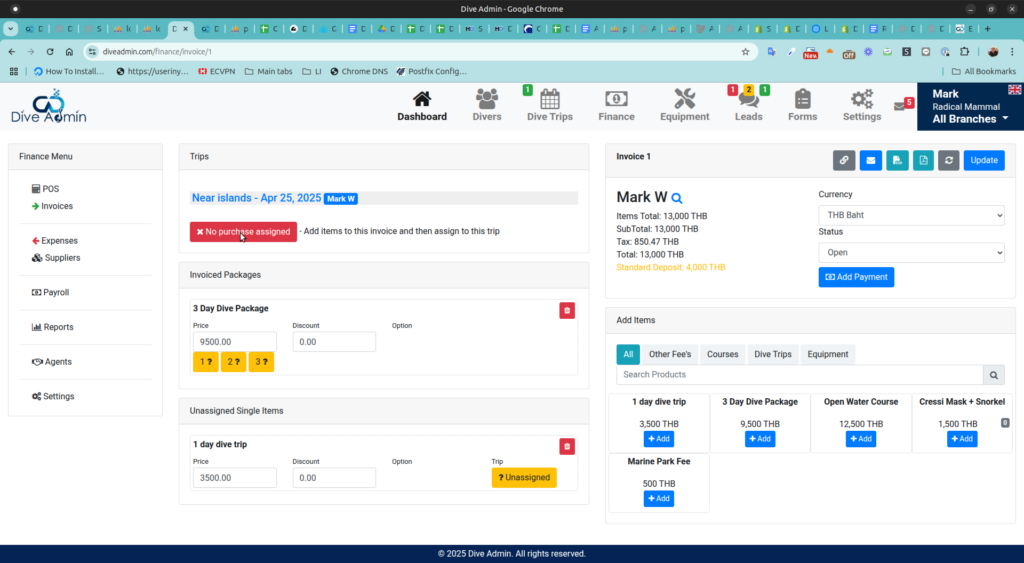
<b>Key requirement:</b> Build your tech stack. Integrated dive center management software keeps bookings, guest communications, and equipment logs in one place. A platform like Dive Admin centralizes operations so a single person can execute a full cancellation and reschedule plan in under 15 minutes.
You also need to maintain alternative site profiles. Keep updated notes on backup sites detailing depth, required skill level, marine life, and current patterns. Share these details with guests during pivots to maintain their excitement. When everyone knows the plan, weather changes feel like routine adjustments rather than total emergencies.
How Does Transparency Build Trust During Cancellations?
Good communication strengthens your brand reputation. You must always explain the "why" behind your decisions.
<b>Trust builder:</b> Safety-first messaging reassures guests you are a professional operator and not just a flaky business. For example, tell them that three-foot swells make surface intervals risky for less experienced divers. Tell them you are prioritizing their safety above all else.
Offer options instead of just saying no. Present alternatives like a different dive site, a different departure time, or a land-based course. Guests feel empowered when they have choices.
Follow up after the change. Send a quick check-in message after a rescheduled dive. Ask them how the alternative site was and if they enjoyed the local macro life. This simple step builds massive loyalty and shows you actually care about their vacation.
Real-World Example of a Weather Pivot Done Right
Island Divers is a mid-size center in Thailand. They woke up to unexpected 25-knot winds on a fully booked Saturday morning.
<b>Their execution:</b>
<b>5:30 AM:</b> The captain confirmed the primary offshore wreck site was unsafe. He suggested a sheltered site with the same depth.
<b>5:45 AM:</b> The team used their dive management software to send an automated text to all 18 guests. They wrote: "Weather update: diving Shark Point today instead of the wreck. Departure still 9 AM. Leopard sharks await! Questions? Reply here."
<b>6:00 AM:</b> They posted the exact same update on their social media pages and website.
<b>The result:</b> 17 of the 18 guests confirmed immediately. One person rescheduled for the next day. The shop processed zero refunds and the trip ran perfectly smoothly. Guests later posted glowing online reviews praising the staff's professionalism under pressure. Speed, clarity, and great options lead to happy guests.
FAQ
What weather conditions typically cancel scuba diving?
Wind over 20 knots, swells above four feet, or visibility under 10 feet often trigger cancellations. Decisions depend heavily on dive site geography, diver skill level, and local captain judgment. Sheltered sites may still be perfectly diveable in otherwise marginal conditions.
Do dive centers have to refund for weather cancellations?
Policies vary wildly between shops. Most professional centers offer rebooking credits or reschedule options rather than automatic cash refunds. You should always check the specific cancellation policy during booking. Many shops encourage trip insurance to cover these exact guest costs.
How far in advance do dive centers usually know about weather cancellations?
Forecasts provide a 24-hour to 48-hour warning. Final decisions are typically made two to four hours before departure based on real-time conditions and a captain's assessment. Early-morning notifications around 5 AM or 6 AM are the industry standard.
Can I reschedule my dive trip myself if the weather is bad?
Many modern dive centers use booking software that allows self-serve rescheduling via an email link or an online portal. If they do not have that tech, you will need to contact the dive center directly. Most operators highly prefer rebooking over issuing refunds.
What should I do as a diver if my trip is canceled last-minute?
Stay flexible and politely ask about alternative sites or different dates. Consider using your downtime for theory courses like Nitrox that add real value to your future dives. If you have specialized trip insurance like DAN, you can file a claim for any non-refundable travel costs.
<i></i>*
Last-minute weather changes do not have to mean lost revenue or deeply frustrated guests. By building proactive systems like automated notifications, flexible rebooking policies, alternative dive sites, and clear operational procedures, dive centers can handle bad weather like absolute professionals. Weather is completely unpredictable, but your response does not have to be.
Ready to eliminate weather chaos? Dive Admin's integrated platform lets you notify guests, reschedule trips, and manage equipment from one single dashboard. You get to focus on diving safety instead of scrambling through paperwork. Learn more about Dive Admin and book a demo today. Your guests will remember exactly how you handled the storm long after they forget the actual dive site.