How to Eliminate Booking Friction and Secure More Dive Course Reservations
<b>Dive centers lose reservations to hidden friction like unclear prerequisites, slow email replies, and inflexible scheduling. Modern divers expect instant booking with real-time availability. By adopting centralized dive center software that automates communication and integrates digital onboarding, you eliminate these bottlenecks and secure dive course bookings exactly when customer excitement peaks.</b>
<b>Key Takeaways</b>
- Hidden friction points silently kill reservations before customers even complain
- Automated FAQs and real-time availability are essential for 2026 travelers
- Conversational booking blends inquiries and confirmations into one mobile-first flow
- Software should act as an active sales agent rather than a passive calendar
The Real Cost of Hidden Booking Friction
Imagine a diver finds your Open Water certification page at midnight. They're thrilled to schedule their dream trip for an upcoming vacation. The prerequisites are buried at the bottom of the page. You show no live pricing. A generic web form tells them to email for availability. By morning, they've already paid a competitor who offered instant confirmation and clear instructions.
This invisible leak happens long before customers complain. Hidden friction refers to operational bottlenecks in the digital journey that divers encounter before they ever reach your physical shop. It's the silent killer of dive center revenue.
Research shows that 68% of travelers abandon bookings when they can't find instant answers to basic questions like pricing or availability.
<b>Bottom line:</b> Every abandoned inquiry equals lost revenue and wasted marketing spend. Most dive centers never see these losses because the customer leaves without saying a word. Your website analytics might show high traffic, but your actual reservation calendar remains empty. The problem stems from treating your website as a static brochure rather than an active sales agent. Modern consumers expect seamless transactions. When they encounter friction, they bounce to the next search result.
What are the biggest friction points killing your conversions?
Modern tools fix these leaks automatically by unifying the customer journey. You need to understand the specific friction points killing your conversion rates first.
<b>Ambiguous Course Requirements:</b> Prerequisites like previous certification levels, medical forms, and age limits are often hidden. Divers fear they're unqualified or will waste money on incomplete info. Add clear, scannable checklists on every course page to fix this immediately.
<b>The Manual Inquiry Bottleneck:</b> Email and phone-only inquiries delay responses by hours or even days. Instant gratification is expected today. A 2024 Skift study found that 74% of travelers prefer self-service booking over waiting for human replies. Delays guarantee you lose customers to competitors.

<b>Inflexible or Invisible Scheduling:</b> Divers want to see multi-day availability, buffer days for flights, and consecutive training slots. When a diver wants three consecutive days for an Advanced Open Water certification but your calendar only shows a generic tag, they panic. Assuming divers will just email you to figure out the logistics is a massive oversight.
<b>Fragmented Systems Breaking Trust:</b> Moving a customer from a website to an email, then a spreadsheet, and finally a paper waiver creates operational chaos. It leads to data loss and double-bookings.
> "Dive centers still using siloed systems are essentially flying blind. Every manual handoff is a chance to lose the customer or their data."
> — Sarah Mitchell, CEO, Dive Operations Quarterly, 2026
How can software eliminate booking friction?
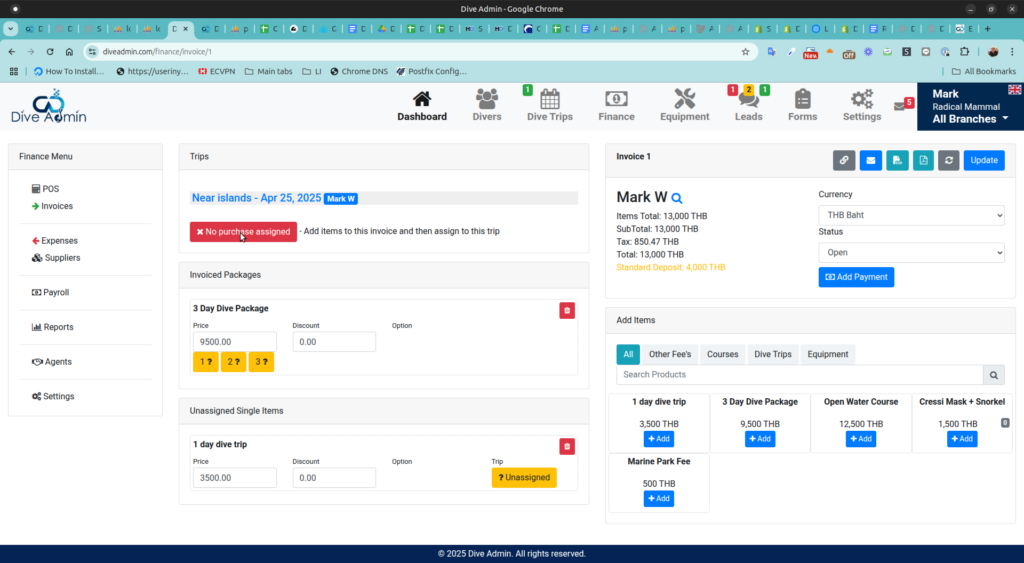
Modern dive center software like Dive Admin, AbyssOS, or Bloowatch syncs availability across all platforms. Divers can secure their spots at midnight, on weekends, or during their lunch break. You avoid overbookings and eliminate awkward delays while waiting for staff to check schedules.
Chatbots or automated replies manage routine queries about pricing, prerequisites, and inclusions. Instant engagement keeps divers on your site instead of shopping around. This frees your team for high-value interactions like planning custom itineraries or safety briefings.
A solid CRM tracks each diver from their first click to their post-dive review. You can set up reminder emails for certification renewals or tailored trip suggestions based on dive history. Imagine automating a message saying they loved the Similan Islands and should try Richelieu Rock next. This builds loyalty in a market prioritizing personalized experiences.
Replace paper forms with secure, mobile-friendly digital processes. This means faster check-ins, a professional first impression, and easier record-keeping. Eco-conscious divers also appreciate paperless operations.

This shift is known as conversational booking. It blurs the line between an inquiry and a confirmation. The interaction feels like a chat but ends with a completed reservation. Divers now expect thumb-friendly navigation, digital wallet integration, and smart recommendations. A great system will suggest a Nitrox specialty for deeper dives right during the checkout flow.
What features should you look for in booking software?
Evaluating new technology can feel overwhelming. Use this checklist to vet potential vendors and ensure you get the right features for your center.
- Real-time calendar sync across your website and third-party platforms
- Automated email and SMS workflows for confirmations and reminders
- Mobile-responsive interface for seamless checkout
- Integrated payment processing for deposits and split payments
- CRM with diver profiles covering certification history and preferences
- Digital waiver and medical form management
- Reporting dashboards for source tracking and revenue trends
According to DEMA's 2025 industry report on software adoption trends, centers using unified digital record-keeping see a massive drop in administrative errors. You can spot your own friction points in one afternoon by following a simple audit process.
<b>Step 1:</b> Mystery shop your own site. Try to schedule a class on your phone late at night. Note how many clicks it takes to confirm and where you get stuck.
<b>Step 2:</b> Track your conversion rate. Count your monthly inquiries versus confirmed reservations. If your conversion is under 30 percent, you have a serious friction problem.
<b>Step 3:</b> Survey recent no-shows or abandoned carts. Send a quick email asking what held them back. Their answers will reveal exact pain points.
<b>Step 4:</b> Map your tech stack. List every tool you use from your website to paper forms. Flag every manual handoff as a potential leak.
<b>Step 5:</b> Ask your front desk what queries customers ask most frequently. Add those answers directly to your website.
FAQ
Why are divers abandoning my course page without contacting me?
Most divers abandon pages because they can't find instant answers to basic details about pricing, prerequisites, or availability. If your page requires them to email or call, they usually choose a competitor with self-service scheduling instead.
How much does dive center booking software cost?
Entry-level platforms start around $50 to $150 per month for small centers. Enterprise solutions that handle multiple locations and advanced CRM integrations range from $300 to $800 per month. Most platforms pay for themselves rapidly by reducing no-shows and capturing after-hours reservations.
Can I still use email inquiries alongside booking software?
Yes, but you should prioritize instant booking for simple classes and straightforward rentals. Reserve email or phone channels for custom charters and complex multi-day trips. Hybrid systems work best if your software auto-replies to inquiries with availability and pricing links.