Speed Wins: Why Dive Centers That Respond in 5 Minutes Get 21x More Bookings
<b>TL;DR:</b> Dive centers that respond to inquiries within five minutes are 21 times more likely to convert leads than those who wait thirty minutes. Most booking problems aren't about traffic or marketing budgets. They're about operational speed. Fast replies, smooth booking systems, and organized diver records win the business. Modern dive center software automates follow-ups and plugs revenue leaks without inflating your ad spend.
Key Takeaways
- Most customers book with the first dive center that responds to their inquiry
- Responding within five minutes makes you 21 times more likely to convert a lead compared to waiting thirty minutes
- Most dive centers suffer from operational revenue leaks, not a lack of website visitors
- Modern dive center software automates replies and centralizes bookings to free up your staff
- Quick responses and seamless check-ins signal safety and professionalism to potential divers
The Real Reason You're Losing Bookings
Picture a diver emailing three centers on a Monday morning. One replies in ten minutes with availability and a booking link. The other two reply on Tuesday afternoon.
Guess who gets the business?
Most dive centers don't lack leads. They lack the infrastructure to capture them. Your booking problem probably isn't a traffic issue. It's a process issue. Good follow-ups beat a massive marketing budget every time.
How Fast Do You Actually Need to Respond?
You should aim to reply within five minutes.
A 2011 study by LeadResponseManagement.org analyzed service industry response times and found that companies responding within five minutes were 21 times more likely to qualify a lead compared to those waiting thirty minutes. Wait just one hour and your chances of qualifying drop tenfold.
In diving, qualifying a lead means getting someone to book a course, a boat trip, or an intro dive. Not just getting an email reply.
Most inquiries come outside office hours. Evenings. Weekends. Without automation, you're already behind.
> "In the experience economy, speed is trust. When a diver gets an instant reply, they assume you'll be just as responsive underwater."
>
> Sarah Mitchell, Director of Customer Experience, Adventure Travel Trade Association, 2025 Dive Industry Report
<b>Key takeaway:</b> Use automated email replies, SMS confirmations, and booking widgets to acknowledge leads instantly.
Why Do Most Divers Book With the First Center to Respond?
Speed sets expectations.
A 2011 Harvard Business Review study titled "The Short Life of Online Sales Leads" found that approximately 78 percent of customers purchase from the vendor that responds first. Not the cheapest. Not the one with the fanciest website. The first.
The psychology is simple. A fast first response signals organization, professionalism, and safety. If you're slow to reply about a simple booking, divers assume you're slow to maintain gear or respond to emergencies.
Divers usually contact two or three centers at once. The first helpful reply wins because it reduces decision fatigue.
Your ad spend doesn't determine conversion. Your follow-up speed does.

Do You Have a Revenue System Problem?
A Revenue System problem happens when leads slip through process failures rather than lack of interest. You might have plenty of website visitors, but they vanish into thin air.
Common revenue leaks include:
- Emails buried in a shared inbox
- Double bookings from spreadsheet errors
- Missed messages because someone forgot to hit send
- No clear record of past diver preferences or certifications
Ask yourself these three questions:
- Do you respond to inquiries in under ten minutes on weekends?
- Can you instantly see boat capacity and instructor availability?
- Do you have a complete view of each diver's certifications and past trips?
If you answered no to any of these, you have a process issue.
<b>Common mistake:</b> Relying on manual processes creates expensive revenue leaks.
Modern dive center software fixes these exact problems.
How Does Dive Center Software Turn Leads Into Loyal Customers?
Modern systems act as the operational backbone for your business. The 2025 Global Diving Industry Report noted that digital transformation in dive retail has shifted from an optional upgrade to a survival tool.
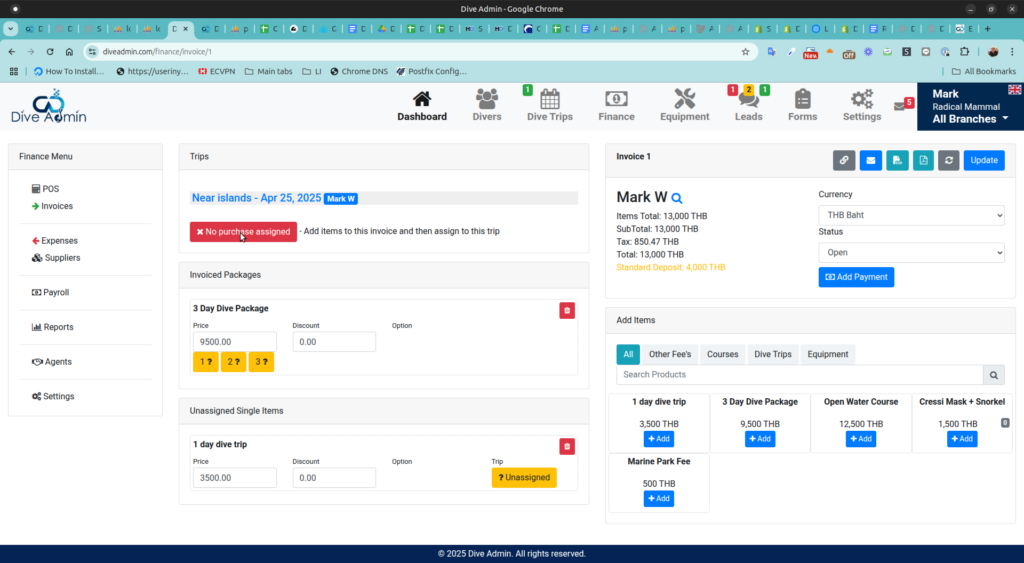
<b>Centralized bookings:</b> A real-time dashboard shows boat and course capacity instantly. No more double bookings.
<b>Automated workflows:</b> Systems auto-reply to inquiries, send reminders, and follow up with past students about advanced courses.
<b>Diver records:</b> Track certifications, medical forms, equipment preferences, and dive history in one place.
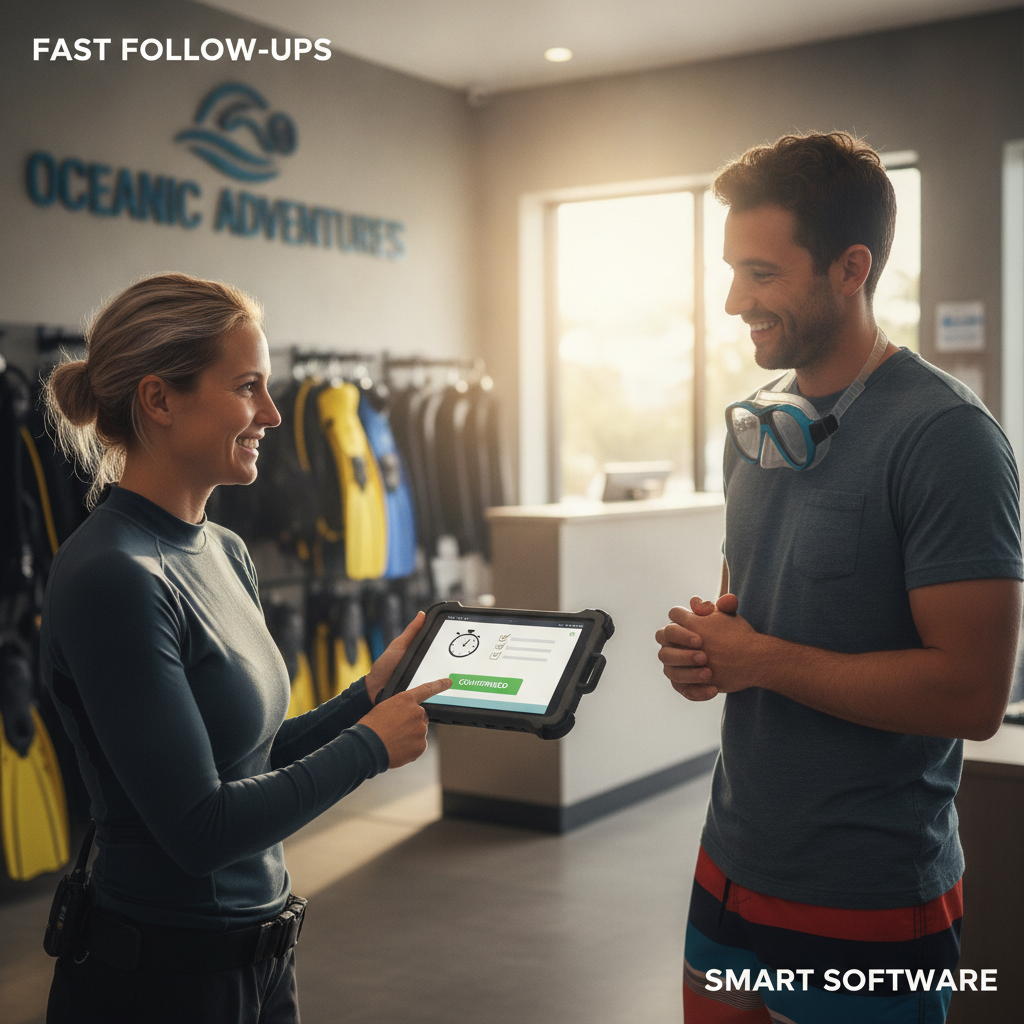
<b>Mobile-friendly check-ins:</b> Digital waivers, health declarations, and gear logs mean less paperwork and more face time.
Automation ensures instant acknowledgment even when you're out on a boat or teaching a class. Knowing a diver's history helps you personalize upsells. "You did your Open Water with us last year. Ready for your Advanced course?"
Your staff spends less time on admin and more time building community.
Do Divers Really Care About Fast Replies and Smooth Check-Ins?
Yes. Absolutely.
Divers consistently rank safety and professionalism as top decision factors when choosing a center. The Diving Equipment and Marketing Association's 2025 consumer trends data showed that modern divers expect the same one-click bookings and instant confirmations they get from airlines and hotels.
Operational precision equals perceived safety. Clean systems, instant replies, and organized records signal a well-run operation.
One center cut booking abandonment by forty percent just by adding automated confirmation emails and a real-time availability calendar.
Customer experience is a direct revenue driver.
Why Operational Excellence Beats Growth Hacks
We're entering the "Responsibility Era" of diving. Prioritizing precision, intentionality, and sustainability over blunt growth tactics.
Environmental responsibility involves coral-safe practices and keeping group sizes small. Diver safety requires proper ratios, thorough briefings, and well-maintained gear. Business responsibility means reliable systems, respectful communication, and strict data privacy.
You can't scale a responsible business on spreadsheets and memory. You need systems that enforce best practices automatically.
Divers share stories constantly. A seamless experience gets recommended to friends. A chaotic, disorganized experience ends up as a negative post on community forums.
What Should You Do Tomorrow to Improve Bookings?
You can start fixing your revenue system immediately.
<b>Step one:</b> Audit your response time. Track exactly how long it takes to reply to inquiries this week.
<b>Step two:</b> Set up auto-replies. Even a simple message saying you'll get back to them within two hours buys goodwill.
<b>Step three:</b> Centralize your inbox. Stop using personal emails and create a shared system or CRM for the team.
<b>Step four:</b> Enable online booking. Let customers book and pay on their own schedule without waiting for your staff to wake up.
<b>Step five:</b> Review your diver records. Can you pull up a customer's certification level and past trips in ten seconds? If not, you need better tools.
Converting just two or three more leads per month easily pays for a software upgrade.
Your Operations Are Your Marketing
Fancy ads get attention. Fast follow-ups and smooth operations win the business.
Remember the data. You're 21 times more likely to convert a lead at the five-minute mark. Most divers book with the first center to respond.
Every booking inquiry is a test of your systems, not just your sales skills. Investing in your infrastructure is the highest-leverage growth move you can make right now.
Good technology frees you to do what you love. Build a thriving dive community instead of wrestling with messy spreadsheets.
Frequently Asked Questions
How quickly should a dive center respond to a booking inquiry?
Ideally within five minutes. Research from LeadResponseManagement.org (2011) shows you're 21 times more likely to convert a lead if you respond within five minutes versus waiting thirty minutes. Use automated replies and booking software to acknowledge inquiries instantly, even outside business hours.
What's the biggest reason dive centers lose bookings?
Slow follow-ups. A 2011 Harvard Business Review study found that 78 percent of customers book with the first company to respond. If you wait hours or days to reply, divers have already moved on to a competitor.
Can dive center software really increase bookings?
Yes. Modern dive center software automates follow-ups, prevents double bookings, and organizes diver records. This fixes the revenue leaks that cause missed opportunities. Centers report significant conversion increases after adopting centralized booking systems.
Do I need expensive marketing if I improve my response speed?
Not necessarily. Many dive centers already have enough traffic. They just need better systems to convert it. Investing in operational tools often delivers better return on investment than simply increasing advertising spend.
What features should I look for in dive center software?
Prioritize real-time booking calendars, automated email and SMS confirmations, centralized diver records, mobile check-ins, and integration with payment processors. The goal is to reduce manual work and speed up every customer touchpoint.