Digital Diver Records: The Complete Guide to Modern Dive Center Management
Digital diver records solve the paper logbook nightmare that dive centers face every day. These cloud-based systems centralize certifications, medical waivers, and booking history in one secure place, replacing error-prone filing cabinets with instant verification. The result? Safer dives, happier guests, and operations that actually scale. Modern dive centers treat digital records as essential infrastructure, not optional technology.
<b>Key Takeaways:</b>
- Real-time certification verification prevents dangerous diver-site mismatches before anyone boards the boat
- Personalized guest profiles drive 20-35% increases in repeat bookings
- Automated staff scheduling eliminates coordination chaos and reduces instructor burnout
- Mobile-first systems deliver the seamless "phygital" experience today's travelers expect
- Small operations see 30-40% reductions in administrative tasks within the first quarter
The Paper Logbook Problem Every Dive Center Knows Too Well
Picture this scenario. It's six in the morning on a busy Saturday. An instructor is frantically digging through a metal filing cabinet trying to verify a guest's Advanced Open Water certification before a 30-meter wreck dive.
This is the traditional model. Illegible handwriting. Missing pages. Medical waivers that get signed, then immediately lost in a stack of clipboards. Paper systems create isolated data silos that frustrate guests and leave operators vulnerable to dangerous safety gaps.

Digital diver records solve these exact headaches. Paper-based systems are simply too prone to human error. They create unnecessary administrative burnout for your staff. And modern divers? They expect the same seamless digital experiences they get from airlines, hotels, and every other service industry.
How Do Digital Diver Records Actually Improve Safety?
Digital systems create instant access to verified certifications, experience levels, and medical clearances. Your staff can check diver qualifications in real-time before assigning anyone to specific dive sites.
<b>Key takeaway:</b> Real-time safety profiles significantly reduce your liability exposure.
Cloud-based medical waivers ensure absolute legal compliance. They're legally binding and instantly accessible to authorized staff from any device. This prevents mismatched diver-to-site assignments and automates buddy system matching by experience level.
Think about stopping an uncertified diver from accidentally joining an advanced drift dive just because someone misread a paper form. According to the Divers Alert Network 2024 Annual Diving Report, skill-related issues and exceeding training levels contribute significantly to diving incidents. Digital verification stops those errors before anyone gets on the boat.
Why Do Returning Guests Book More Often with Digital Systems?
Digital records enable highly personalized experiences by storing customer history, equipment preferences, and certification milestones. When a returning diver walks through the door, your staff already knows they need a medium buoyancy compensator and love shallow reef dives.
This level of data-driven personalization builds immense customer loyalty. Integrated CRM tools let you send targeted email campaigns for certification anniversaries or new site openings. Automated communications keep your guests engaged between their tropical vacations.
The Adventure Travel Trade Association reported in 2024 that dive centers using integrated software see 20-35% increases in repeat bookings. Sending an automated email that says "Welcome back, Sarah" with personalized course recommendations makes guests feel valued. Customer lifetime value naturally increases when you remember their preferences.
What Is the "Phygital" Experience Divers Expect Today?
A phygital experience blends in-person diving activities with modern digital convenience. Online booking. Digital check-in. Mobile waivers. Cloud-based dive logs.

Modern travelers are entirely accustomed to airline apps and hotel digital check-ins. They expect the exact same contactless workflows from your dive operation. Guests can complete waivers online before they even arrive at the shop.
<b>Bottom line:</b> Mobile accessibility is now a baseline expectation rather than a luxury feature.
Instead of a long clipboard queue on the dock, divers experience a five-minute gear pickup. They walk in, grab their tanks, and head straight to the water. This seamless transition increases positive reviews and encourages guests to share their experiences on social media.
How Does Centralized Software Streamline Staff Coordination?
Centralized platforms automate instructor scheduling and send real-time assignment notifications to your team. They automatically match staff certifications to specific trip requirements.
This technology completely eliminates phone tag, messy group texts, and whiteboard confusion. The system assigns instructors based on their specific certification levels, availability, and workload balance. Real-time updates ensure boat manifests and equipment needs are accessible from any smartphone.
<b>Common mistake:</b> Relying on manual text messages to coordinate last-minute boat changes often leads to missed assignments.
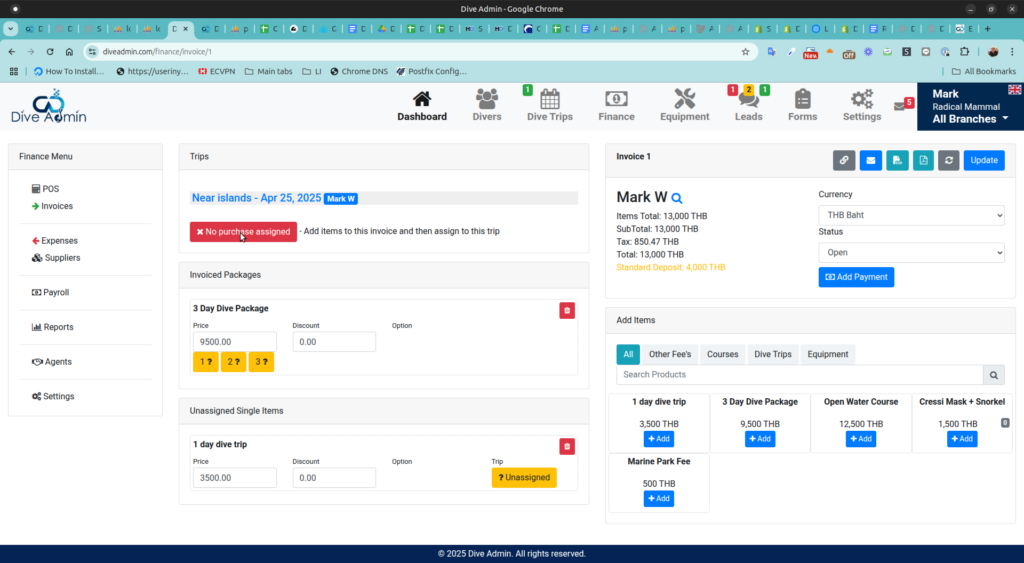
Instructors receive instant notifications rather than relying on manual coordination. Solutions like Dive Admin feature the Coral AI assistant to help owners manage tasks and gain business insights instantly. This automation reduces stress and vastly improves work-life balance for your crew.
> "The biggest bottleneck in dive operations isn't boats or equipment. It's time spent on manual coordination. Digital systems give that time back so we can focus on what matters: creating incredible underwater experiences."
> — Mark Thompson, Operations Manager at Blue Water Divers, quoted in Dive Training Magazine, 2025.
What Features Should You Look for in Dive Management Software?
Essential features include certification verification, digital waivers, customer relationship integration, and automated scheduling. You also need real-time boat manifests, mobile access, and AI-powered insights.
Your software must connect booking, inventory, staff scheduling, and customer data in one place. Global accessibility is required so owners can manage operations from the office, the boat, or the beach. Dive Admin offers specialized features designed specifically for these unique dive operations.
Look for a system that includes integrated smart assistants like Coral for task management. Digital waiver and medical form management must include proper legal compliance features. Finally, ensure the platform includes equipment maintenance tracking to protect your rental inventory.
Is Digital Record-Keeping Worth the Investment for Small Dive Centers?
Yes. Even small operations see rapid return on investment through reduced errors, time savings, and improved safety compliance.
Many owners think they're too small for dedicated software. However, manual systems create hidden costs through lost bookings, customer frustration, and compliance risks. Small operations often see 30-40% reductions in administrative tasks.

<b>When to use this:</b> Implement software when you want to scale your business from ten to a thousand annual divers seamlessly.
Modern divers actively choose centers with seamless digital experiences. According to Grand View Research's 2024 report, the global diving tourism market reached $5.57 billion and continues expanding at a compound annual growth rate of 12.1% through 2030. Competing in this massive market requires modern tools.
How to Transition from Paper Logbooks to Digital Records Without Chaos
Successful transitions involve phased implementation, proper staff training, and running parallel systems for a short period.
<b>Step 1:</b> Explain the upcoming benefits to your staff to get their buy-in and reduce resistance.
<b>Step 2:</b> Digitize your active customers from the last year or two first.
<b>Step 3:</b> Enter historical data gradually as returning guests check in.
<b>Step 4:</b> Run paper and digital systems parallel for two to four weeks.
Phased implementation heavily reduces business disruption. Staff training typically requires just two to four hours for basic proficiency. Most platforms offer onboarding assistance and migration support to make a four-week transition realistic.
Frequently Asked Questions About Digital Diver Records
Are digital waivers legally binding?
Yes. Digital waivers are legally enforceable in most jurisdictions when they include verified signatures, timestamp documentation, and secure storage. Cloud-based systems like Dive Admin ensure waivers meet all legal requirements and remain instantly accessible to authorized staff. This provides much stronger compliance than paper forms that easily get lost or damaged.
What happens to our digital records if the internet goes down?
Quality dive management platforms offer offline modes that sync automatically when connectivity returns. Critical information like boat manifests, medical waivers, and certification verification can be accessed locally during outages. This ensures your operations continue smoothly even in remote locations with unreliable internet access.
How long does it take to digitize years of paper logbooks?
Bulk data migration typically takes two to six weeks depending on your volume and data quality. Most dive centers choose to digitize their active customers first while entering historical data only as returning guests check in. This phased approach spreads the migration workload and provides immediate benefits.
Can divers access their own digital logbooks?
Yes. Modern systems provide diver-facing portals where guests can view their certification history, completed dives, and upcoming bookings. This self-service access increases customer engagement and reduces administrative phone calls. It gives divers convenient access to their personal diving history from any device.
What is the typical cost for dive management software?
Pricing varies by features and operation size but typically ranges from $50 to $300 monthly for small to mid-size dive centers. Most operators see positive return on investment within three to six months. The software pays for itself through improved efficiency, time savings, and increased repeat bookings.
The Bottom Line
Digital records are the new dive center essential for safety, customer experience, and operational efficiency. The gap between digital and manual operators will rapidly widen as customer expectations evolve. Early adopters gain massive competitive advantage and operational resilience. Technology should serve your core mission. It gives you more time underwater and requires less time spent on paperwork.