Building a Smoother Multi-Day Dive Trip Experience in 2026
Modern dive centers are ditching spreadsheets for cloud-based systems that automate communication, centralize guest data, and schedule staff proactively. This shift cuts admin time by 60% while boosting bookings by 40%, creating frictionless multi-day experiences that convert first-time divers into loyal, returning customers.
Key Takeaways:
- Centralized booking systems eliminate double-bookings and slash manual admin work by up to 60%
- Saved guest profiles tracking sizes and preferences speed up check-ins and personalize every interaction
- Multi-level training integration maximizes boat capacity while building community among divers
- Automated post-trip engagement keeps your dive center top of mind long after guests fly home
- Proactive scheduling of instructors and equipment prevents last-minute chaos and staff burnout
Picture this. Day three of a five-day liveaboard. You’re still manually sorting who needs what gear, which instructor is teaching whom, and whether your newest guest remembered to sign their medical waiver. Most dive centers still run multi-day trips exactly like this. Messy spreadsheets, endless WhatsApp groups, reactive problem solving.
Dive travelers in 2026 expect better. They want the same seamless experience they get from modern booking apps. Instant confirmations. Zero friction. Highly personalized service. Creating a smoother multi-day dive trip experience isn’t just about keeping guests happy anymore. It’s a competitive necessity.

Modern dive travelers prioritize longer, deeper experiences over frequent budget trips. They expect mobile-friendly reservations and digital check-ins before they even arrive at your shop. The industry shift from high-volume churn to experience-led operations is well underway. The right operational systems turn chaotic multi-day bookings into effortless, profitable dive holidays.
Why does multi-day trip management matter more in 2026?
Multi-day trip management directly impacts guest retention, online reviews, and long-term profitability. In 2026, seamless operations are the primary differentiator. Dive travelers prioritize stress-free experiences and environmental sustainability over rock-bottom prices.
Dive tourism is maturing rapidly. Guests are willing to pay more for quality. They expect professional, frictionless service in return. Leading operators are targeting a 60% reduction in admin time through digitalization while increasing total bookings by 40%.
The reputation factor: One chaotic morning check-in or a lost certification record equals a poor online review that haunts your business for years. Modern travelers research obsessively. They spot disorganization in your reviews before they ever book a spot on your boat.
The sustainability connection: A majority of dive tourists now prioritize operators demonstrating actual sustainable practices. This includes how you manage paper waste, energy use, and local reef impact.
What does a genuinely smooth operation look like behind the scenes?
The foundation: centralized digital management systems
Cloud-based dive management platforms replace error-prone spreadsheets with real-time booking accuracy, automated communications, and instant access to guest records. This eliminates double-bookings, reduces manual work drastically, and frees staff to focus on the guest experience.
The spreadsheet problem: Manual tracking systems are the top source of multi-day trip disasters. They lead to double-bookings across your website and front desk. Crucial paperwork gets lost. Without historical guest data, every returning customer feels like a total stranger.
The digital solution: Centralized management solves this chaos. You get real-time availability across all booking channels. You collect digital waivers before guests arrive in the country. The system automatically sends confirmation emails and pre-trip checklists. Your staff gets instant access to certifications, medical forms, and past dive history.
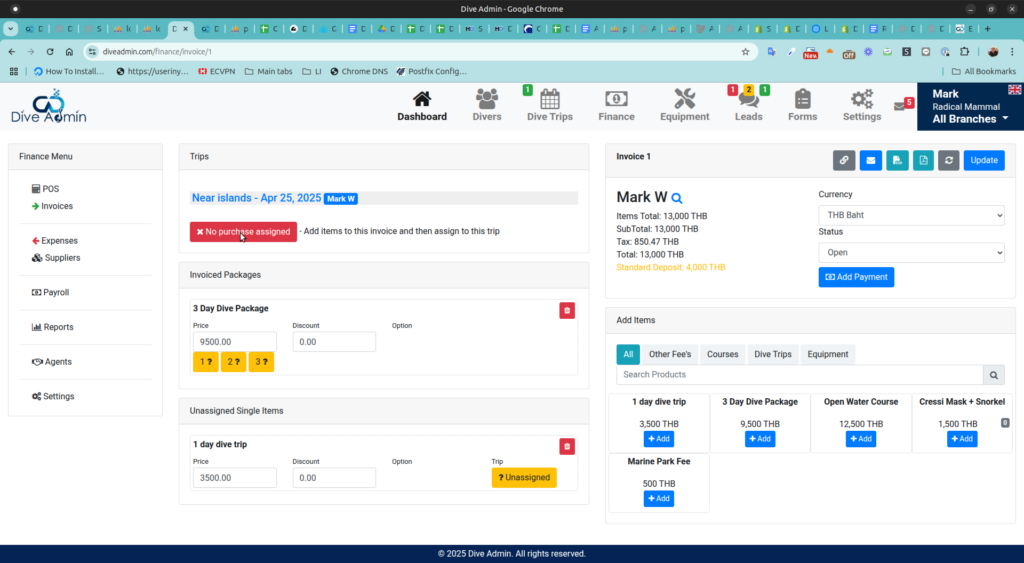
Bottom line: Average check-in time drops from 30 minutes to just five minutes per guest. Staff can prepare rental equipment ahead of time using saved size preferences. Returning customers feel recognized and valued right away. Modern systems like Dive Admin serve as the central operating system for professional dive centers, unifying everything from online bookings to daily boat manifests.
“We went from spending three hours every morning just organizing paperwork to having everything ready the night before. That time now goes into guest briefings and building real relationships.” Quote by Sarah Chen, Operations Manager at Blue Horizon Dive Resort, Dive Industry Magazine, 2025.
How do you schedule multi-day trips without burning out your team?
Proactive scheduling assigns instructors based on qualifications and current workload to prevent fatigue. Digital boat lists, automated equipment preparation from saved preferences, and real-time hotel transfer coordination eliminate daily chaos while maintaining excellent teaching quality.
The reactive trap: Hoping you’ll figure things out tomorrow morning doesn’t work for five-day trips. It causes instructor burnout from back-to-back demanding courses. You discover equipment shortages at seven in the morning. Confused guests end up waiting on the sidewalk for transfers that no one planned.
Proactive allocation: Assign instructors weeks in advance based on certification levels and current workload. Pre-allocate rental equipment using guest profiles that hold sizes and preferences from previous trips. Plan boat capacity with multi-level training in mind.

Staff coordination: Match qualifications correctly. Don’t assign a demanding technical course to an instructor already maxed out on weekly hours. Build in mandatory rest days to prevent physical fatigue. Track equipment rotation to see which regulators are due for service mid-trip. According to Divers Alert Network 2026 safety guidelines, proactive scheduling directly reduces human error and incident rates on dive boats.
Digital logistics: Generate mobile boat manifests with guest names, certification levels, and special needs. Map out hotel pickup routes the night before. Share real-time updates directly with drivers and guides.
Practical tip: Schedule a dedicated trip prep hour exactly 24 hours before each multi-day experience begins. Review all bookings, prep equipment, confirm staff assignments, and send final reminders to guests.
What’s the secret to integrating multiple course levels on one trip?
Multi-level training combines Open Water, Advanced, and Divemaster students on a single dive trip to maximize boat capacity. Clear pre-trip communication about requirements and daily schedules prevents confusion and creates natural upsell opportunities.
Why it works: Instead of running separate boats for each certification level, you combine them strategically. Open Water students complete their third skills dive while Advanced students do their deep dive at the same site. Divemaster candidates assist with both groups under instructor supervision. Everyone feels like part of a vibrant learning community rather than isolated in a beginner group.
Operational benefits: You maximize available boat capacity easily. You fill 12 spaces instead of running six half-filled trips. Cross-selling becomes a natural conversation. Experienced divers mentor newer ones, creating a fantastic vibe on board.
Communication is critical: Send detailed pre-trip FAQs to everyone booked. Cover exactly what certifications are required for specific activities. Break down the daily schedule so everyone knows who’s doing what and when. Include gear recommendations specific to each course level. This prevents day-of surprises.
Sample day structure:
- Morning: Open Water confined skills alongside an Advanced navigation dive
- Lunch: Everyone eats together to build community and share stories
- Afternoon: Open Water open water dive alongside an Advanced wreck dive at the same site but different depths
Safety note: This integrated approach requires experienced instructors and very clear, structured briefings. When done correctly, it actually enhances safety through active peer learning.
How can you automate guest communication before, during, and after trips?
Automated emails triggered by specific booking stages reduce manual work while keeping guests highly informed. Personalized messages using saved dive history make communication feel thoughtful and build the loyalty that drives repeat bookings.
The manual bottleneck: Typing individual emails to 40 guests per week isn’t sustainable. You need an automated system that handles the repetitive work.
Pre-trip automation: Send an instant booking confirmation with trip details right away. Seven days before the trip, trigger an email with a digital waiver link and gear size form. Three days out, send a final checklist detailing what to bring, meeting location, and local weather forecast. This simple sequence reduces repetitive questions by 80%.
During-trip touchpoints: Send daily recap emails with dive site photos using simple templates with custom fields. Provide certification progress updates for course students. Send simple upsell prompts like offering a Nitrox specialty if they loved their first deep dive.
Post-trip engagement: Most operators fail here completely. Send an automated thank-you email within 24 hours of their last dive. Request a review on Google or TripAdvisor after three days. Send a personalized rebooking offer after seven days.

What guest data should you actually be tracking?
Track certifications, medical history, rental equipment sizes, past dive sites visited, and course progression. This specific data enables instant check-ins, personalized gear preparation, and targeted marketing while ensuring safety compliance.
Essential safety data: Keep current certifications on file with card photos and numbers. Track medical questionnaire responses and exact expiration dates. Log insurance information and emergency contacts for every guest.
Experience enhancement data: Note rental equipment sizes and preferences like wetsuit thickness and fin style. Record preferred dive sites or ocean conditions. Track course history and progression to set up natural upsells later. Log special occasions like a honeymoon, birthday, or 100th dive.
Operational efficiency data: Track preferred boat times for repeat guests. Note dietary restrictions for catered lunch. Save hotel pickup locations and preferred payment methods.
How to use it: Speed up check-in by telling guests their profile is current and they just need to sign the daily log. Have equipment room staff pull all rentals the night before based on saved sizes. Personalize marketing by reminding a guest they’re only three dives away from their Advanced certification. Remembering their 50th dive milestone turns a normal returning guest into a VIP.
Privacy note: Always store this data securely. Get explicit consent and give guests total control over their personal information.
Why does the post-dive experience matter as much as the dive itself?
The customer journey doesn’t end at the dock. Automated thank-you messages, review requests, and personalized rebooking offers solidify relationships and turn one-time guests into repeat customers.
The missed retention opportunity: Guest excitement peaks right after the trip ends. You must capture that energy immediately. A five-star review left within 48 hours is highly valuable for your search ranking. The impulse to book another trip fades quickly without a gentle nudge.
Immediate post-trip actions: Send a thank-you email with trip photos or dive log summary within 24 to 48 hours. Follow up with a review request for your preferred platforms. Invite them to tag your dive center on social media.
Medium-term follow-up: Send a rebooking offer within one to two weeks. Offer a referral incentive if they bring a friend next time. Send a course progression prompt if they just finished their Advanced course and are ready for Rescue Diver.
Long-term relationship building: Send seasonal newsletters with high and low season schedules. Send certification anniversary emails exactly one year after they get their Open Water card.
Data-driven examples: Tell them you just added night dives at a site they loved last year. Let them know their favorite instructor is leading a liveaboard next month. Repeat customers spend 67% more than first-timers according to 2026 data published by the Global Dive Travel Association and cost significantly less to acquire. Make your future marketing feel like reconnecting with old friends.
What key metrics should you track for multi-day trip success?
Monitor admin time saved, booking conversion rates, customer satisfaction scores, repeat booking percentages, and overall review ratings. Leading operators target significant admin time reductions and high satisfaction scores to predict profitability.
Efficiency metrics: Track admin hours spent per booking. Your target should be a 60% reduction from your old manual baseline. Monitor check-in time per guest and aim for under five minutes. Watch pre-trip question volume closely. It should drop substantially as your automation improves.

Growth metrics: Compare total bookings versus the previous period. Top operators routinely see 40% increases when their systems are fully dialed in. Track average booking value to see if daily upsells are working. Monitor booking conversion rate from casual inquiries to confirmed trips.
Satisfaction metrics: Look at post-trip survey scores. A 95% satisfaction rate is an excellent and achievable target. Track your Net Promoter Score to see if guests would actively recommend you to friends. Aim for a 4.7-star average on public online reviews.
How to measure: Use built-in analytics in your management software. Platforms like Dive Admin offer AI-driven insights through their Coral feature to help you track these exact numbers effortlessly. Set up automated post-trip surveys via email. Run monthly team reviews of these key metrics to identify and fix operational bottlenecks quickly.
FAQ
How do I handle guests who book multiple days but with different group members?
Centralized management software allows you to split bookings and assign individual days to different sub-groups or family members. You simply tag the specific guests to the specific days they’re diving, and the digital boat manifest updates automatically.
Can automated messaging completely replace my front desk staff?
No. Automation handles the repetitive tasks like waivers, directions, and gear sizing. This frees up your front desk staff to have meaningful, face-to-face conversations with guests and handle complex, specialized requests.
What happens if a multi-day trip gets canceled due to weather?
With a digital system, you can bulk-message all affected guests instantly. You can easily reschedule their specific dives to later in the week or process partial refunds without digging through paper files or massive spreadsheets.
How do I transition my team from spreadsheets to dive management software?
Start during your slow season. Pick one core process to digitize first, such as digital waivers or online bookings. Train your staff thoroughly on that one feature before rolling out the full automated scheduling and daily boat manifests.