Does Dive Center Software Actually Improve the Diver Experience?
<b>Yes, dive center software dramatically improves the diver experience by eliminating administrative friction.</b> Modern systems enable instant online booking, paperless pre-arrival check-ins, and personalized service through accessible diver histories. By replacing manual spreadsheets and paper forms, dive centers transform from reactive administrators into proactive experience facilitators. The result is happier divers who enjoy seamless journeys from booking to splashdown, while operators reduce no-shows and build stronger customer loyalty.
Key Takeaways
- Modern software turns administrative tasks into seamless customer experiences through instant online booking
- Paperless check-ins allow staff to shift from clerks to experience creators with gear ready
- Integrated systems provide instant access to diver histories for personalized service and safety compliance
- Automated reminders reduce no-shows by up to 30% while keeping divers informed about schedules
- Backend software investments directly translate to premium guest interactions in competitive global travel markets
Picture this. You've been dreaming about your scuba trip for months. You arrive at the shop pumped for your first ocean excursion, but then reality hits. You spend 25 minutes in a cramped line filling out the exact same medical form you completed last year. Meanwhile, the staff frantically searches for your certification card in a messy filing cabinet.
Administrative chaos quickly dampens vacation excitement. There's a massive disconnect between amazing underwater experiences and clunky booking processes. Divers want to see coral reefs, not clipboards.
Can the right dive center software actually make divers happier? The answer is a resounding yes. Let's explore how behind-the-scenes technology can completely make or break your customers' experience.
Why does dive center software matter for customer experience?
Administrative friction refers to any unnecessary effort a customer must expend to do business with you. In the travel world, friction directly impacts customer perception. Divers judge your shop before they even set foot on the boat.
Customer expectations in 2026 are exceptionally high. Divers want hotel-booking-level convenience. They expect seamless digital interfaces, instant confirmations, and zero paperwork upon arrival.
According to Allied Market Research, the global adventure tourism market is projected to reach approximately $2 trillion by 2032. This emphasizes rising customer expectations as more money flows into the sector. Manual systems are no longer just "good enough." They're a competitive liability.
Spreadsheets create nasty bottlenecks for your staff. They lead to double-bookings, lost paperwork, and delayed responses. Modern divers compare your dive shop to their broader travel experiences, not just to other dive shops down the street.
Deloitte's 2026 Travel Industry Outlook found that Millennials and Gen Z rely heavily on digital platforms and demand seamless connected experiences. If your business runs on paper, you look outdated. Upgrading your dive center software is now a strategic necessity.
How does online booking make life easier for divers?
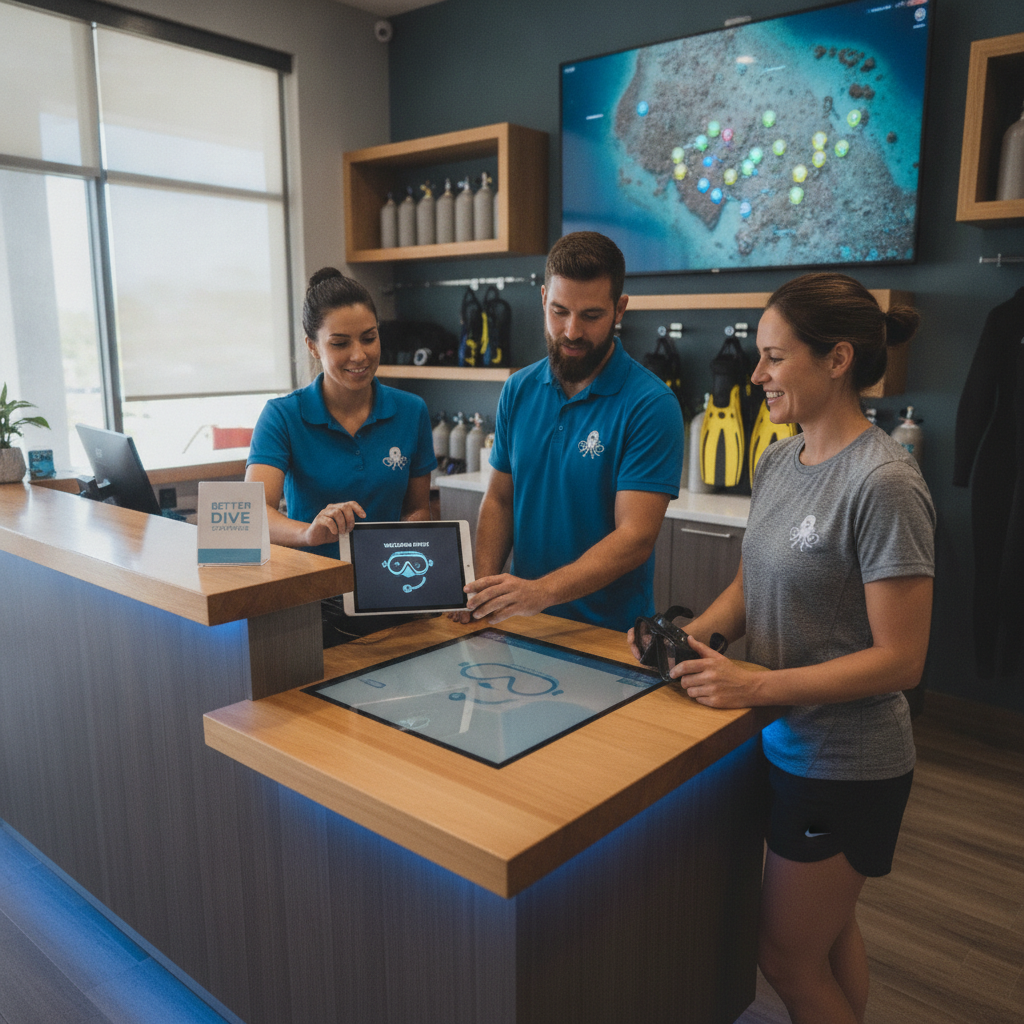
Real-time availability eliminates the friction of "let me check and call you back." When divers decide they want to book a trip, they want to secure it right then. Instant confirmation gives them immediate peace of mind and drastically reduces booking abandonment.
Mobile-friendly interfaces meet customers exactly where they are. Industry data shows that over 70% of modern travel bookings happen on mobile phones. Booking a scuba excursion should feel exactly like booking a flight, not like calling a dentist in 1998.
Payment processing must be secure and instant. Good software automatically generates receipts and sends them straight to the customer's inbox. Calendar integrations and automated pre-trip reminders keep everything neatly organized.
Imagine a diver browsing your website at 11 PM on a Friday. They feel spontaneous, book a weekend spot, and get confirmation instantly. This convenience prevents customers from ghosting your shop to find a competitor with an easier booking system.
What happens when check-ins go paperless?
Traditional check-in procedures are notoriously frustrating. Repetitive forms and long waits overwhelm staff on busy mornings. Divers end up standing around sweating in their wetsuits instead of enjoying the ocean breeze.
Digital waivers and medical forms fix this entirely. Customers complete them pre-arrival via email or a secure customer portal. Certification verification happens in advance through API integrations or simple photo uploads.
This shifts your staff's role completely. They transform from clipboard holders to true experience creators. Staff can greet returning customers by name and have their preferred rental gear already staged on the boat.
Businesses using digital check-in systems report approximately 30% reduction in customer wait times, according to service industry research. Traditional check-ins take 15 to 25 minutes per group. Digital check-ins take two to three minutes on-site.
This enhances the first impression of your business. Professionalism signals quality and strict safety standards. As a bonus, eliminating thousands of forms annually significantly reduces paper waste, aligning perfectly with conservation goals.

How does software make dive days smoother and safer?
Software connects backend organization directly to on-the-water operations. Staff gain instant access to diver histories, including certifications, medical conditions, and previous dive logs.
This allows for true personalization. Your team can pre-select the exact right size of rental gear. They can note favorite local dive sites and accommodate dietary restrictions for boat trips seamlessly.
Safety compliance becomes automatic. Systems trigger alerts for expired medical questionnaires and match certification levels strictly to dive difficulty. Instructors and divemasters can review all customer details on tablets directly on the boat.
> "The best dive software doesn't just organize data. It gives our team superpowers to deliver personalized service at scale."
>
> <b>Elena Rostova, Owner of Blue Horizon Dive Center</b> (Dive Professional Magazine, 2026)
Emergency preparedness improves drastically. Staff have immediate access to emergency contacts and medical information if an incident occurs. Inventory management ensures the right equipment is always available, avoiding those awkward moments where a specific fin size is missing.
Can automated communication really reduce no-shows?
Empty spots on a boat equal lost revenue and disappointed divers who missed out. No-shows hurt everyone involved. Automated communication solves this persistent business pain point.
Automated reminder sequences do the heavy lifting. The system sends a booking confirmation, followed by a seven-day reminder, a 24-hour reminder, and a day-of check-in text. Weather and schedule updates push automatically via email or SMS.
Software also handles course requirement reminders. A simple automated text saying "Don't forget your logbook!" saves hours of headaches. Automated reminders can reduce no-shows by up to 30% by simply keeping the commitment top of mind.
Consistent communication builds deep trust. Divers feel cared for and fully informed before they ever arrive. This professional image proves that the shop has its act together.
It also massively reduces inbound phone calls. Customers already have the information they need without asking. Easy rescheduling links offer flexibility if plans change, while automated post-dive surveys create a continuous feedback loop for improvement.
Why does this matter more in 2026 than ever before?
The post-pandemic travel boom brought more people into scuba diving than ever before. Global diving tourism projections show massive growth. More divers mean more business, but it also means increased competition.
Divers have more choices and a much lower tolerance for friction. The generational shift is undeniable. Millennial and Gen Z divers are digital natives with incredibly high technology expectations.
We live in a review economy. One bad administrative experience often results in a public negative review. Connected experiences are the new standard across the entire travel industry.
Paperless operations also align perfectly with environmental values. Divers are inherently conservation-minded, and they notice when a business actively reduces waste.
Software isn't just an operating expense. It's critical customer experience infrastructure. Early adopters separate themselves dramatically from laggards in this highly competitive global market.
What should dive centers look for in software solutions?
Operators need practical guidance when evaluating platforms. All-in-one solutions offer massive integration benefits over piecemeal systems. Fragmented tools usually create more work than they save.
An essential features checklist should include:
- Online booking with real-time availability
- Digital waivers and medical forms
- Robust customer database with dive history
- Inventory and equipment management
- Automated communication tools
- Secure payment processing
- Reporting and analytics capabilities
Ease of implementation is crucial. Systems must be intuitive to minimize staff training requirements. Mobile accessibility is equally vital since staff need system access on boats and at remote dive sites.
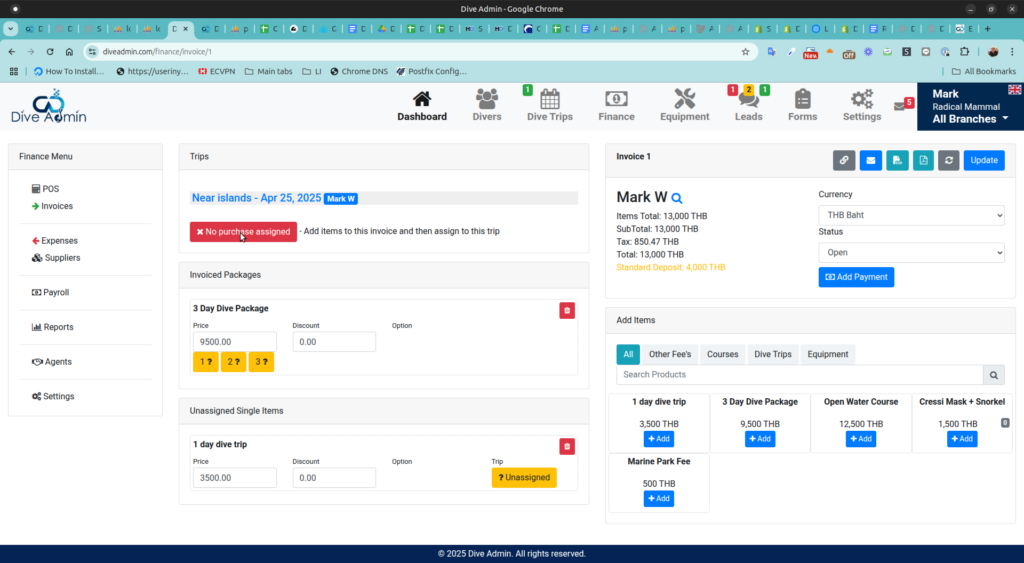
Customer portals empower divers to access and manage their own information. Compliance tools track certification levels and medical expiration dates automatically. Platforms like Dive Admin offer integrated solutions designed specifically for dive operations, which outperform generic booking systems.
Scalability matters for both single-shop operations and multi-location chains. Good platforms offer reliable support and thorough training availability. The time savings alone easily justify the monthly cost by opening up new revenue opportunities.
Real-world impact: From chaos to seamless
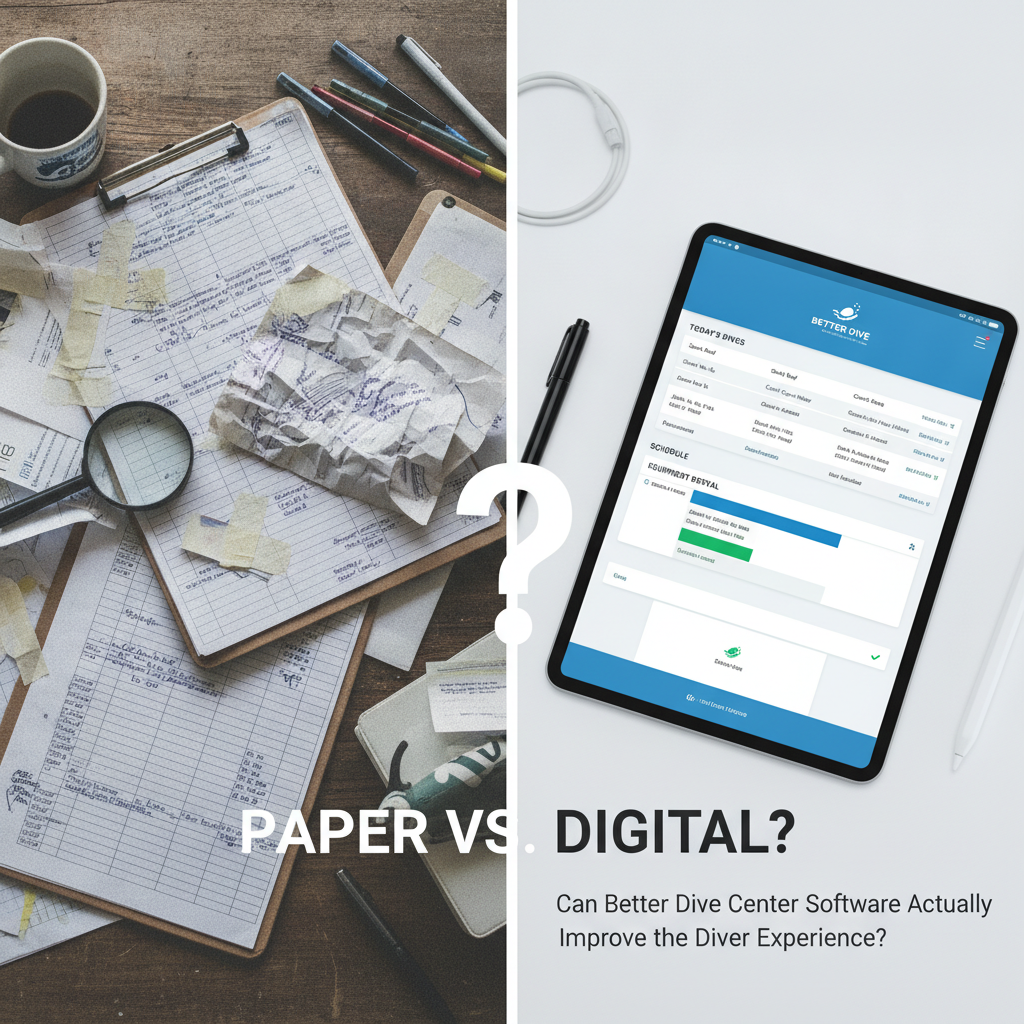
Consider a typical dive center transformation. Before adopting software, the shop relied on paper logbooks, phone bookings, and manual waiver filing. Staff experienced frequent double-bookings and constant stress. Customers regularly complained about wait times.
After implementation, the environment changes completely. The shop uses online booking and pre-arrival digital forms. Staff have instant access to diver information and can focus entirely on customer service. Customers leave glowing praise in online reviews.
Many centers reclaim up to 10 hours per week previously lost to administrative tasks. Customer satisfaction improves across the board. Repeat booking rates climb steadily as friction disappears.
Staff morale improves dramatically when clerical drudgery goes away. Meaningful guest interaction replaces frantic paperwork searches. Revenue increases through reduced no-shows, better capacity utilization, and targeted upsell opportunities.
Divers notice and appreciate the difference. The ripple effect is powerful. Smoother operations generate better word-of-mouth, which ultimately leads to more bookings.
Software as experience infrastructure
It's not a question of whether software improves the experience, but exactly how much. The invisible backend efficiency clearly shows up as frontend delight. The right dive center software is experience infrastructure.
Technology frees humans to be human. When a system handles the logistics, your team can focus on sharing their passion for the ocean. Customer expectations will only continue to rise.
Evaluate where friction exists in your current customer journey. Dive centers that invest now position themselves for continued, sustainable growth. Find the bottlenecks and eliminate them.
The best dive centers understand a simple truth. Every minute saved on paperwork is a minute gained for creating underwater memories. Check out dedicated platforms like Dive Admin to see how easy the transition can be.
FAQ
How much does dive center software typically cost?
Dive center software ranges from $50 to $500 or more per month depending on features and business size. Entry-level booking systems start around $50 to $100 monthly. Comprehensive platforms like Dive Admin with integrated booking, waivers, inventory, and customer management typically run $200 to $400 per month. Calculate ROI by factoring in time savings, reduced no-shows, and improved customer retention.
Is dive center software difficult for staff to learn?
Modern dive center software is designed for ease of use. Most staff become proficient within one to two weeks. Leading platforms offer onboarding training, video tutorials, and ongoing support. The learning curve is comparable to mastering a new smartphone app. Most centers report that the time invested in training is easily recouped within the first month through efficiency gains.
Can software really improve safety, or is it just about convenience?
Software significantly enhances safety by ensuring certification requirements are verified and medical forms are current. Automated alerts prevent booking divers into experiences beyond their certification level. Digital records eliminate illegible handwriting issues and lost paperwork. In emergency situations, staff can immediately access medical conditions and emergency contacts, which the World Recreational Scuba Training Council (WRSTC) notes as a fundamental safety practice.
What happens if internet connectivity is poor at our dive location?
Quality dive center software includes offline functionality for remote locations. Staff can download necessary information like dive rosters, customer details, and waivers before heading to boats. They simply sync the system when connectivity returns. Many dive centers use a hybrid approach where primary booking happens at the shop, while on-site operations use offline-capable mobile tools to ensure business continuity.
Will customers actually use online booking, or do divers prefer calling?
Customer booking behavior data shows 60% to 70% of divers prefer online booking when available. This is particularly true for younger demographics. Online booking doesn't eliminate phone options. It simply adds convenience for customers who browse outside business hours. Centers offering both options see increased total bookings because they capture spontaneous evening and weekend shoppers. Older customers still appreciate phone options, which staff can handle more efficiently when not overwhelmed by routine calls.