From Booking to Backroll: Where Dive Centers Win or Lose Trust
Dive center software is changing how shops build trust with their divers. From instant online scheduling and digital waivers to automated gear tracking and post-dive emails, integrated management systems solve the operational gaps that erode customer confidence. The diving tourism market is reaching $6.25 billion in 2026. Successful dive centers are ditching their spreadsheets and whiteboards for digital platforms that deliver the safe, seamless experience today's divers expect.
<b>Key Takeaways:</b>
- Trust grows through visible professionalism at every step of the diver's journey
- Dive center software stops manual errors like double bookings and missed gear maintenance
- Digital booking and mobile waivers signal a modern operation dedicated to safety
- Post-dive email automation turns one-time vacationers into lifelong brand advocates
What happens when a dive center loses a diver's trust?
Picture this scenario. A diver arrives excited for a certification course. They quickly find out the shop cannot locate their medical forms. The scheduled instructor called in sick with no backup plan. Worst of all, the rental equipment log is missing somewhere in the back office.
Meanwhile, across town, another diver gets an instant booking confirmation. They complete their waivers right from their phone. They walk through the doors and find staff who already know their name and experience level.
The difference comes down to organization. One shop runs on spreadsheets and hope. The other relies on dive center software to create a seamless experience. These small operational moments determine whether divers trust you with their safety. It also decides whether they give you their repeat business.
Why does trust matter more than ever for dive centers?
Trust isn't just a nice feeling. It acts as the economic engine of your dive business. You're asking people to trust you with their literal breathing underwater, so that confidence has to start somewhere.
<b>Key point:</b> Divers prioritize your safety record and the appearance of your premises, equipment, and staff above all other factors when choosing a shop.
The global diving tourism market is projected to reach $6.25 billion in 2026, according to Fortune Business Insights. The market will grow at 11.86% compound annual growth rate through 2034. This growth means more competition and much higher customer expectations. Dive centers simply have thinner margins for error today.
One-time vacation divers compare experiences online. Modern divers research extensively before booking, meaning your digital presence acts as your first handshake. A single negative review about faulty gear or a disorganized boat can scare off dozens of potential customers. Trust starts the very moment someone finds you online.
How does your booking system shape customer confidence?
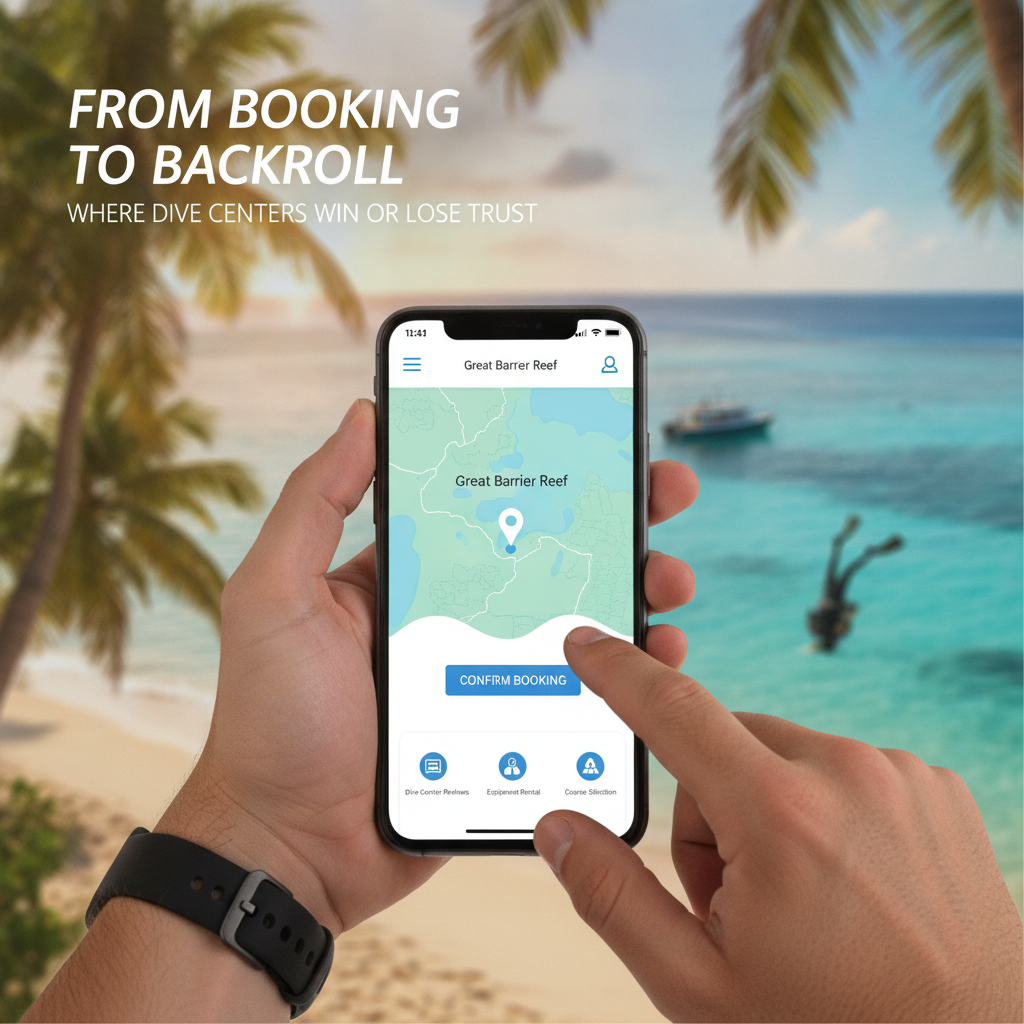
Most divers discover your shop on a mobile phone. They often browse while dreaming about their next trip late at night. Their first interaction needs to be flawless.
<b>Common mistake:</b> Asking customers to "email us to check availability" creates a dead end.
Wait times for booking confirmation frustrate eager travelers. Clunky forms that break on mobile screens push divers away. When customers can't see course schedules or boat availability instantly, they abandon your site for a competitor.
<b>What builds trust:</b>
- Real-time availability calendars
- Instant confirmation emails
- Mobile-optimized booking flows
- Transparent pricing without hidden fees
- Automated payment processing
Instant and professional booking signals that your team has its act together before the diver ever meets you. Dive center software provides an incredible advantage here. Integrated systems show live schedule availability and trigger automatic confirmations. Customer data stays clean and organized for the entire journey.
Nothing says professional operation quite like responding to a late-night booking request while you're actually sleeping. First impressions are everything when someone chooses who to trust sixty feet underwater.
What happens when divers arrive at your shop?
Traditional check-in processes usually involve pure chaos. Staff hand divers a clipboard with paper waivers to fill out while standing in a busy lobby. Employees frantically hunt for reservation details. Customers wait thirty minutes before anyone even mentions getting in the water.
This disorganization at check-in makes divers nervous. They wonder if you're disorganized about important things like safety and boat maintenance.
<b>Digital transformation solves this:</b>
- Pre-arrival digital waivers get completed from home
- Medical questionnaires are reviewed before the diver ever arrives
- Staff greet customers by name with gear ready
- Seamless five-minute check-ins replace long lines
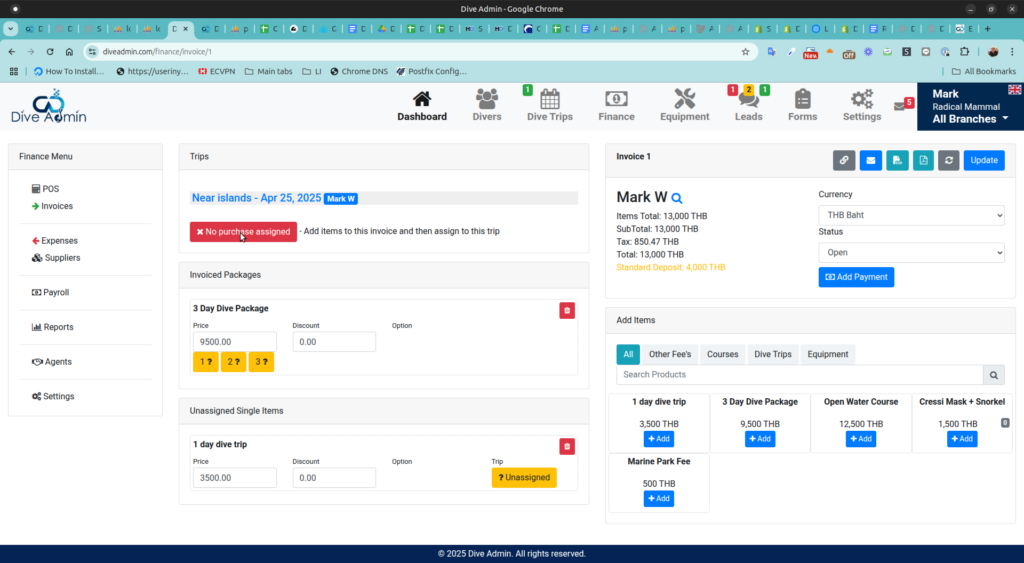
Dive center software sends automated waiver links before the arrival date. It captures digital signatures and stores them securely in the cloud. Customer profiles track sizes, certification levels, and personal preferences.
<b>Bottom line:</b> Safety improves when staff review medical disclosures thoughtfully beforehand instead of rushing at a crowded counter. Divers feel valued as individuals rather than just being processed as a number.
How does equipment tracking build or break diver safety trust?
Equipment represents a major operational asset. It's also the primary safety concern for your divers. Nobody wants to wonder when a tank was last inspected while they swim eighty feet down.
Manual tracking often goes wrong. Staff write service dates on whiteboards or save them in messy spreadsheets. Employees easily forget which regulators need servicing. Visual inspections get missed during busy seasons. The result is a customer asking if their equipment is actually safe to use.
Equipment failures underwater create dangerous safety incidents. Even minor malfunctions destroy trust permanently. The Divers Alert Network (DAN) consistently highlights how equipment maintenance plays a direct role in incident prevention.
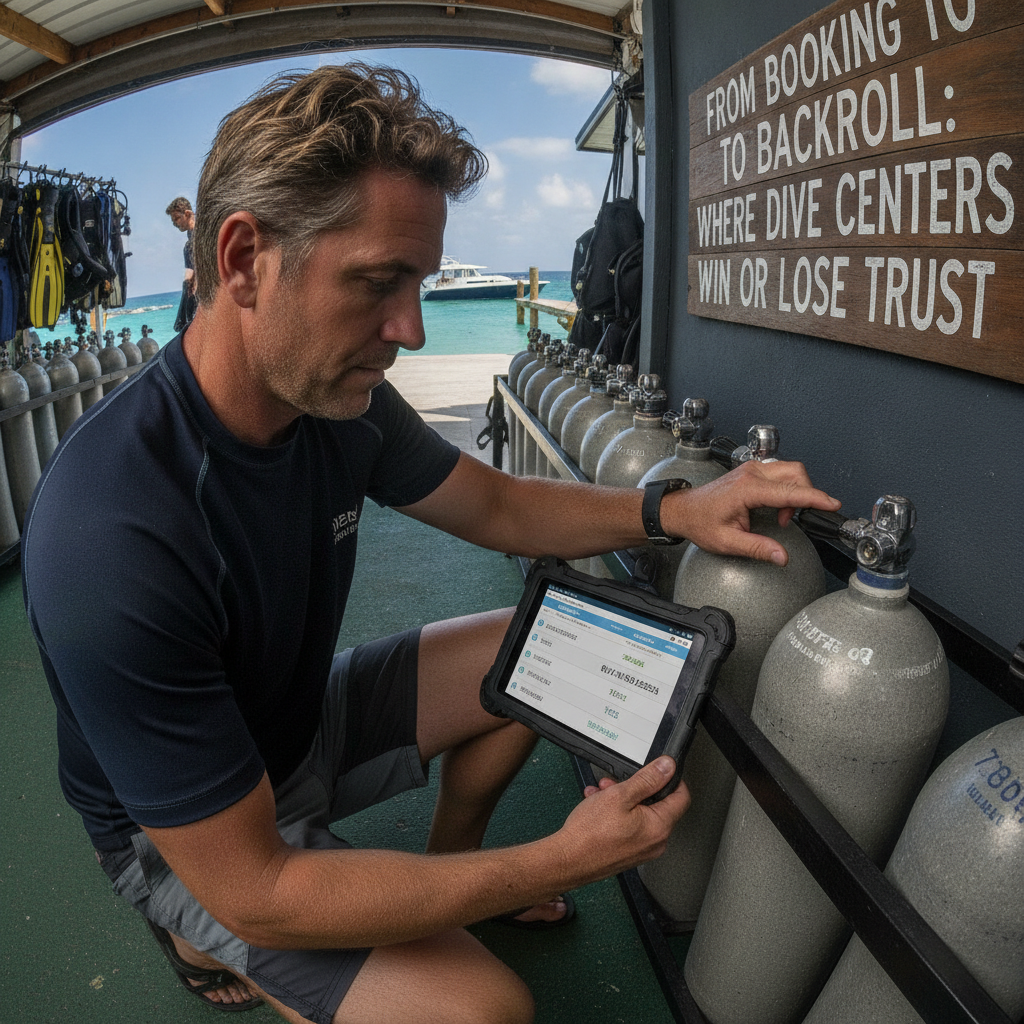
When divers see organized and well-maintained gear, they naturally trust your safety protocols. Dive center software provides digital service calendars with automated reminders. Each piece of equipment gets a detailed service history. The system flags upcoming maintenance well before the due date.
A reliable software platform prevents a regulator that needs service from ever being assigned to a customer. Staff can truthfully tell guests that every single piece of gear is tracked and serviced exactly on schedule.
Why do some divers become lifelong customers while others disappear?
Most dive centers treat the post-dive experience as a completed transaction. The diver leaves the shop, maybe drops a quick review, and the relationship ends entirely. There's no follow-up and no community building.
Acquiring new customers is expensive. It costs five to seven times more than retaining an existing one. Vacation divers might return to your specific destination, but you need a reason for them to return to your specific shop.
Post-dive touchpoints build real communities. Digital logbook entries and fast certification card processing create immediate satisfaction. Follow-up emails with trip photos provide short-term connection. Personalized course recommendations based on their new certification level build medium-term loyalty.
Dive center software enables all of this automatically. The system sends thank-you emails without any staff effort. Customer profiles show a diver's progression from beginner to advanced courses. You can easily target marketing based on interests like technical diving or underwater photography.
The dive doesn't end at the backroll. The best relationships are just getting started when divers climb back onto the boat.
What does "operating with intention" mean in 2026?
Operating with intention means replacing reactive workflows with purposeful systems. You replace scattered sticky notes with an integrated management platform.
In the past, owners fought daily fires. They made every decision in the heat of the moment. Staff operated from different information sources, which limited growth through operational chaos.
<b>The 2026 paradigm shift:</b>
- The industry relies on data-driven operations
- Systems centralize all bookings and customer data
- Automation handles the boring routine tasks
- Staff focus entirely on customer experience and safety
Intentional practice means performing proactive equipment maintenance instead of reactive repairs. It means planning predictable staffing schedules rather than scrambling at the last minute.
> "In scuba diving, consistency isn't just about quality – it's about safety. Every dive involves people, equipment, weather, and decisions that need to line up just right. When they don't, small oversights can quickly turn into big problems."
> — Jeff McNutt, Chief Operating Officer and Owner of Dive BVI
Scalability becomes possible without proportional stress increases. While competitors fight fires with spreadsheets, intentional operators build vibrant communities and grow strategically.
How are cold-water and technical diving changing software needs?
There's a rising demand for technical-lite and cold-water experiences in 2026. Traditional warm-water vacation diving remains dominant, but adventurous divers increasingly want challenging and unique environments.
These segments demand much better systems. Technical diving involves complex equipment requirements like multiple tanks and specialized gear. Shops need strict gas blending tracking and tight safety protocols. Cold-water diving requires drysuits and thicker exposure protection. It also involves more detailed pre-dive medical screening.
Manual systems simply can't handle this level of complexity. There are too many variables to track on a whiteboard. Safety margins run too thin for scheduling errors.
Robust dive center software validates certification prerequisites before booking even happens. It tracks specialized equipment inventory and logs gas blending mixtures. Shops that reliably deliver these complex experiences easily capture the premium market segment. When you're coordinating trimix fills and checking sidemount certifications, sticky notes just won't work.
What should dive centers look for in management software?
Choosing the right software feels like hiring a highly organized assistant who never sleeps and actually enjoys spreadsheets. You need a system built specifically for the quirks of the diving industry.
<b>Core requirements include:</b>
- Integrated booking system with real-time availability
- Customer management profiles containing medical history
- Equipment tracking for service schedules
- Digital waivers with cloud storage
- Reporting tools for revenue and boat utilization
<b>When to use this:</b> Evaluate these core features first before getting distracted by flashy add-ons.
Mobile optimization is absolutely non-negotiable for both customers and staff. You also want a platform with automated marketing tools like email sequences and loyalty programs. Leading organizations like the Professional Association of Diving Instructors (PADI) frequently emphasize how digital ecosystems help shops retain divers long-term.
<b>Red flags to avoid:</b> Stay away from generic scheduling tools masquerading as dive center software. Avoid systems that require extensive customization just to handle a simple boat charter. Poor customer support is a dealbreaker. Match the features exactly to your specific operation size and growth goals.
What results can you expect from digital transformation?
Implementing dive center software delivers concrete business outcomes. You stop guessing and start measuring real success.
Efficiency gains are massive. Check-in time drops from thirty minutes to roughly five minutes. Shops save ten to twenty administrative hours every single week. Double bookings disappear entirely. Equipment downtime drops because preventive maintenance happens on schedule.
Revenue impacts follow closely behind. Abandoned online bookings decrease through a seamless checkout process. Repeat customer rates jump up thanks to follow-up automation. You sell higher-value courses through targeted recommendations.
Customer satisfaction naturally improves. Review ratings climb higher. Your divers refer their friends more often.
Most importantly, risk reduction creates peace of mind. Safety incidents decrease through strict equipment tracking. Waiver compliance is guaranteed. Digital transformation is no longer a luxury for modern dive centers. It's the core infrastructure required to scale your business and keep your divers safe.
FAQ
Does dive center software integrate with existing website platforms?
Yes. Most modern dive center software provides simple widgets or API links that embed directly into WordPress, Wix, Squarespace, or custom-built websites. This keeps the customer on your domain during the booking process.
How much training does staff need to use digital booking systems?
Modern systems are designed with intuitive interfaces similar to common smartphone apps. Most dive center staff can learn the core check-in and booking workflows in a single afternoon of training.
Can digital waivers legally replace paper waivers?
Yes. Electronic signatures on digital waivers are legally binding in most jurisdictions. The software just needs to meet standard compliance regulations for identity verification and secure document storage.
Does dive software work in remote locations with bad internet?
Many leading dive management platforms offer offline modes or native mobile apps. Staff can view schedules and check in divers offline, and the system automatically syncs data once the device reconnects to Wi-Fi.
What's the most important feature for a new dive shop just starting out?
An integrated online booking system with real-time inventory management is critical. Capturing bookings securely while avoiding schedule conflicts sets the foundation for all other operations.