Peak Season Shouldn't Mean Peak Stress: How Dive Center Scheduling Software Saves Your Sanity
Modern dive center scheduling software replaces messy spreadsheets and frantic group chats by centralizing bookings, staff coordination, and customer management. When boat capacity and instructor availability sync automatically, your team can focus on delivering great underwater experiences instead of fixing administrative disasters. The result? Fewer double bookings, faster customer responses, and staff who actually get to dive.
Key Takeaways
- Manual scheduling costs dive centers up to 30% of potential revenue through inefficiencies
- Centralized software prevents double bookings and keeps boats and staff synchronized
- Automated workflows free your team to focus on safety and guest experiences
- Integrated platforms reduce hidden salary costs spent fixing preventable scheduling errors
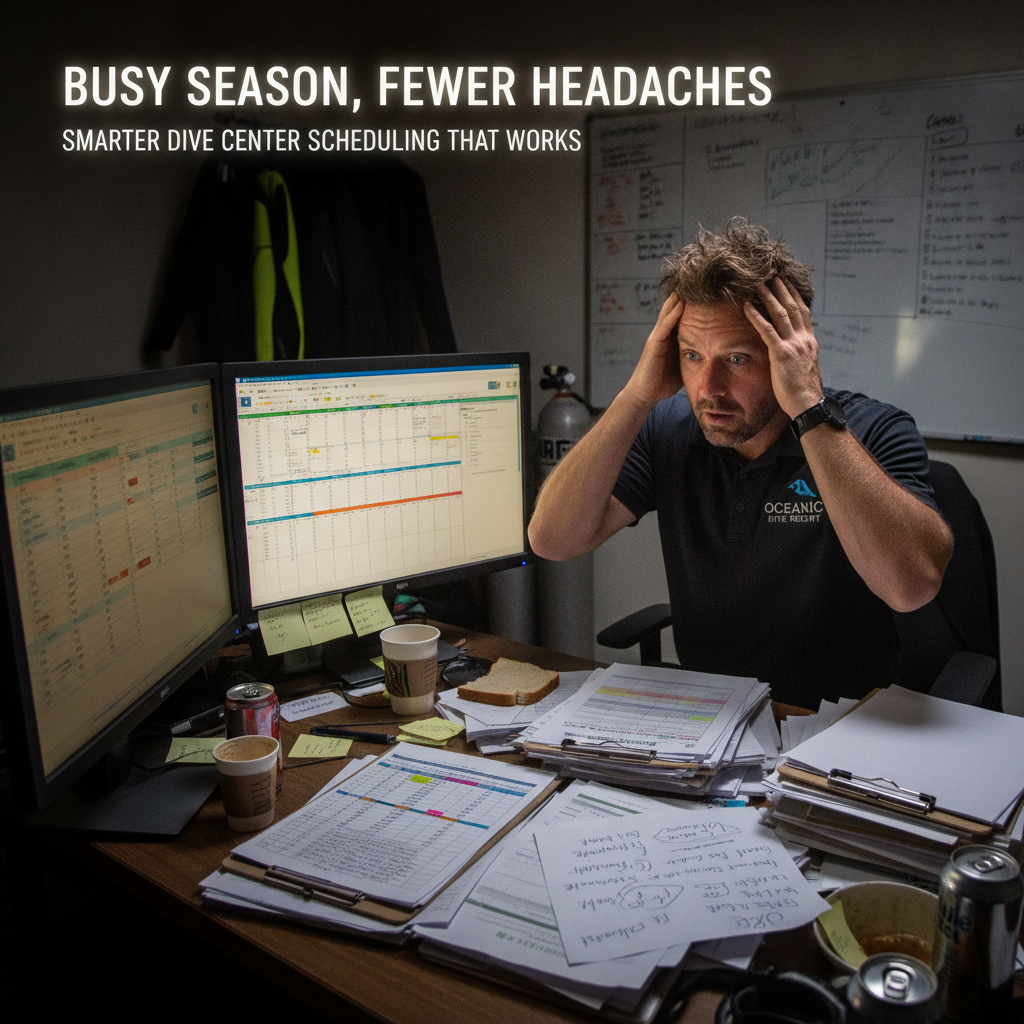
Picture this. It's 8 AM on a busy Saturday in July. Your phone rings with a last-minute booking request. Three WhatsApp messages wait for answers. Your lead instructor is frantically waving from the dock because someone is missing from the boat list.
Sound familiar?
Peak season at dive centers often feels like controlled chaos. Juggling spreadsheets, scribbled notes, and pure memory makes everything harder than it needs to be.
The good news? It doesn't have to be this way. Smarter scheduling tools can transform your busy season from a fast track to burnout into your most profitable time of year.
Why Does Dive Center Scheduling Fall Apart During Peak Season?
The main problem is a bottleneck of attention. Customer demand is high, but manual systems simply can't keep up. A booking spreadsheet doesn't talk to a boat manifest or an instructor calendar.
One small error creates cascading problems. A wrong hotel pickup time ruins the whole day. Relying on manual data entry while guests are standing right in front of you is a recipe for disaster.
Research from Operations Management Review shows businesses lose 20 to 30% of potential revenue due to operational inefficiencies like poor scheduling and delayed customer responses.
<b>Common mistake:</b> Relying on memory to update paper schedules after dealing with an urgent customer request.
What Are the Hidden Costs You Pay During Peak Season?
Missed bookings from delayed responses are easy to spot. Refunds from double bookings sting. But the indirect costs hurt just as much.
<b>Hidden cost:</b> Staff hours spent redoing schedules, hunting for lost medical forms, and fixing preventable errors act as a massive drain on payroll. Time spent on paperwork could be spent upselling specialty courses or improving the guest experience.
High staff turnover happens quickly when peak season becomes completely unsustainable. Modern divers expect instant digital confirmations instead of being told someone will call them back later.
> "Training is not a transaction, it is a relationship. You simply cannot build relationships when you are drowning in administrative tasks." – Marcus Thorne, Director of Operations at the Global Scuba Retailers Association, 2026 State of the Dive Industry Report
What Makes Modern Dive Center Scheduling Software Different?
The biggest shift is moving from digitizing paper to using truly integrated systems. Everything syncs automatically behind the scenes.
A booking updates the manifest, processes the payment, tracks rental equipment, and collects the waiver without human intervention. Visual interfaces replace confusing spreadsheet cells. You can drag and drop bookings easily.
Real-time updates are accessible from your phone, tablet, or front desk computer. According to the 2026 State of the Dive Industry Report, small dive operations save an average of 10 to 15 hours per week just by eliminating manual scheduling tasks. Cloud-based systems make this efficient operation entirely possible.
How Does Centralized Scheduling Actually Work Day-to-Day?
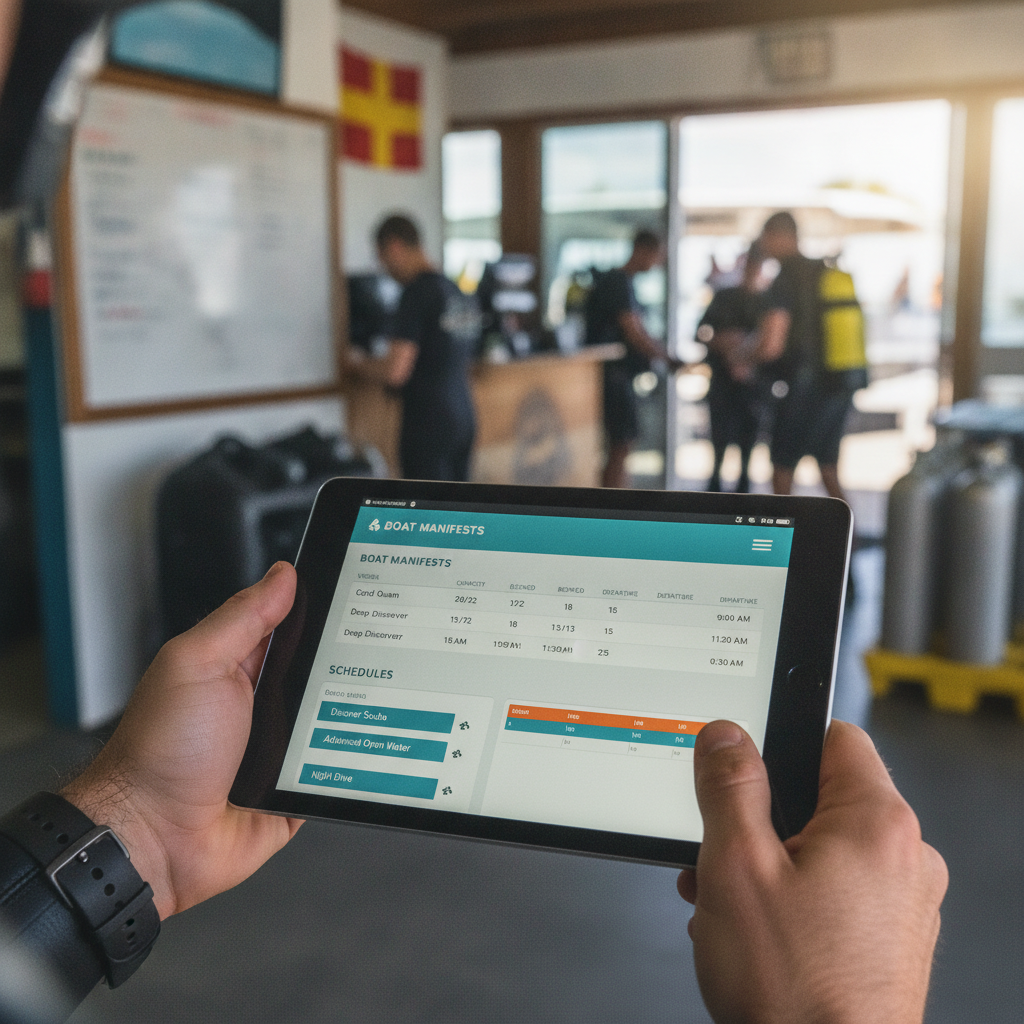
One glance at a single dashboard shows today's boat trips, course schedules, and staff assignments.
An instructor opens the app on their phone and instantly sees a student list with certification levels and medical notes. The front desk can answer availability questions in seconds without putting a caller on hold.
When a customer books online, the system automatically checks boat capacity and instructor availability. It sends a confirmation email, collects a digital waiver, and updates the boat manifest seamlessly.
If an instructor calls in sick, you can immediately see which backup instructors are free.
How Dive Admin Serves as Your Digital Front Desk
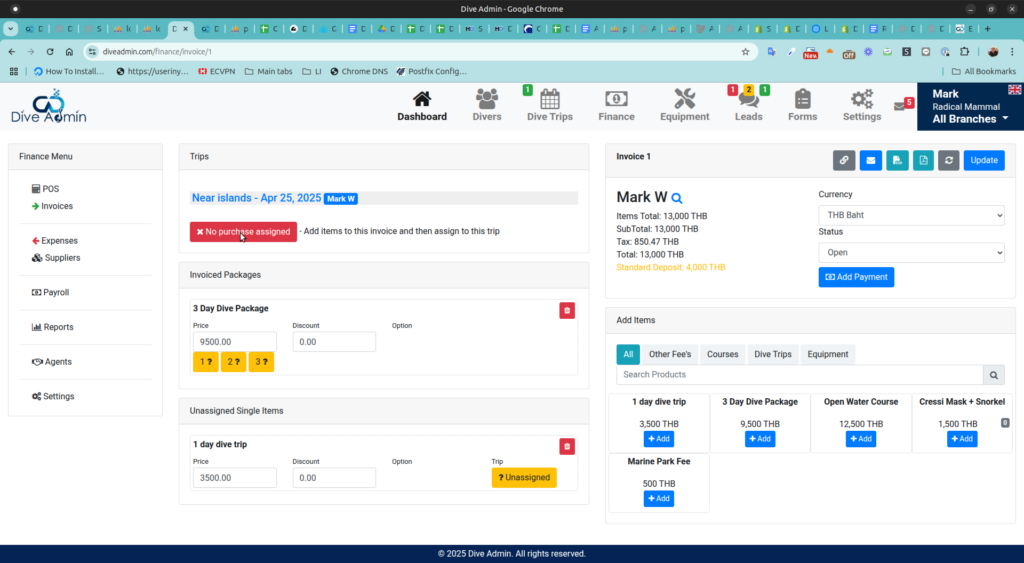
Dive Admin acts as the operational heartbeat of your shop. A visual calendar prevents overbooking by tracking boat capacity, instructor certifications, and equipment availability simultaneously. You can move bookings between boats or days in just a few seconds.
Automated digital waivers and registration forms are sent long before guests arrive. This creates a smooth experience where the admin work is finished before they even reach the dock.
Bookings, payments, equipment tracking, and customer communications live in one platform. The front desk and the boat deck stay on exactly the same page.
Digital records for certifications and medical forms eliminate the uncertainty of who checked specific rental gear. This provides a clear audit trail for liability protection.
Why Stop Plugging Leaks When You Can Start Growing?
Manual systems act like leaks in a ship. You're constantly bailing water instead of sailing forward.
Automation creates massive capacity so the same number of staff can serve more customers safely and happily. Data visibility enables smart business decisions. You can finally see which trips are most profitable or when you actually need to hire more help.
Staff retention improves dramatically when the workload becomes sustainable year-round. Customer experience becomes a serious competitive advantage. Your shop confirms a booking in thirty seconds while the customer is still on hold with the shop down the street.
What Does Implementation Actually Look Like?
Moving to a new system sounds scary, but it's actually straightforward. Most dive centers become fully operational within two to four weeks.
<b>Step 1:</b> Import your existing customer and booking data. You don't have to start from scratch.
<b>Step 2:</b> Train your staff. Mobile-first designs mean that if your team can use a smartphone, they can easily use this system.
<b>Step 3:</b> Set up during the off-season. This gives you absolute confidence when peak season hits.
Imagine next July. You're on the boat enjoying a gorgeous dive while your phone stays tucked away in your dry bag. Back at the shop, the bookings are handling themselves.
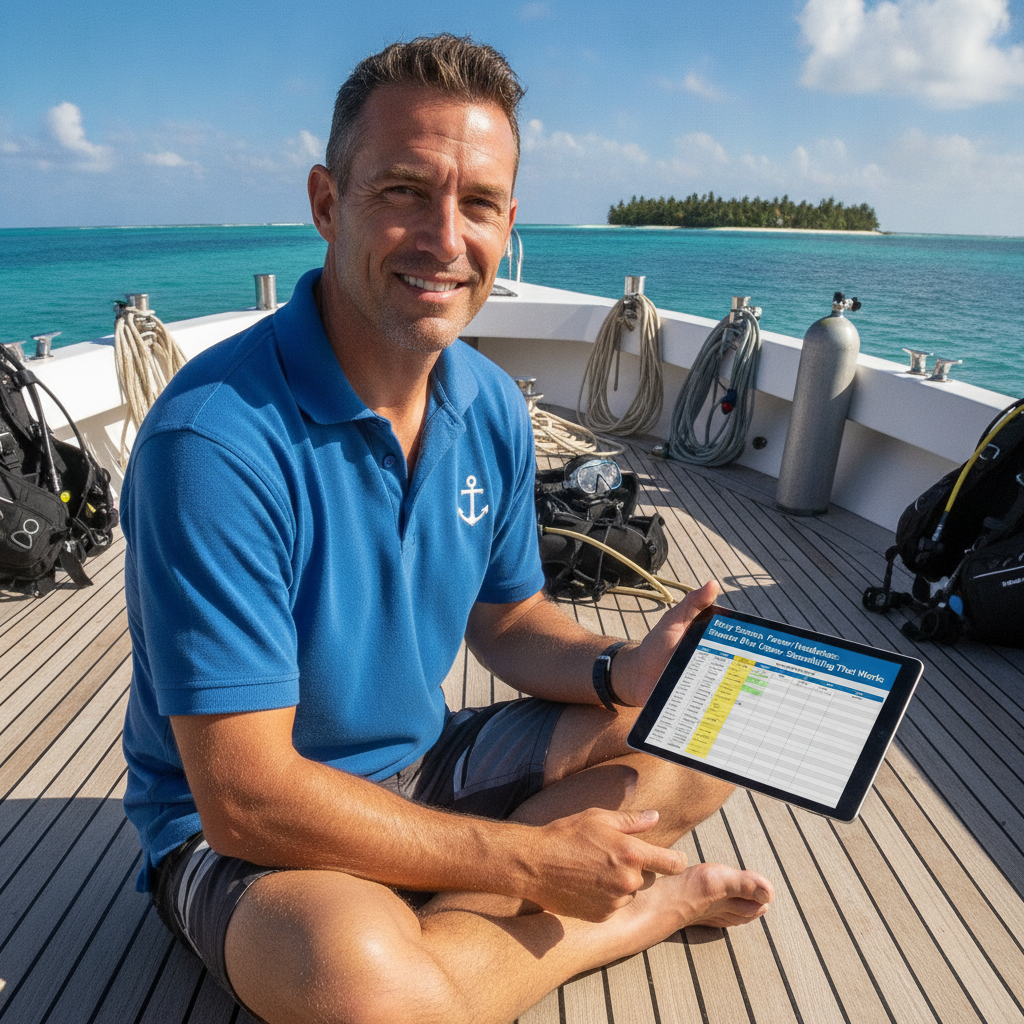
Can You Experience Peak Season Without the Burnout?
Most people start dive centers because they love the ocean, teaching, and building community. People leave the industry when burnout from administrative tasks takes over that joy.
Software doesn't replace human connection. It actively protects it.
Staff can finally focus on what they love doing most: teaching, guiding, ensuring safety, and telling great stories. Sustainable operations guarantee long-term business viability.
The best dive centers in 2026 aren't the ones with the fanciest gear or the biggest boats. They're the ones where staff actually have time to make magic happen for their guests. That starts with getting the paperwork out of the way.
FAQ
How much does dive center scheduling software typically cost?
Pricing varies by features and business size. Most cloud-based dive center scheduling platforms range from $50 to $300 per month. You can easily calculate ROI by considering recovered revenue from prevented double bookings. Even one $500 course per month pays for the entire system.
Will my staff actually use new software or stick to the old ways?
Modern dive scheduling software is designed for intuitive use. If your team uses smartphones, they can use these systems. Expect a brief adjustment period. Resistance quickly fades as staff realize they're spending less time on paperwork and more time diving.
Can scheduling software actually prevent double bookings?
Yes. This is the core function of the software. Integrated systems track boat capacity, instructor availability, and equipment inventory in real-time. They automatically block bookings when limits are reached, completely eliminating the conflicts common with shared spreadsheets.
What happens to our existing customer data and booking history?
Reputable dive center management platforms include data migration assistance. You can import customer information, certification records, and booking history from your previous systems. This preserves your operational memory while giving you much better tools to use that data.
Is dive center scheduling software worth it for smaller operations?
Absolutely. Small operations often feel the pain of manual systems more acutely because there's no dedicated admin department. Scheduling software can be the difference between sustainable growth and chronic overwhelm for a shop running just two or three boats.