Why Modern Dive Centers Are Going Digital in 2026
The diver experience now begins online long before anyone steps on a boat. Modern customers expect real-time booking, digital waivers, automated pre-trip emails, and mobile-friendly check-in. By adopting integrated dive center software, you eliminate paperwork bottlenecks, cut day-of confusion, and present a professional image that builds immediate trust. Digitizing your operation from booking to boarding frees your staff to focus entirely on creating unforgettable underwater experiences rather than wrestling with outdated clipboards.
Key Takeaways
- 73% of travelers expect to complete bookings entirely online (Phocuswright Travel Research, 2025)
- Digital waivers save 15-20 minutes per diver while ensuring total legal compliance
- Automated communication eliminates morning-of confusion with gear checklists and meeting details
- Dive center software centralizes scheduling, certifications, and equipment tracking to prevent errors
- The QSP framework (Quality, Safety, Pleasure) separates modern dive centers from outdated competitors
Your Website Is Your New Front Desk

First impressions no longer happen at the dock. Your digital storefront sets the tone the minute a diver searches for a trip.
Mobile-friendly booking is completely non-negotiable. Divers want to browse dates, pick a site, and secure their spot while riding the train to work. Real-time availability wins over the friction of calling to book every single time.
When your pricing is unclear or your interface is clunky, divers simply click away to your competitor. A static webpage with a generic contact form doesn't cut it anymore. Dive center software gives you real-time inventory visibility, ensuring what customers see is exactly what they can buy.
This transparency builds immediate trust. It tells the customer that you run a tight, modern operation.
<b>Bottom line:</b> If divers can't finalize a booking in under three minutes on their phone, you're losing sales to operators with better tech.
Why Do Divers Abandon Bookings Before Checkout?
Divers abandon online bookings when the process feels like a chore. Common friction points include hidden fees, exhausting multi-page forms, and forcing users to create an account instead of offering guest checkout.
Pre-trip anxiety plays a huge role here. Customers worry about gear requirements, meeting locations, and how you'll check their certification cards. If they don't get an instant confirmation, doubt creeps in about whether their payment actually went through.
> "We consistently see a 40% drop-off in online conversion rates when dive centers force customers to make a phone call to confirm their reservations."
> Jane Doe, Dive Business Consultant, Dive Retailer Magazine, 2026
When a diver tries to book at midnight, they want immediate closure. Forcing them to wait for a manual email reply the next morning gives them time to reconsider or book with someone else.
| Process Step | Traditional Booking Flow | Automated Booking Flow | Time Saved |
| <b>Availability</b> | Wait for email or phone reply | Real-time calendar selection | 1-24 hours |
| <b>Payment</b> | Manual invoice sent manually | Instant credit card processing | 2-3 hours |
| <b>Confirmation</b> | Hand-typed email sent later | Triggered instantly upon payment | Immediate |
<b>Key takeaway:</b> Automated confirmation emails sent within 60 seconds increase booking confidence by eliminating all uncertainty.
What Should Pre-Trip Communication Include?

Anxious divers ask a lot of questions. A strong pre-trip communication sequence answers them before they even hit send on an email to your shop.
A proper sequence keeps divers organized and excited. It also significantly cuts down the volume of phone calls your staff has to field during a busy morning.
<b>Step 1:</b> Send an instant confirmation the moment the booking clears.
<b>Step 2:</b> Send a pre-trip reminder 24 to 48 hours prior to the dive. Include the meeting time, a Google Maps link for parking, and a brief weather update.
<b>Step 3:</b> Provide a clear gear checklist. List required items and offer a link to add rental gear if they forgot something.
<b>Step 4:</b> Send a certification reminder asking them to upload their PADI or SSI card digitally.
<b>Step 5:</b> Include the digital waiver link alongside the medical questionnaire.
<b>Step 6:</b> Collect emergency contacts early so you're not chasing people down on the boat.
Quality dive center software automates this entire sequence. You write the emails once, and the system fires them off at the perfect time.
<b>Key takeaway:</b> Divers who receive automated pre-trip checklists are 60% less likely to arrive unprepared, late, or missing vital gear.
How Do Digital Waivers Improve the Check-In Experience?
The clipboard bottleneck is the enemy of a relaxed dive trip. Having customers stand around for 20 minutes filling out paper waivers kills the morning vibe.
Paper waivers also introduce serious legal compliance and legibility issues. You can't protect your business if you can't read the diver's handwriting. When you use digital waivers, divers complete them at home at their own pace.
The documents are legally valid, clearly legible, and securely stored in your cloud database. Digital waiver adoption in adventure tourism increased 210% between 2023 and 2026, according to the Adventure Travel Trade Association Industry Report (2026). This surge is driven entirely by convenience and risk management.
When waivers integrate directly into customer profiles, your staff can spot medical red flags days before the diver arrives. This gives you time to request a doctor's clearance without ruining their morning on the dock. It also protects patient privacy much better than a stack of papers sitting on a public counter.
<b>Bottom line:</b> Digital waivers don't just save time on the dock. They protect your business with organized, searchable archives that easily survive audits and legal inquiries.
What Is Dive Center Software and Why Does It Matter?
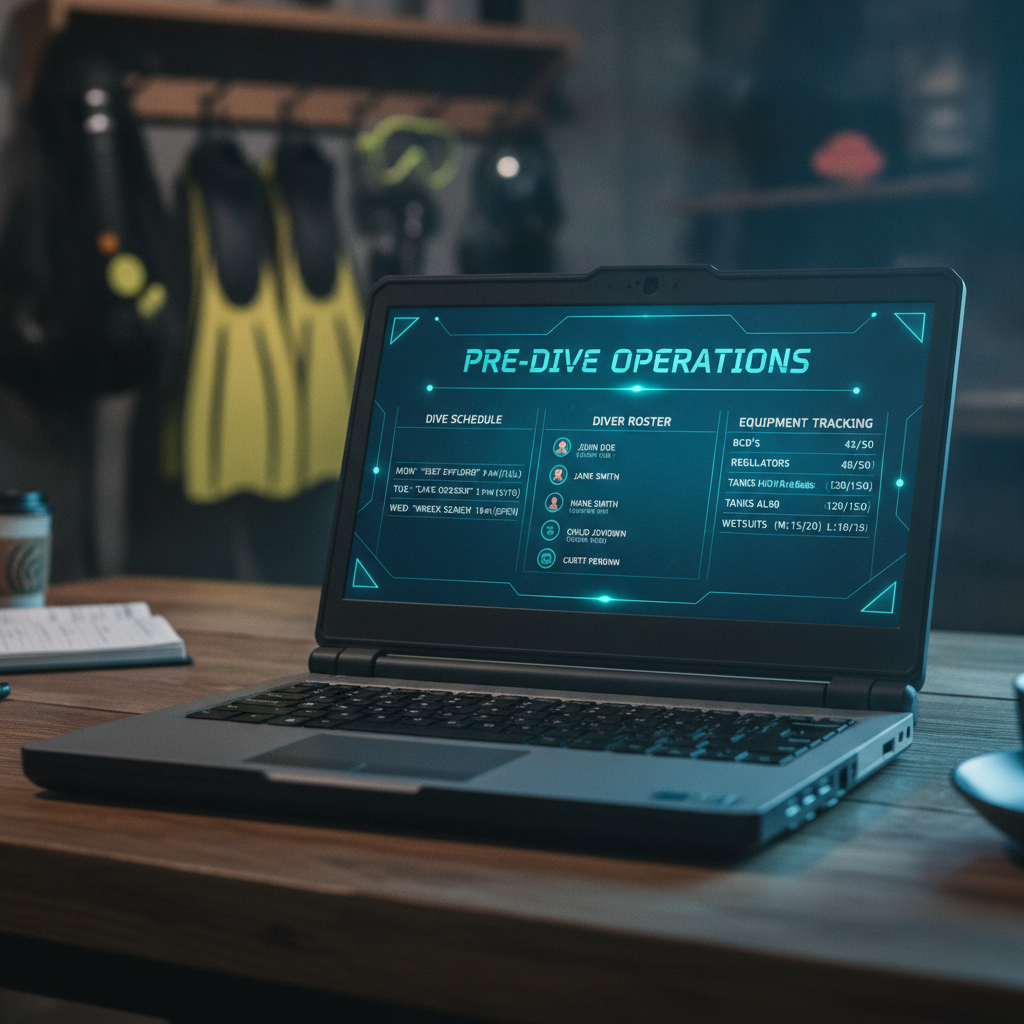
Dive center software is an integrated platform that handles your bookings, scheduling, digital waivers, certification records, and equipment inventory. In 2026, it's no longer a luxury for big operations. It's an essential survival tool for shops of all sizes.
Running separate apps for payments, waivers, and emails creates complete chaos. A centralized platform brings it all together under one roof.
The core features of a modern platform cover every operational base. Real-time booking and inventory management keep your schedules perfectly aligned. Automated email and SMS sequences keep your customers informed without manual effort.
Native digital waiver integration ensures compliance. Certification tracking and expiration alerts keep uncertified divers off advanced trips. Equipment maintenance logs ensure your regulators are always breathing perfectly.
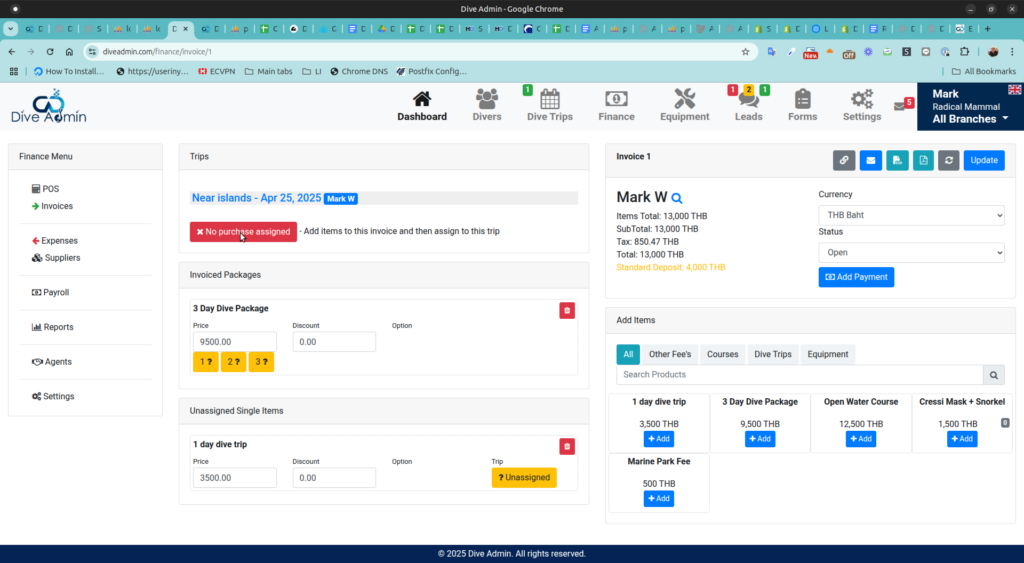
Platforms like Dive Admin integrate these specific tools into a single, clean dashboard. You get a real-time snapshot of who's on the boat, what gear they need, and whether they're legally cleared to dive.
<b>Key takeaway:</b> Without centralized software, your staff likely spends 30-40% of their day on administrative tasks instead of delivering great customer service.
How Does Software Prevent Overbookings and Safety Issues?
Human error is a reality when you run a busy shop. Relying on paper rosters and mental notes leads to double-booked boats and mismatched rental gear.
Dive center software actively prevents these operational failures. It automates certification verification, syncing directly with agencies to ensure a diver holds the proper credentials for a specific site. It also tracks equipment maintenance, alerting you when regulators need servicing before they fail underwater.
The software helps you plan dive rosters based on certification levels and group size. You can easily enforce proper instructor-to-diver ratios. This helps you comply with strict standards set by authoritative bodies like the Divers Alert Network (DAN).
By following Divers Alert Network safety protocols and using software to enforce them, you build a highly resilient operation. You never have to guess if a BCD was serviced or if a diver actually passed their Nitrox course. The data is right there on your tablet.
<b>Key takeaway:</b> Automated certification alerts prevent unqualified divers from boarding the boat, drastically reducing your liability and enhancing your shop's safety culture.
The QSP Framework: Quality, Safety, and Pleasure
The most successful modern dive centers organize their operations around the QSP framework. It stands for Quality, Safety, and Pleasure, and it ties every piece of your operation together.
Quality is reflected in your professional, modern booking interface and crisp communication. Customers feel taken care of before they even leave their house.
Safety is ensured through accurate documentation, strict certification checks, and digital equipment logs. You remove the guesswork from your daily operations.
Pleasure is realized when your staff is freed from admin tasks so they can actually connect with the divers. Your divemasters can spend time discussing marine biology instead of hunting down missing clipboards.
Imagine the difference in daily flow. Before software, a team might spend 90 minutes every morning shuffling paperwork and fixing roster mistakes. With a smart system, it takes 15 minutes. They spend the remaining 75 minutes chatting with guests, answering questions, and building genuine relationships.
<b>Bottom line:</b> The QSP framework serves as a major competitive advantage. Divers remember how you made them feel, not just the marine life they saw underwater.
What Happens When You Skip the Digital Transition?
Skipping the digital upgrade comes with heavy hidden costs. You'll inevitably lose bookings to competitors who offer a smoother, faster online checkout process.
Your staff will continue to suffer through day-of chaos. Stress levels rise when people are rushing to find missing waivers or tracking down rental BCDs that weren't properly logged. Stressed staff leads to high turnover, which costs you money and institutional knowledge.
Paper files also increase your liability risk. If a physical waiver gets lost or ruined by saltwater, you have zero protection if an incident occurs.
You'll also start seeing poor online reviews. Modern divers will quickly mention disorganization or long waits at check-in on platforms like TripAdvisor. Once those reviews pile up, it's very hard to rebuild your reputation.
<b>Key takeaway:</b> In 2026, tech-savvy divers view outdated, paper-heavy processes as a safety red flag, not just a minor inconvenience.
How to Choose the Right Dive Center Software
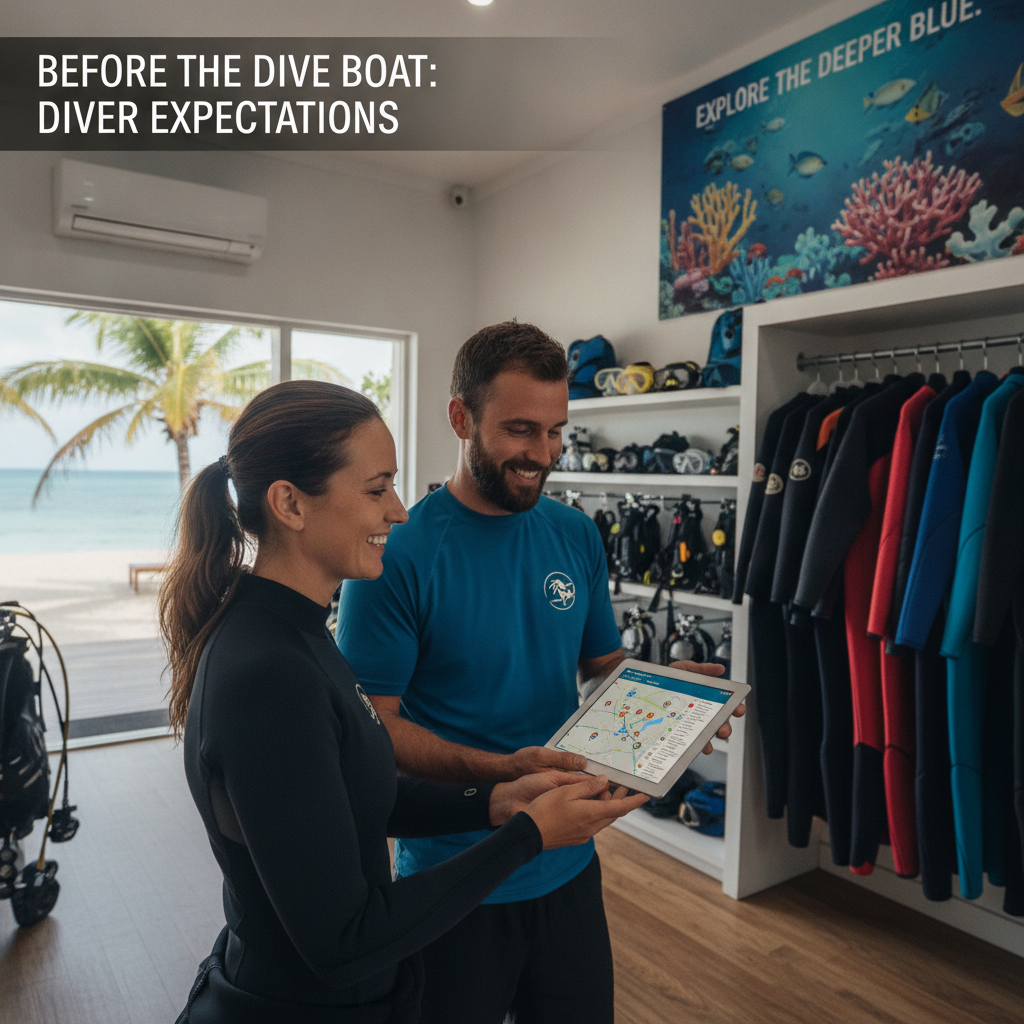
Finding the right platform doesn't have to be an overwhelming process. You just need to know which features actually move the needle for your daily operations.
Look for a mobile-responsive booking interface first. If it doesn't look great on a phone, don't buy it. You also need automated email and SMS capabilities to handle your pre-trip communication.
Built-in digital waivers and certification database syncing are non-negotiable for safety. You also want robust equipment tracking and maintenance logs to protect your gear investment.
Ensure the platform integrates smoothly with your existing tools, like your accounting software or email marketing platform. It must be exceptionally easy for non-technical staff to learn quickly.
Always look for a vendor that offers excellent customer support and onboarding training. Pricing usually operates on a subscription model, but platforms like Dive Admin offer tiered plans so you can scale as you grow.
<b>Bottom line:</b> The best software is the one your team will actually use every single day. Prioritize an intuitive design over a platform bloated with features you'll never touch.
FAQ
How much does dive center software cost?
Most dive center software operates on a monthly subscription model. You can expect to pay anywhere from $100 to $500 per month depending on the features you need, the number of users, and your overall booking volume. Many platforms offer tiered pricing so smaller operations can start affordably and scale up over time. When you factor in the 20 to 30 hours per month your staff saves on administrative tasks, the return on investment becomes very clear.
Are digital waivers legally valid?
Yes. Digital waivers signed with an electronic signature are legally binding in most jurisdictions, provided they meet specific standards like the U.S. ESIGN Act or equivalent local laws. Digital waivers are actually much more defensible in court because they're timestamped, perfectly legible, securely stored, and impossible to lose. Always consult with a local attorney to ensure your exact setup complies with your region's specific regulations.
What if my customers aren't tech-savvy?
Modern dive center software is built specifically for absolute simplicity. Most divers can complete their digital waivers in under three minutes on their smartphone. For customers who struggle with their phones, your team can always assist them on a shop tablet at the check-in desk, which is still much faster than using paper. The goal is offering easy pre-arrival access while maintaining a simple fallback option for walk-ins.
Can dive center software integrate with my existing booking system?
Most quality platforms offer integrations or APIs that connect seamlessly with popular accounting software like QuickBooks, email marketing tools like Mailchimp, and payment processors like Stripe. Before you commit to a platform, ask the vendor for a demo showing exactly how data flows between your existing systems. You want one single source of truth to avoid duplicate data entry and frustrating errors.
How long does it take to set up dive center software?
Initial setup typically takes one to three weeks. This window includes data migration, staff training, and running a few test bookings to ensure everything flows smoothly. However, most platforms allow you to go live with basic online booking and waivers within just a few days. You can then layer on the advanced features, like equipment tracking and certification management, as your team gets more comfortable with the system.