Dive Center Software: How to Stop Losing Hours on Manual Admin Every Day
Running a dive center shouldn't mean drowning in paperwork. Yet most operators lose two to four hours daily juggling WhatsApp messages, hunting down medical waivers, and updating booking sheets by hand. This administrative chaos drains profits from already tight margins. Modern dive center software eliminates these gaps by centralizing guest records and automating schedules, letting your team focus on what matters: delivering incredible underwater experiences.
Key Takeaways
- Hidden administrative tasks consume hours daily and directly hurt dive center profitability.
- Scattered information across apps and clipboards creates friction before every single departure.
- A twelve-seat boat at 75% capacity loses revenue equivalent to three full dives per trip.
- Centralized systems automate scheduling and give you real-time visibility for instant booking updates.
- Smart automation protects the human connection guests value instead of replacing it.
The Two-Hour Countdown Chaos

The boat leaves in two hours. Your staff is scrambling to match WhatsApp messages with handwritten booking sheets. Someone's hunting down a missing medical form. Again.
You're an expert at managing complex life-support logistics underwater. Above water? The admin process feels completely out of control.
These pre-departure gaps aren't inevitable. They're hurting your business.
Why Do Dive Centers Struggle with Pre-Departure Admin?
Analog operations fail in a digital world. Information silos build up fast when customers reach you through email, phone, social media, and walk-ins.
Peak season pressure amplifies every inefficiency. Staff turnover makes it worse since critical knowledge walks out the door with departing employees. According to BambooHR's 2025 data, the travel and hospitality sector has the highest employee turnover of any industry at 2.8% monthly.
When your standard operating procedures live only in your manager's head, chaos becomes the default. Tight margins mean you can't afford this. Most dive centers operate on net margins between 8 and 15 percent.
What Are the Hidden Costs of Manual Operations?
<b>The "Invisible Admin" Drain:</b> Your team wastes hours reconnecting fragmented information. Certification statuses, medical forms, and payment records sit scattered across multiple platforms.
AI Productivity Hub's 2025 research shows small businesses reclaim 10 hours weekly through smart automation. That translates directly into wage savings and fewer delayed departures.
<b>Lost Revenue from Empty Seats:</b> A twelve-seat boat at 75% occupancy just lost three full dives worth of revenue per trip. Manual systems lack the real-time inventory visibility needed to capture last-minute bookings.
<b>The "Memory-Based" Risk:</b> Inconsistent briefings and incomplete equipment logs create safety implications. Liability exposure increases when you rely on memory rather than documented systems.
How Does Fragmented Information Slow Down Operations?

The "clipboard to spreadsheet to app" loop creates communication breakdowns between your front desk, divemasters, and boat crew.
A typical morning breaks down at these friction points:
- Checking certification cards manually at the desk
- Collecting and filing physical liability waivers
- Confirming payment status across different banking apps
- Assigning rental equipment using a whiteboard
- Briefing the crew with outdated passenger manifests
Critical guest information gets buried in text threads. Staff spend valuable prep time figuring out who needs what gear.
What Is Phygital and Why Does It Matter?
"Phygital" blends physical, hands-on experiences with digital convenience. The dive industry is navigating its second wave of digital transformation right now.
Automation isn't about removing the human touch. It protects the personal interactions that make diving special.
Younger generations expect this blended experience. They want to handle boring paperwork on their phones, but they still want quality in-person dive briefings.
> "The pandemic has established technology's role in the guest and associate journey, and the industry is never going back. Guests are looking for the highly digital, self-service experience they have come to expect in other parts of their lives."
> Alex Alt, Senior Vice President and General Manager, Oracle Hospitality
How Can Dive Center Software Eliminate Time Drains?
<b>Unified Guest Journeys:</b> Modern software transforms a grueling thirty-minute check-in into a three-minute welcome. Guests complete digital waivers, medical forms, and certification checks from their hotel the night before.
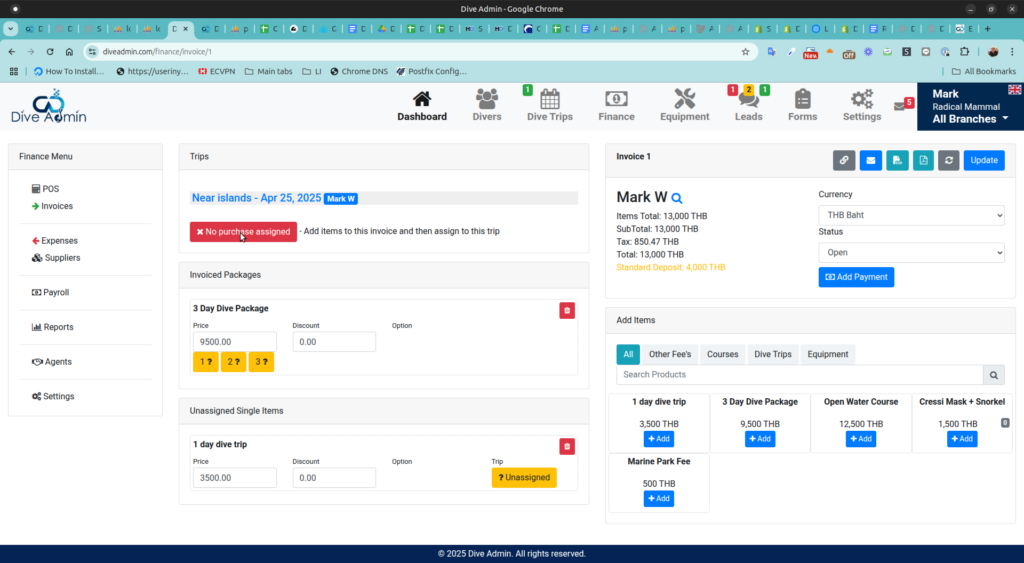
<b>Automated Scheduling:</b> A centralized calendar eliminates back-and-forth messaging. You can track equipment maintenance, assign staff, and manage courses from one dashboard.
<b>Real-Time Data Visibility:</b> A unified system provides one source of truth for availability and payment status. This prevents overbooking disasters and confusion over unpaid balances. Last-minute seat-filling becomes realistic.
What Changes When You Shift to Data-Driven Systems?
Documented systems create consistent guest experiences across your entire staff. Standardized checklists improve safety and operational reliability instantly.
Onboarding new employees becomes systematic rather than stressful trial by fire. Knowledge stays in the company even when your best divemaster moves to another location. McKinsey & Company research confirms that businesses implementing automation successfully experience up to 30% reduction in operational costs.
Manager delegation becomes possible. Owners experience less burnout. Scaling from one boat to two feels manageable.
How Do You Start Modernizing Without Overwhelming Your Team?
Identify your single biggest operational pain point. Fix it first. Start small to build momentum and staff buy-in.
Here's a proven implementation path:
- Implement digital waivers to speed up morning check-ins
- Consolidate your booking system into one central calendar
- Integrate payment processing to secure funds instantly
- Digitize your inventory and equipment management
Apply this phased rollout during shoulder season. Set clear milestones for 30, 60, and 90 days. Measure success by tracking time saved, occupancy rates, and guest satisfaction.
What Results Can You Expect?

Replacing manual chaos with streamlined systems delivers immediate relief. You reclaim hours of administrative time every week.
Revenue increases naturally as real-time inventory helps you achieve higher boat occupancy. Staff satisfaction improves because instructors get to teach diving instead of chasing paperwork.
Track these metrics to measure success:
- Average check-in time per guest
- Boat departure on-time percentage
- Daily seat occupancy rates
- Payment collection speed
- Staff overtime hours spent on admin
A busy three-boat operation can reduce pre-departure admin from four hours to forty-five minutes daily.
Turning Admin Time into Dive Time
Picture that chaotic morning scene reimagined. Guests arrive to a warm, relaxed welcome. Your staff feels prepared. The boat departs on schedule.
Automation handles repetitive tasks quietly in the background. Your dive professionals are free to do what they love: teaching, guiding, and building relationships with customers.
Smooth operations provide a massive competitive advantage. Take a close look at your daily workflow and identify exactly where your time drains happen.
FAQ
How much time do dive centers waste on manual admin tasks daily?
Dive centers typically waste between two and four hours daily on redundant administrative work. This time is lost checking fragmented messages, verifying certifications manually, and hunting down missing paperwork. Over an entire season, this translates to hundreds of lost wage hours.
What is the average profit margin for dive centers?
Most dive centers operate on tight net profit margins between 8 and 15 percent. Because margins are so slim, administrative inefficiencies directly threaten business viability. Eliminating hidden time drains is often the fastest way to increase profitability.
Can modern software integrate with existing booking systems?
Yes, modern platforms use open APIs to connect smoothly with common booking tools and accounting software. The migration process preserves your historical data and upcoming reservations. Most providers offer guided onboarding to ensure no bookings fall through the cracks.
How long does it take to implement a new system?
A typical software rollout takes two to six weeks, depending on your operation's size. A phased approach works best, starting with waivers before moving to full inventory management. Support teams usually guide your staff through training.
Will guests accept digital waivers instead of paper forms?
Guests overwhelmingly prefer completing digital waivers on their own devices before arrival. Electronic signatures carry full legal validity and improve record accessibility. You can always keep a tablet or a few paper forms on hand for guests who prefer traditional methods.