Why Dive Center Admin Software Transforms Student Safety and Course Quality
Administrative chaos in dive centers directly impacts scuba training quality and student safety. When booking workflows are clunky and equipment logs are inconsistent, students face frustration and potential risks. Modern dive center admin software addresses these pain points by centralizing operations. Centers can reduce admin time by up to 60 percent, creating seamless student journeys from first inquiry to certification.
<b>Key Takeaways:</b>
- Manual dive center admin creates scheduling gaps and frustrated students.
- Inconsistent record-keeping poses safety risks through poor maintenance tracking.
- Dive center software reduces administrative workload, freeing instructors to teach.
- Centers using integrated platforms report higher student satisfaction and improved profits.
Picture this. A student shows up for their Open Water checkout dive, excited and nervous. Their instructor is scrambling because the assigned rental gear is in for servicing. Nobody updated the spreadsheet. The backup tank inspection date is buried in a three-ring binder in the back office. Another student is calling because they never received their pool session confirmation. The owner is knee-deep in paperwork trying to find a medical waiver.
Sound familiar? For dive centers juggling spreadsheets, paper files, and scattered communication, this chaos is routine. Most operators don't realize that administrative mess actively damages course quality, student trust, and the bottom line. When dive center operations get messy, courses feel it first.
The fix isn't hiring more staff. It's getting smarter about how things work behind the scenes. We'll explore why this matters and how modern dive centers solve it.
Why Does Dive Center Admin Actually Matter for Course Quality?
People often separate administrative tasks from teaching. Big mistake. The two are deeply connected. When a dive shop fails at operations, students feel it directly.
<b>Specific examples of admin failures:</b>
- Double-booked instructors leading to cancelled sessions.
- Lost or incomplete training records delaying certification.
- Equipment not ready because maintenance schedules were ignored.
- Students missing pre-course materials or waivers.
In 2026, customers expect seamless convenience. They don't want phone tag or paper forms. Disorganization erodes trust before students even get in the water. Administrative tasks consume a significant portion of dive instructor time, drastically reducing availability for actual teaching and student mentorship.

What Administrative Tasks Hit Scuba Courses Hardest?
When back-office systems fail, certain pain points become obvious immediately. Instructors feel the burden first, and the friction quickly trickles down to the students.
<b>Scheduling and Instructor Coordination</b>
Manual calendar management leads to conflicts and gaps. Owners struggle to match instructor availability with student needs. Last-minute changes cascade into chaos across the whole shop. There's zero visibility into instructor utilization or workload balance.
<b>Student Record Management</b>
Medical forms, liability waivers, and certification prerequisites end up scattered. Incomplete training logs delay certification processing. Tracking student progress across multiple sessions becomes difficult. This creates compliance nightmares during agency audits.
<b>Equipment Tracking and Maintenance</b>
Service histories on rental gear get lost. Equipment availability for upcoming courses remains unclear. Crucial safety checks get skipped when equipment past due for maintenance slips through the cracks. Inventory mysteries become a daily occurrence for shop managers.
<b>Communication and Follow-Up</b>
Students fall through the cracks between inquiry and booking. Missed pre-course preparation instructions slow down the actual class. Delayed responses create a perception of unprofessionalism. No automated reminders exist for upcoming sessions or payments.
What Safety Risks Come From Sloppy Record-Keeping?
Administrative discipline is a critical safety system. It's not just bureaucracy. Consistent tracking of critical records prevents accidents and protects liability.
<b>Crucial records that require consistent tracking:</b>
- Student medical disclosures and physician clearances.
- Equipment maintenance intervals and service history.
- Instructor certifications and insurance status.
- Incident reports and near-miss documentation.
Human error is the biggest factor here. Manual systems fail when people get busy or distracted. According to the British Sub-Aqua Club's Annual Diving Incident Report, equipment failures often stem from poor tracking rather than lack of care. A missing service record means nobody actually knows if a regulator is safe to breathe from.
> "One of the things that's come out of the science of human factors, and it is a recognized science, is understanding that our behaviors are massively influenced by the system in which we are operating. So, if you design a piece of dive equipment from strictly an engineering perspective, you know how it is supposed to operate. But if an ordinary user gets a hold of it, and consistently makes the same mistakes using the unit, well, that's a human factors issue."
> Gareth Lock, Owner at The Human Diver, Alert Diver Magazine
How Much Time Does Manual Admin Actually Waste?
The sheer volume of manual work required to run a dive center is staggering. Small inefficiencies add up to massive time drains.
<b>Time audit breakdown:</b>
- Scheduling and rescheduling instructors.
- Answering repetitive booking inquiries.
- Tracking down physical paperwork.
- Performing manual equipment inventory checks.
- Entering data manually for certifications.
The hidden cost includes student inquiries that never convert because the response was too slow. Integrated dive center management platforms can reduce administrative time by up to 60 percent, according to industry operational studies.
Recovering that time means centers can run additional courses. It improves instructor work-life balance and reduces burnout. Owners can spend time on business growth instead of filing paperwork.

What Is Dive Center Management Software and How Does It Help?
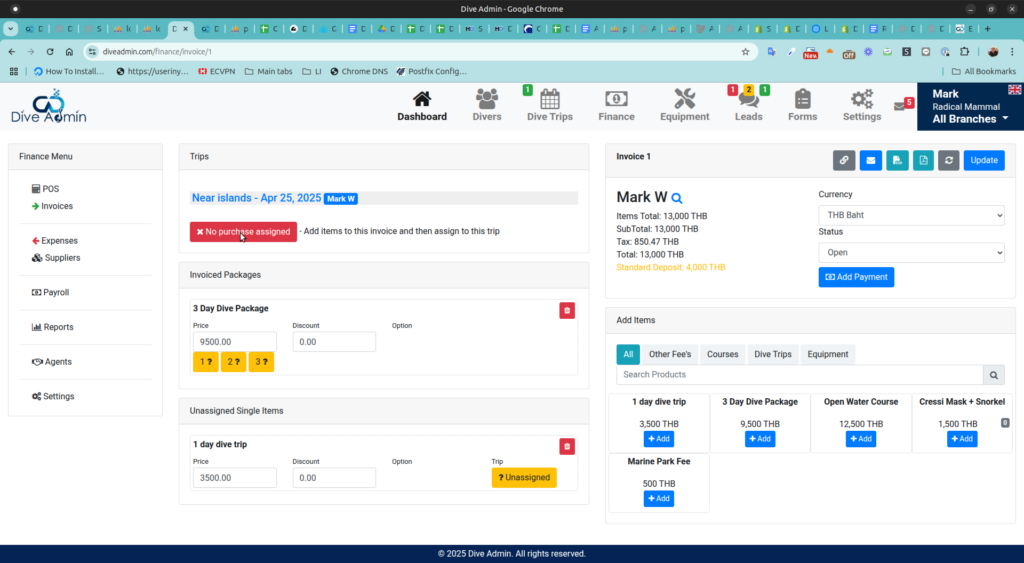
Specialized software centralizes all operations in one platform. It handles bookings, student records, equipment, and staff scheduling. It automates repetitive tasks like confirmations, reminders, and waiver collection.
<b>Key features that impact course quality:</b>
- <b>Scheduling tools:</b> Drag-and-drop calendars, instructor matching, and automatic conflict detection.
- <b>Student management:</b> Digital waivers, progress tracking, and certification processing.
- <b>Equipment tracking:</b> Service intervals, availability, and automated maintenance alerts.
- <b>Communication automation:</b> Booking confirmations, pre-course instructions, and follow-ups.
- <b>Reporting and analytics:</b> Utilization rates, revenue tracking, and course completion metrics.
A digital approach creates a smooth student journey from inquiry to certification. Students can book online without playing phone tag. They receive automatic reminders and preparation materials. They get digital access to training records and certifications.
Dive centers using modern management tools consistently report high customer satisfaction rates.
Are Dive Centers That Don't Modernize Actually Falling Behind?
The scuba industry is officially in the Execution Era. Operational excellence now drives competition. Customers in 2026 are digital natives who expect seamless experiences.
Dive centers stuck in manual mode struggle with thin margins. The DEMA (Diving Equipment and Marketing Association) demographic reports highlight that reaching potential customers requires actionable data. You can't get that data from a messy whiteboard.
<b>The compound advantage of efficient operations:</b>
- Offer more courses with the same staff.
- Provide a better student experience.
- Reduce instructor burnout.
- Make data-driven business decisions.
Professional operations attract serious divers and premium students. The risk of doing nothing is losing students to more organized competitors.
What Should Dive Centers Look for When Choosing Software?
Choosing the right platform requires careful evaluation. Not all tools fit every dive shop.
| Feature Category | Generic Booking Software | Dive Center Management Software |
| <b>Scheduling</b> | Basic calendar dates and times | Tracks boat capacity and instructor depth limits |
| <b>Medical Forms</b> | Standard text boxes only | Integrates agency medical questionnaires |
| <b>Equipment</b> | No inventory tracking | Tracks service intervals and daily sizing |
| <b>Certifications</b> | Manual entry required | API integration with training agencies |
<b>Must-Have Features:</b>
- Complete student journey management from inquiry to certification.
- Instructor and equipment scheduling capabilities.
- Digital waiver and document collection.
- Equipment maintenance tracking.
- Automated communications and reminders.
- Mobile accessibility for instructors on the go.
<b>Common mistake:</b> Choosing platforms that require extensive IT resources or fail to integrate with certification agencies. You don't want a solution that forces you to use multiple disconnected tools.
What Does the Transition to New Software Actually Look Like?
Many owners fear the transition process. A realistic timeline is typically two to four weeks from decision to full operation.
<b>Step 1:</b> Data migration and initial setup. Move your existing files over to the new cloud system.
<b>Step 2:</b> Comprehensive staff training. Teach instructors how to view schedules and log gear.
<b>Step 3:</b> A short parallel operation period. Run the old and new systems together for a week to catch errors.
<b>Step 4:</b> Full transition to the new system. Turn off the spreadsheets entirely.
Getting staff buy-in is the hardest part. Instructors are often skeptical of new technology. However, owners report that the initial learning curve is shorter than expected. Staff resistance disappears once they see the massive time savings. Student feedback improves immediately. The fastest transitions work better than prolonged hybrid approaches.
FAQ
How much does dive center management software typically cost?
Most dive center management platforms range from $100 to $500 per month depending on size and features. Pricing usually scales with the number of instructors, students processed monthly, and additional modules like retail POS and online booking. Given the massive reduction in admin time, most centers see a return on investment within two to three months through efficiency gains and reduced staffing needs.
Can small dive centers with just one or two instructors benefit from management software?
Absolutely. Small operations often benefit most because owners wear multiple hats. They're the instructor, admin, and marketer all at once. Software that automates scheduling, waivers, and student communications can free up 10 to 15 hours weekly for solo operators. The professional image created by seamless digital experiences helps small shops compete with larger operations.
What happens to existing student records when switching to new software?
Reputable dive center management platforms include data migration services as part of onboarding. Most can import student records, certification history, and equipment inventory from spreadsheets or previous systems. Critical records like medical waivers and training logs are typically digitized during a transition period. The best practice is to maintain paper backups during the first 90 days to confirm everything transferred correctly.
How does dive center software improve equipment safety tracking?
Modern platforms create automated maintenance schedules for all rental equipment. They track service intervals, inspection dates, and repair history. The system flags equipment approaching service deadlines and can automatically mark items as unavailable until maintenance is completed. This eliminates the risk of equipment slipping through the cracks between manual inspections.
Will students actually use online booking or do they prefer calling?
Students overwhelmingly prefer online booking when available. Most dive students research and book courses outside traditional business hours like evenings and weekends. Online systems capture these inquiries immediately with instant confirmation rather than losing them to competitors. Centers typically see 40 to 60 percent of bookings shift to online channels within months of implementation.