Dive Instructor Admin Systems: Less Paperwork, More Teaching
You became a dive instructor to share the underwater world, not to chase soggy paperwork. Modern dive admin systems eliminate the chaos of manual waivers, scheduling spreadsheets, and missing liability forms. They automate compliance documentation, centralize equipment tracking, and secure boat manifests so you can focus on what actually matters: teaching safe, memorable dive experiences. When administrative tasks shrink from hours to minutes, instructors rediscover why they fell in love with this profession in the first place.
<b>Key Takeaways:</b>
- Manual paperwork creates serious compliance risks and pulls instructors away from actual teaching
- Digital admin systems automate waivers, scheduling, and equipment tracking while maintaining bulletproof documentation
- Industry-specific platforms understand dive operations in ways generic software never will
- Streamlined administration directly reduces instructor burnout and improves student experiences
- Time saved on logistics translates to better safety briefings and more personalized instruction
The Dream Job That Drowns You in Paperwork
You signed up to share the ocean. Nobody warned you about the clipboards.
Picture a typical Saturday morning at a busy dive shop. Instructors arrive hours early to sort physical waivers, check boat manifests, and track down missing liability releases. The boat leaves in twenty minutes, but someone forgot to check the "no" box on their medical questionnaire. Panic sets in.

Administrative chaos steals mental bandwidth before you even put on your wetsuit. Your primary job is dive briefings and student safety. Great teaching requires focus. Hunting for signatures destroys that focus.
Why Does Dive Paperwork Get So Messy?
Dive professionals face unique logistical nightmares that make traditional paperwork absolutely brutal.
<b>Paperwork overload:</b> Physical medical forms, liability releases, and agency-specific disclosures create massive compliance risks. Missing a single checkmark on a medical questionnaire can void insurance coverage entirely. Paper trails are vulnerable to water damage, loss, and incomplete documentation.
<b>Scheduling chaos:</b> Spreadsheets and WhatsApp groups lead to double-bookings and miscommunication. Instructors waste hours reconciling conflicting schedules. Email chains become impossible to track for multi-day courses.
<b>Distraction from teaching:</b> Time spent on administration equals less time for student mentorship. Equipment tracking and manifest updates eat directly into pre-dive briefing preparation. Burned-out instructors provide lower-quality educational experiences.
How Do Admin Systems Actually Improve Dive Instruction?
Streamlined administration translates directly to better teaching outcomes on the boat and in the water.
<b>Standardization and safety:</b> Digital waivers ensure 100% completion of required fields. No more missed checkboxes. Automated reminders handle medical form renewals. Secure cloud storage creates audit-ready compliance records.
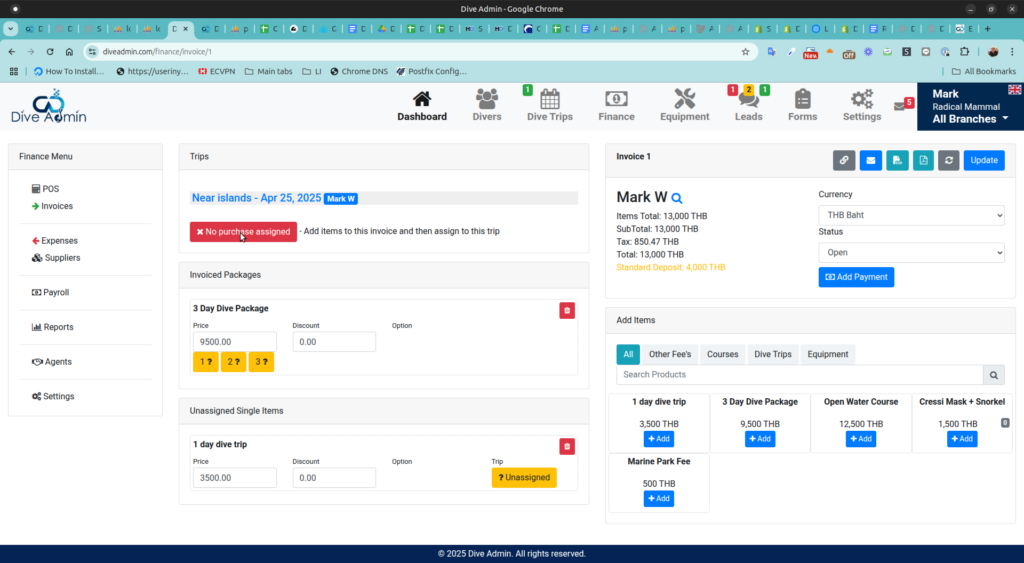
<b>Seamless logistics:</b> Everything lives in one dashboard. Integrated staff scheduling, boat manifests, and gear tracking replace frantic morning texts. Instructors see their full daily agenda in real time.
<b>More human touch time:</b> When admin takes 15 minutes instead of two hours, instructors can focus on personalized student feedback. Energy flows toward safety briefings, skill demonstrations, and thoughtful post-dive debriefs.
According to the Diver's Alert Network (DAN) Risk Mitigation Report from 2023, incomplete medical documentation and liability waivers represent two of the top five legal vulnerabilities for dive operations. Professional dive centers report spending an average of 8 to 12 hours per week on administrative tasks per instructor, according to industry surveys.
What Features Should Dive Instructors Look for in Admin Software?
Not all software understands the realities of teaching in wet, sandy environments.

<b>Look for digital waiver and medical form automation.</b> The system must capture e-signatures and automatically flag medical "yes" responses for instructor review. It should store documents securely for at least seven years to meet insurance requirements.
<b>Demand unified scheduling and calendar tools.</b> You need staff availability tracking and automatic conflict detection. This must integrate directly with boat manifests and equipment reservations.
<b>Prioritize equipment and inventory management.</b> Real-time tracking of tank fills, regulator maintenance, and wetsuit assignments eliminates the frantic gear search before courses.
<b>Check for agency integration.</b> Your software should sync with certification databases for agencies like PADI or SSI. It should auto-populate student records from these systems.
<b>Ensure mobile accessibility.</b> Instructors need access from boats, beaches, and travel destinations. An offline mode is essential for remote dive sites.
> "The best dive admin platforms are built by people who've actually been in the water. They understand that a dive instructor's workday doesn't happen at a desk."
> — Maria Gonzalez, Training Director at Blue Horizon Dive Centers, Dive Training Magazine, 2025.
Why Are Dive-Specific Platforms Better Than Generic Tools?
Generic tools simply don't understand how a dive business operates. Basic booking software and spreadsheets fall apart when faced with multi-day course structures.
An Open Water course involves four sessions spread over multiple days. Generic calendars can't handle this elegantly.
Off-the-shelf software also lacks agency-specific compliance requirements. A standard liability waiver is not the same as a PADI or SSI medical form. Generic tools offer zero boat manifest integration and ignore dive site logistics entirely.
Systems built by divers for divers solve these exact problems. Platforms like Dive Admin are designed around real instructor workflows. They centralize waivers, scheduling, boat logistics, and certification tracking in one unified ecosystem.
According to the Diving Equipment & Marketing Association (DEMA) 2024 Industry Insights Report, dive centers using industry-specific management software reported 30-40% reductions in administrative errors compared to those using generic business tools.
How Does Better Admin Reduce Instructor Burnout?
Instructor burnout is a major retention issue in the scuba industry. Administrative overwhelm actively drives talented professionals out of the field for good.
Streamlined systems create predictable and manageable workdays. When instructors aren't stressed about logistics, they actually enjoy teaching again. Better work-life balance leads to longer careers and keeps experienced instructors in the industry.
Research published in the Journal of Occupational Health Psychology shows administrative workload is a top predictor of burnout among service professionals. By removing the friction of scheduling and compliance, dive centers protect their most valuable assets. Happy instructors create happy divers.
What's the Future of Dive Operations Look Like?
The dive industry is moving away from the old paper and clipboard culture. Students today expect seamless digital experiences from the moment they book a course. Millennials and Gen Z divers don't want to fill out five pages of paper on a rocking boat.
Instructors who adopt modern tools position themselves as serious professionals rather than casual hobbyists. Digital systems represent the new standard for any dive operation looking to thrive in 2026 and beyond.
The combination of digital convenience with physical in-water experiences creates better outcomes for everyone. Students get smoother onboarding. Instructors reclaim their time. Dive centers reduce legal risk and operational friction.
What Should Instructors Demand From Admin Systems?
Your time is valuable. The tools you use should reflect that reality.
Systems should save time rather than create new frustrating learning curves. Your admin platform must actively reduce compliance risk for insurance and legal purposes. It should seamlessly integrate scheduling, equipment tracking, and documentation. It needs to be mobile-friendly and accessible right at the dive site. Most importantly, it must be built specifically for dive industry workflows.
FAQ
How much time do dive instructors spend on admin tasks?
Most dive instructors spend 8 to 12 hours per week on administrative work like paperwork, scheduling, and equipment tracking. Modern admin systems can reduce this burden to just 2 to 3 hours weekly.
What is the biggest compliance risk for dive instructors?
Incomplete or improperly stored medical questionnaires and liability waivers pose the greatest risk. A missing signature or an overlooked medical "yes" response can void insurance coverage if an incident occurs.
Can dive admin systems work offline at remote dive sites?
The best dive-specific platforms offer offline modes that automatically sync when internet connectivity is restored. This feature is crucial for liveaboards and remote beach locations.
Do I need different software for PADI vs. SSI courses?
No. Modern dive admin platforms integrate with multiple training agencies. They handle different certification requirements for PADI, SSI, NAUI, and others within one system.
How do admin systems help with instructor burnout?
By automating repetitive tasks and reducing scheduling chaos, these systems create more predictable workdays. This allows instructors to focus energy on teaching rather than stressing over logistics.
Teaching Over Tracking
Great instructors became dive pros to share their passion. You trained to teach buoyancy, not to manage endless spreadsheets.
Modern admin systems give you your time back. The dive industry deserves infrastructure that actually supports its hardworking professionals.
Instructors should actively advocate for better systems at their dive centers. The ocean doesn't wait for paperwork, and neither should your teaching.