Why Dive Centers Are Ditching Spreadsheets for Dedicated Software in 2026
Spreadsheets seem like an easy solution for managing dive center bookings and gear. But as you grow, they create serious problems. From double bookings and lost reservations to security risks and wasted admin time, spreadsheets become a major bottleneck. Modern dive center software automates routine tasks and centralizes your data. It frees up your schedule so you can focus on guests instead of paperwork.
<b>Key Takeaways:</b>
- Spreadsheets create conflicting files that lead to double bookings and version control nightmares
- Manual data entry costs dive centers 10 to 15 hours per week in pure administrative labor
- Dive center software cuts check-in times by up to 50 percent and eliminates costly booking errors
- 73 percent of global dive centers now use management software, up from 41 percent in 2020
- Platforms like Dive Admin connect bookings, scheduling, and payments in one dashboard
How does the spreadsheet trap start?
You started with one Excel file for bookings. Then you added another for gear inventory. Now you have separate sheets for instructor schedules, boat manifests, payment tracking, and diver certifications. Spreadsheets are the default choice because they are free and familiar. They seem perfectly fine when you are running a small operation.

<b>Common mistake:</b> Relying on free tools for too long. When operations scale beyond 20 bookings per week, the familiar spreadsheet format breaks down. The morning routine turns into chaos. You check multiple files to build a single boat list. You discover conflicting information and race to verify who is actually coming on the dive. This is when most owners start wondering if spreadsheets cost them more than dedicated dive center software.
What problems do spreadsheets actually cause for dive centers?
Let us break down the everyday problems spreadsheets create for your business.
<b>The multiple versions nightmare:</b> When several staff members access files, version conflicts happen. An instructor downloads the morning boat list. A guest calls to cancel, and the office updates the master file. The instructor never gets the update. This creates a situation where nobody knows which version is correct, leading directly to double bookings.
<b>Human error on repeat:</b> Manual data entry guarantees manual mistakes. Staff enter wrong dates, duplicate records, or miss equipment maintenance schedules. Research from the Data Administration Management Association shows manual data entry has an error rate of about 1 percent per field. That adds up incredibly fast when you manage hundreds of bookings monthly.
<b>Massive time drain:</b> Building daily boat lists manually takes 30 to 60 minutes. Cross-referencing certifications, medical information, and equipment assignments requires opening multiple files. The average dive center spends 10 to 15 hours per week on spreadsheet administration.
<b>Security and compliance risks:</b> Spreadsheets lack access controls. Anyone with the file has all your data. There is no audit trail to show who changed important details. According to the Divers Alert Network, improper handling of diver medical information exposes businesses to serious legal liability. Keeping digital waivers and medical histories in unencrypted folders is a massive risk.
How does dive center software actually work?
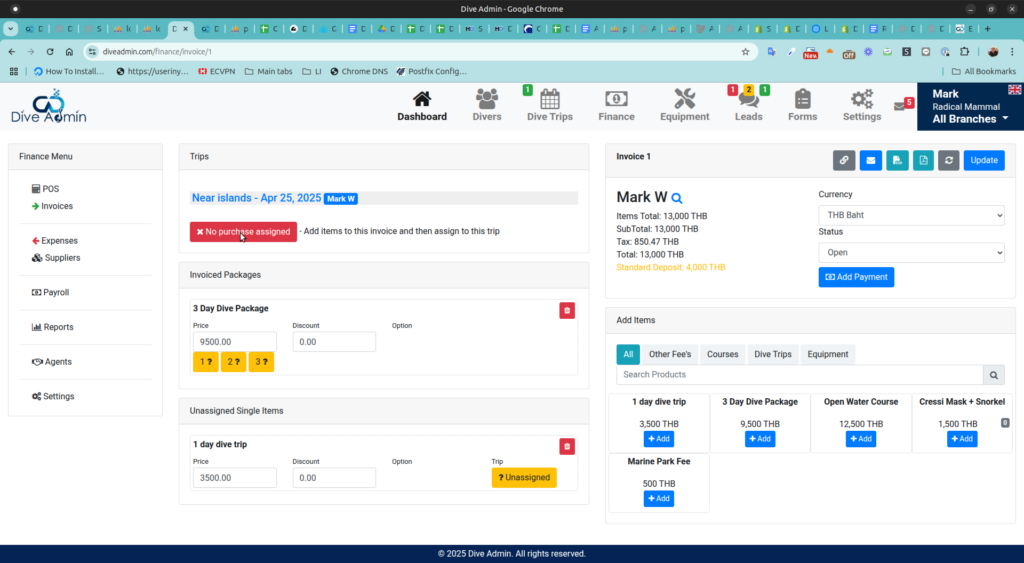
Dive center management software replaces your scattered spreadsheets with one centralized, cloud-based platform. It handles bookings, scheduling, equipment, payments, and customer records in real time. Think of it as a control panel where everything connects perfectly.

Compare a typical morning using both methods. With spreadsheets, you open four files to build a boat list manually. You check certifications on another website, print paper waivers, and mark payments by hand. With software, you log in and see today's bookings fully populated. You click one button to generate a boat manifest complete with gear assignments.
<b>Key takeaway:</b> Software creates a single source of truth. Everyone on your staff sees the exact same real-time data. Since it is cloud-based, you can manage operations from the front desk, the dock, or your living room.
Why are so many dive centers making the switch in 2026?
The scuba industry is going through a massive digital shift. According to Scuba Business Review's 2026 industry report, 73 percent of dive centers worldwide have adopted specialized management software. This is a huge jump from just 41 percent in 2020.
Travelers now expect a modern digital experience. They want to book online, sign waivers on their phones, and receive instant confirmations. Centers without online booking simply lose customers to competitors who offer 24/7 availability. Modern tools also reduce frustrating administrative work, making it much easier to keep your staff happy.
> "Dive centers that resist digital transformation are essentially choosing to compete with a severe disadvantage. Modern travelers book online, expect instant communication, and choose businesses that make their experience seamless."
>
> William Cline, President at Cline Group.
Staying with manual files puts you at a steep competitive disadvantage. Customers expect more, and your business needs tools that can keep up.
What can dive center software actually do for you?
Dedicated software brings completely new capabilities to your business. It is not just about organizing data.
<b>Save massive time on daily admin:</b> Automated boat manifests and daily schedules generate instantly. Digital waivers send automatically with booking confirmations. Diver information like certifications and emergency contacts auto-populate. Centers consistently report saving 10 to 15 hours per week after dropping spreadsheets.
<b>Reduce costly mistakes:</b> Real-time availability eliminates double bookings entirely. The system verifies certifications automatically. Equipment maintenance alerts keep your gear safe and compliant. Digital systems reduce check-in errors and improve overall customer satisfaction by up to 40 percent.
<b>Improve the customer experience:</b> Your business stays open for bookings 24 hours a day. Automated emails handle confirmations and reminders professionally. Mobile-friendly digital waivers let guests complete paperwork before they arrive. This reduces check-in times by up to 50 percent.
<b>Scale without growing pains:</b> Platforms like Dive Admin handle 10 or 1,000 bookings equally well. You can train new staff in hours instead of weeks. Cloud backups ensure you never lose critical data during a computer crash.
Is switching to dive center software actually worth it?
If you spend more than a few hours per week on paperwork, the return on investment is clear.
<b>Bottom line:</b> Ten hours of staff time at $25 per hour costs your business $1,000 per month in labor. You also lose money from double-booking mistakes and customers who book elsewhere because you lack online checkout.
| Expense Area | Spreadsheet Approach | Dive Center Software |
| Admin Labor | Costs $800 to $1,800 per month | Minimal manual entry required |
| Customer Errors | High risk of double bookings | Real-time availability blocks errors |
| Booking Access | Limited to operating hours | Available 24/7 online |
| Software Cost | Free or minimal | $100 to $300 per month |
Typical dive center software costs between $100 and $300 per month. If the software saves you just five hours of labor a week, it completely pays for itself. Everything else is pure profit. You get less stress, happier customers, and a professional image that attracts quality divers.
What should you look for in dive center software?
Not all software is created equal. General booking tools often miss the specific features scuba operations require.
<b>Essential features to look for:</b>
- Centralized booking management with real-time availability blocks
- Digital waiver management that meets strict compliance rules
- Equipment inventory tracking with built-in maintenance alerts
- Staff scheduling that links directly to course bookings
- Customer databases that track certification levels and medical status
The platform must also integrate smoothly with your existing tools. It should connect to your website, work with your payment processor, and send automated emails. If the interface takes weeks to learn, it is not the right fit.
Platforms like Dive Admin are built specifically for the dive industry. They include unique tools like boat manifest generation and dive site management that generic software ignores.
FAQ: Common Questions About Switching From Spreadsheets
How long does it take to switch from spreadsheets to dive center software?
Most dive centers complete the transition in one to three days. You spend a few hours importing your existing customer and booking data. Then you spend about a day training staff on the new dashboard. Software providers offer import tools that handle common spreadsheet formats automatically.
Will I lose all my existing data if I switch?
No. Reputable software includes data import tools that pull information directly from your spreadsheets. You can import customer lists, booking history, and equipment inventory. The new platform becomes your secure database, complete with cloud backups.
What if my staff are not tech savvy?
Modern dive center software is much more intuitive than complex spreadsheet formulas. Most staff find it easier to click through a visual dashboard than navigate endless tabs. Training typically takes just a few hours.
Can dive center software really save me 10 hours per week?
Yes. The time savings come directly from automating daily tasks. You no longer type out boat lists, manually check certifications, or file paper waivers. One task that used to take an hour now takes a single click.
Is dive center software secure enough for sensitive customer data?
Professional dive center software is vastly more secure than local spreadsheets. Look for platforms with encrypted data storage, strict access controls, and audit trails. These tools help you comply with privacy regulations and protect medical information far better than shared office files.