Dive Center Scheduling Software: Stop Wasting Hours on Manual Bookings
Manual scheduling is killing your dive center's productivity. Staff burn two to four hours every day wrestling with spreadsheets, whiteboards, and phone tag. Double-bookings frustrate students. Outdated processes lose reservations. Modern dive center software fixes this chaos by centralizing instructor planning, automating boat capacity tracking, and enabling 24/7 online booking. The result? Fewer errors, happier students, and more time creating unforgettable underwater experiences.
<b>Key Takeaways:</b>
- Front-desk staff waste up to 50 percent of their day on manual scheduling tasks
- Smart software prevents double-booked instructors and overbooked boats automatically
- 24/7 digital booking meets modern expectations and captures reservations you'd otherwise lose
- Real-time dashboards show instructor availability, boat capacity, and rental gear status instantly
- Data insights help optimize course offerings based on seasonal demand patterns
What is Actually Happening Behind the Desk?
Picture this. Saturday morning during peak dive season. Your phone won't stop ringing. Three students just walked in for a course that isn't on the calendar. Your lead instructor is somehow double-booked on two boats leaving at the exact same time.
Sound familiar?
Busy dive center managers face this chaos daily. Many shops still rely on spreadsheets, whiteboards, or a bulky paper binder to manage reservations. This manual approach can't keep up with modern dive center demands.
The hidden cost? According to dive industry operational research from 2026, front-desk staff spend two to four hours daily on administrative reconciliation. That's 25 to 50 percent of their working time gone.
Your staff wastes hours making back-and-forth phone calls just to confirm instructor availability. They deal with equipment tracking nightmares. They sometimes schedule instructors for certifications they don't actually hold.
This repetitive work leads to staff burnout. It pulls your team away from customer-facing activities where they actually add value.

Why Does Modern Course Scheduling Matter for Dive Centers?
Students today expect a seamless digital experience. They book flights, hotels, and restaurant reservations instantly from their phones. They expect the exact same convenience when booking a scuba certification.
According to Phocuswright research from 2025, global online travel gross bookings hit $1.0 trillion in 2024. Projections show $1.2 trillion coming soon. Consumers overwhelmingly prefer platforms that offer immediate confirmation.
When a prospective student researches dive courses on their mobile phone, they want immediate answers about availability. If they call your shop and get voicemail, they'll likely just book with a competitor who offers an online system.
Smooth scheduling also reflects your operational competence. This matters especially for technical diving and safety-conscious customers. A polished booking experience builds trust before the student ever puts on a wetsuit.
How Does Dive Center Software Actually Fix Scheduling Chaos?
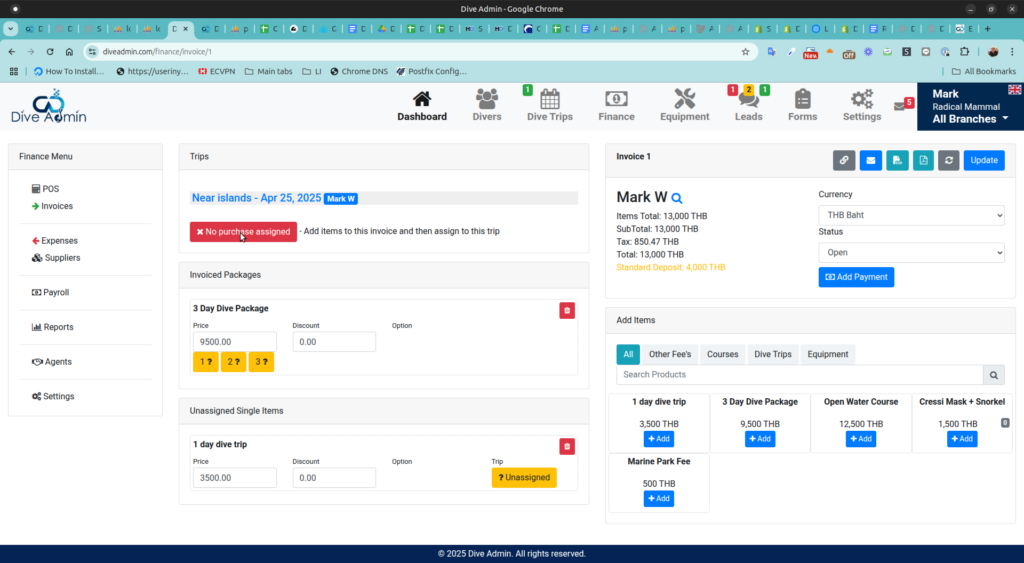
Dedicated dive center management software replaces manual guesswork with smart automation. Platforms like Dive Admin handle the heavy lifting so your staff can focus on guests.
<b>Centralized resource planning:</b> A real-time dashboard shows your exact boat capacity, instructor availability, and equipment status. This prevents conflicts automatically. You maintain one single source of truth instead of juggling five different spreadsheets.
<b>Automated instructor matching:</b> The software assigns instructors based on their specific certifications and schedule. It eliminates the need to manually check qualification cards. Team members receive automatic notifications about their assignments. This reduces manager workload and prevents compliance issues.
<b>Seamless student experience:</b> You can offer 24/7 online booking capabilities. The system sends automated confirmations and reminders. Students can even complete digital waivers before they arrive. This completely removes the need for clipboard hunting on a busy morning.
<b>Data-driven business insights:</b> These systems track which courses and activities are most popular. You can run seasonal trend analysis to plan your staffing needs accurately. They highlight clear revenue optimization opportunities and equipment utilization metrics.
What Problems Does Smart Scheduling Prevent?
High manual entry error rates lead to costly mistakes and frustrated customers. Smart scheduling systems catch these errors before they happen.
According to research from Arcade.dev in 2025, businesses using automated scheduling tools experience a 26 percent increase in new customers due to reduced booking friction. Automated notifications also cut costly no-shows by 25 percent.
<b>Common errors prevented:</b>
- <b>Double-booked instructors:</b> You never have to choose which student to disappoint
- <b>Overbooked boats:</b> Safety compliance and passenger comfort are maintained automatically
- <b>Certification mismatches:</b> The system prevents scheduling an instructor for an advanced course they can't teach
- <b>Equipment conflicts:</b> You always know what gear is available, in use, or out for maintenance
- <b>Communication gaps:</b> Everyone sees updates in real-time on their phones
> "We have so many different functions. We handle sales, service, rentals, trips, and training. It's very hard to find a system that can manage all of that effectively without overlapping appointments. Bringing scheduling and booking under one roof accomplishes exactly that."
>
> — Tanya Kuck, Owner of Submerged Inc.
How Does Better Scheduling Improve the Student Experience?
Your customer journey begins long before the first pool session. A professional first impression sets the tone for expensive certifications or technical diving courses.
The old way? A student calls during business hours. Your staff checks the schedule, calls them back hours later, and asks them to mail a deposit check.
The new way? A student books online in ninety seconds. They complete their medical waiver on their phone. They get automated text reminders and walk in fully ready to dive.
Automated reminders ensure students show up on time. Digital paperwork completed at home means check-in is smooth. The instructor is prepared and expecting them.
If a schedule changes due to weather, proactive notifications prevent students from showing up to a closed shop.

What Should Dive Centers Look for in Scheduling Software?
You need software built specifically for the diving industry. Generic booking platforms rarely understand the complexities of boat rosters and mixed breathing gases.
<b>Must-have features:</b>
- <b>Certification tracking:</b> The software must handle multiple agencies like PADI, SSI, or NAUI, plus specific instructor specialties
- <b>Equipment management:</b> You need to track inventory, maintenance schedules, and rental assignments
- <b>Boat capacity:</b> The system must prevent overbooking and manage multiple vessels or dive sites
- <b>Gas management:</b> Tracking air, nitrox, and trimix is particularly important for technical diving centers
- <b>Mobile access:</b> Instructors and managers need on-the-go updates from the dock
According to Fortune Business Insights research from 2026, over 65 percent of appointment scheduling system deployments are now cloud-based. This underscores the strict necessity of mobile access and immediate syncing for staff moving around a wet environment.
Why Are Digital Operations No Longer Optional?
The dive industry is maturing rapidly. Travelers prioritize fewer, longer, and higher-value dive trips. They expect absolute professional reliability for their money.
Dive centers that can't offer modern booking capabilities lose market share to those that can. Technical diving is also growing. These specialized customers demand operational excellence and strict safety protocols.
A sloppy schedule doesn't inspire confidence in a technical diver.
Good software also reduces burnout. It helps you attract and keep quality instructors who want to dive instead of doing paperwork.
Centers investing in operational technology now position themselves for the next decade. Back-office efficiency creates the required capacity for front-of-house excellence.
How Do You Move from Spreadsheets to Smart Systems?
Transitioning from pen and paper to a digital system feels daunting. A structured approach makes it completely manageable.
<b>Step 1:</b> Document your current pain points and calculate the exact time wasted on admin tasks.
<b>Step 2:</b> Get input from the front-desk staff and instructors who will actually use the system daily.
<b>Step 3:</b> Start simple. Don't try to use every single feature on day one. Master core scheduling first.
<b>Step 4:</b> Budget adequate time for proper training. It pays off very quickly.
The bottom line? Compare the software subscription cost to the staff time you currently waste. Most centers hit a break-even point within the first two months. Even small operations benefit immensely because the software prevents scaling problems as the business grows.
FAQ
How much does dive center scheduling software typically cost?
Modern systems range from $50 to $500 per month depending on your center's size and required features. Some systems offer pricing tiers tailored to different business volumes. When you compare this monthly fee to the cost of lost bookings, scheduling errors, and wasted staff time, the return on investment is usually immediate.
Can scheduling software integrate with our existing booking system?
Most modern dive center software offers built-in integrations or flexible APIs. They connect directly with popular payment processors, email marketing platforms, and accounting software. Many newer platforms operate as all-in-one solutions that handle scheduling, online booking, and payments simultaneously.
What happens if the internet goes down? Can we still access schedules?
Leading cloud-based systems come with dedicated mobile applications that cache your data. If your shop loses its internet connection, staff can still view the downloaded schedule on their smartphones. Once the connection returns, the system automatically syncs any updates.
How long does it take to start using scheduling software at a dive center?
A typical implementation timeline takes one to four weeks from purchase to full operation. Setup takes a few days. Data migration and staff training usually take another couple of days. Most centers run their new software and their old spreadsheets in parallel for a week or two just to ensure a smooth transition.
Will our instructors actually use new scheduling software?
Instructors will embrace the change if you provide a simple interface and reliable mobile access. Involve your key instructors early in the selection process. Once they experience the massive benefit of clear schedules, automatic notifications, and zero double-bookings, any initial resistance fades quickly.