How to Master Family and Non-Diver Bookings: A Dive Center's Complete Guide
Picture this. A family of five walks into your dive shop. Dad and the eldest son are certified rescue divers ready for a wreck dive. Mom wants to try her first discover scuba session. The teenage daughter plans to snorkel. Grandma is happy to sightsee from the boat, but she fully expects to stay with the family.
Sound familiar? Family and non-diver bookings are becoming the norm, not the exception. These mixed groups create a daily operational puzzle for dive centers trying to juggle boats, instructors, equipment, and vastly different expectations. Get it wrong, and you risk safety issues, disappointed guests, and wasted capacity. Get it right, and you capture a lucrative market segment that values premium, coordinated experiences.
<b>Key Takeaways:</b>
- Mixed group bookings create resource allocation challenges that require centralized digital management
- Family travel is growing as travelers seek longer, premium experiential trips together
- Digital platforms eliminate double-bookings and optimize staff and boat capacity in real time
- Pre-arrival digital waivers and certification verification drastically reduce check-in times
This guide breaks down exactly how modern dive centers are solving the operational challenge of family and non-diver bookings. You'll learn the best practices for everything from scheduling to safety to keeping everyone happy on the water.

Why Are Family and Non-Diver Bookings Increasing?
Families increasingly choose destinations where members can pursue different activities together. The demand for shared, experiential travel is reshaping the entire tourism industry.
The numbers tell the story. According to the 2025 U.S. Family Travel Survey by NYU Tisch Center of Hospitality and Good Housekeeping, 48% of parents plan to travel with extended family. This represents a massive shift toward mixed-group vacations. According to Topologica's 2026 travel data, 47% of all travelers are now opting for multigenerational trips.
Modern travelers take fewer but longer trips. They're more willing to pay a premium for seamless, well-coordinated experiences. Social media also drives this trend, as families want shareable moments where everyone participates, even at different skill levels.
These groups typically book multiple services like accommodation, meals, and multiple activities. This creates higher per-booking revenue for the dive center, but it requires serious operational sophistication.
> "Traveling families have a lot of stress points and sometimes very specific needs. A travel advisor or tour operator that helps alleviate those pain points can win customers for life." — Ken Shapiro, President of the Board for the Family Travel Association
What Makes Family and Non-Diver Bookings Operationally Complex?
How Do Mixed Activities Strain Resource Allocation?
Coordinating multiple activity types simultaneously is incredibly difficult with manual systems. You have to balance fun dives, introductory courses, snorkeling, and boat tours all at once.
Boat capacity planning becomes complicated because certified divers need different equipment space than snorkelers. Instructor availability is another bottleneck. You can't double-book your introductory instructor for an advanced wreck dive.
Tracking equipment manually across different experience levels often leads to sizing errors on the boat. A single family might require a dive master, a beginner instructor, three sets of full dive gear, two snorkel sets, and specific boat space for a non-participating observer.
What About Safety and Certification Requirements?
Maintaining strict safety ratios is non-negotiable. PADI standards, for example, require a strict four-to-one student-to-instructor ratio for Discover Scuba Diving in confined water.
Certification verification must happen before the trip date to avoid surprises on the dock. Medical screening complexity also increases, as different forms are required for different activity levels.
How Do You Manage Diverse Expectations?
Non-divers need engaging alternatives, not just an instruction to sit on the boat and wait. Timing conflicts frequently arise between group members. Beginner courses often take up to four hours, while certified divers might want two quick dives and an early lunch.
Communication gaps are common because families often don't understand how different diving activities actually work. Price sensitivity and perceived value vary wildly across the same group.
How Do Successful Dive Centers Handle Mixed Groups?
Centralized Digital Scheduling Systems
The traditional spreadsheet approach causes double-bookings, relies on outdated information, and prevents real-time staff access.
Step one: Move to a single calendar view for all activities, boats, instructors, and equipment. Automated capacity limits prevent overbooking while real-time updates remain visible to all staff.
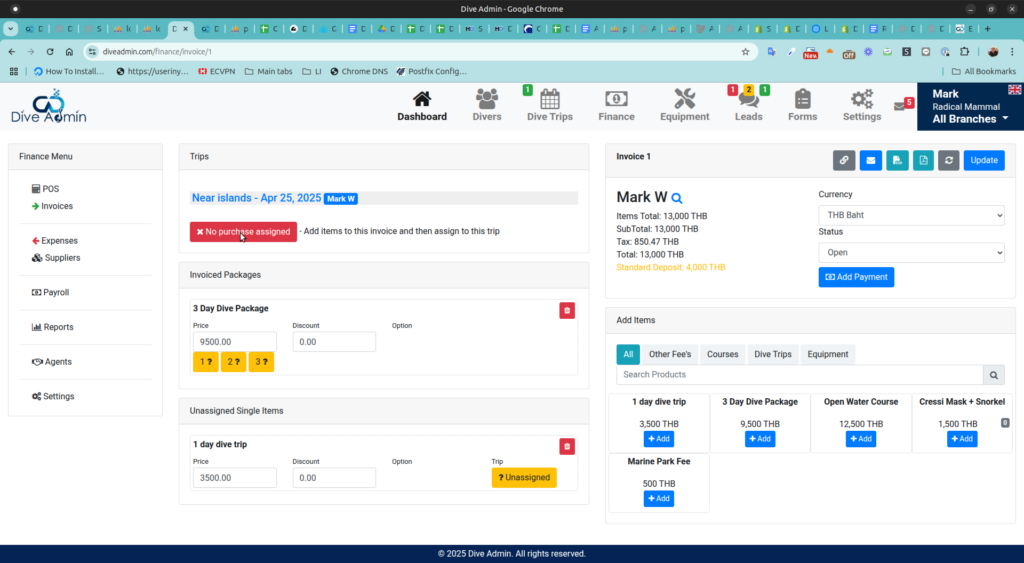
Tools like Dive Admin are purpose-built for dive operations, unlike generic booking software. When a family books online, the system automatically reserves appropriate gear, assigns qualified instructors based on activity type, and flags any scheduling conflicts before confirmation.
Pre-Arrival Digital Onboarding
Handling paperwork on the morning of a trip causes check-in chaos. Digitizing this process ensures safety compliance and gets groups on the boat faster.
Dive centers need to digitize customized liability waivers, medical screening questionnaires, and certification card uploads. They should also collect emergency contact information and activity preferences in advance.
Centers report a 60 to 70 percent reduction in check-in time when using digital forms. Staff can review medical concerns and prepare appropriate accommodations before guests arrive.
Curated Flexible Itineraries
Design multisport boat trips that accommodate divers and snorkelers on the same vessel. Choose dive sites with shallow reef components for snorkelers. Staff can stagger timing so snorkelers explore while divers descend, then everyone regroups on the boat.
Partner with local resorts to sync dive schedules with activity calendars like spas, golf courses, or cultural tours. Clear pre-trip communication sets expectations about timing, limitations, and options during booking.

What Digital Tools Do You Need to Manage Operations?
Managing mixed groups requires software designed specifically for the dive industry. Generic tools lack certification tracking and don't understand dive industry safety ratios.
<b>Essential Features Checklist:</b>
- Unified booking calendar with activity-type filtering
- Automated resource assignment for staff, boats, and equipment
- Capacity management with customizable limits by activity or vessel
- Digital waiver system with conditional logic for different activities
- Certification database with expiration tracking
- Equipment inventory management integrated with bookings
- Payment processing with group splitting features
Dive Admin offers a massive advantage because it was built by dive professionals for dive operations. It integrates all essential functions into one platform. Internal data shows that switching to a specialized platform reduces administrative time by more than half.
How Do You Price and Package Mixed-Group Bookings?
How Should You Structure Pricing?
Different activities have different cost structures, making pricing complicated. Group discounts can eat into margins if you ignore operational complexity.
Implement tiered activity pricing to keep things fair and profitable. Charge a base boat access fee that covers everyone, then add specific fees for dives, beginner courses, or snorkel gear.
Offer package deals like a "family dive day" bundle with multiple activity tiers. Multi-day discounts encourage longer stays, and resort partnership bundles add extra perceived value.
How Can You Maximize Profitability?
Transparent pricing requires a clear breakdown of what each family member pays based on their chosen activity. Eliminate hidden fees and offer easy split-payment options for groups.
You can fill boat capacity more consistently with mixed groups. Serving multiple experience levels on the same trip yields higher per-trip revenue. Better coordination and expectations management naturally reduce cancellation rates.
What Do Non-Divers Actually Want While Their Family Dives?
A common misconception is that non-divers are happy to just sit and wait. They chose this vacation too and expect real value for their time.
Offer light snorkeling at dive sites with safe, shallow reef access. Provide photography opportunities for wildlife spotting above the water.
Educational content like marine life briefings and conservation talks keeps non-participants engaged. Comfort amenities like shaded areas, refreshments, and reliable Wi-Fi make a huge difference.
Shore-based alternatives are another great option. Coordinate beach activities, cultural tours, or shopping excursions that align perfectly with the boat's return time. Set these expectations during booking so non-divers know exactly what options they have.

How Can You Prevent Common Mistakes with Mixed Groups?
Assuming Everyone Knows What They Booked
Family members rarely communicate booking details perfectly to one another. Send individual confirmation emails to each participant detailing their specific activity and requirements.
Not Verifying Certifications in Advance
Discovering an expired certification or missing credential on the boat ruins the schedule. Require a digital certification upload during booking, and have staff review it days before the trip.
Underestimating Time Requirements
Beginner courses almost always take longer than families expect, which creates friction. Provide clear time estimates in all communications and build buffer time into your daily schedules.
Poor Boat Layout Planning
Not having enough space for mixed equipment needs creates a frustrating, cramped environment. Plan your capacity by activity type, not just the raw number of people on the manifest.
Operating Without Backup Plans
Weather changes or sudden medical issues can create chaos for an entire group. Communicate flexible rescheduling policies and alternative activity options clearly upfront.
Moving Beyond Spreadsheets to Serve Modern Dive Families
Family and non-diver bookings represent a rapidly growing, high-value market segment. Serving them requires a level of operational sophistication you simply can't achieve with manual systems.
Purpose-built platforms like Dive Admin eliminate logistical complexity and turn administrative headaches into a competitive advantage. Upgrading to dive-specific solutions gives your staff more time to create memorable underwater experiences and less time wrestling with logistics. Evaluate whether your current system can handle tomorrow's mixed-group bookings, or if it's time to upgrade.
FAQ
Can non-certified family members come on a dive boat?
Yes. Most dive operators welcome non-divers on boats. Non-diving family members can snorkel if the site allows, observe from the boat, or participate in surface activities. Some centers charge a reduced passenger fee, while others include it in family packages. Always confirm what activities and amenities are available for non-divers when booking.
How much does a mixed family dive trip typically cost?
Pricing varies widely by location and activity mix. Expect $80 to $150 per certified diver for a two-tank dive, $100 to $200 per person for introductory experiences, $30 to $50 for snorkeling gear rental, and $20 to $50 for non-participating boat passengers. Total cost for a family of four with mixed experience levels typically ranges between $300 and $600 for a day trip.
Do I need to book separate trips for divers and non-divers?
Not necessarily. Many modern dive centers offer multisport trips designed specifically for mixed groups. These trips visit sites with both deep and shallow areas, allowing divers to explore below while snorkelers and observers enjoy the surface.
What if someone in our group doesn't meet the medical requirements for diving?
Digital pre-arrival medical screening flags concerns before your trip, allowing time to obtain physician approval if needed. If someone can't dive due to medical restrictions, operators can usually accommodate them as a snorkeler or boat passenger.
How long do different diving activities take?
Time requirements vary significantly based on the activity. Introductory experiences typically take three to four hours total for the briefing, shallow water training, and open water dive. Certified divers complete two-tank dives in three to four hours including surface intervals. Snorkeling sessions usually last 30 to 60 minutes.