Why Spreadsheet Costs for Dive Centers Are Killing Your Profits in 2026
<b>TL;DR:</b> Dive centers using spreadsheets waste up to 41% of staff time on manual admin tasks, leading to booking errors, scheduling conflicts, and lost revenue. Purpose-built dive management software eliminates these problems by automating scheduling, centralizing data, and capturing bookings 24/7. Most centers recoup their software investment within three to four months.
Key Takeaways
- Staff lose up to 41% of their workday on manual admin tasks that software handles instantly
- Spreadsheet errors cause double-bookings, missed certifications, and damaged reputation
- Modern divers expect instant online booking, and spreadsheets can't compete
- Software typically pays for itself in one season through captured bookings and saved labor
- The 2026 diving market demands integrated platforms that connect booking, safety, and customer records
When "Quick and Easy" Becomes Expensive and Chaotic

It's 8:00 AM on a Saturday. You have three dive boats departing in an hour. You just discovered two different instructors are assigned to the same deep wreck dive because someone forgot to update "the master sheet."
Sound familiar?
Spreadsheets feel comfortable, free, and easy to set up when you first open your business. That comfort creates hidden operational damage. The year 2026 represents a critical turning point for the diving industry. Relying on fragmented manual files is no longer sustainable.
Modern divers expect instant online booking, mobile-friendly digital waivers, and immediate confirmations. Sticking to outdated systems creates friction that drives customers straight to your competitors.
How Much Time Do Spreadsheets Actually Waste?
<b>Bottom line:</b> Spreadsheets cost dive center staff up to 41% of their workday on manual, repetitive tasks that software could handle instantly.
According to a 2024 McKinsey study on operational automation, workers lose substantial time simply moving information between different systems. For a typical dive center with a staff of four, that translates to losing nearly 1.6 full-time employees purely to administrative busywork.
Your team spends precious hours manually typing booking details, cross-referencing rental gear logs against instructor schedules, and hunting down paper medical waivers. When mistakes happen, even more time is lost fixing double-bookings or tracking down missing payment confirmations.
<b>Where Your Day Goes: Spreadsheets vs. Software</b>
- <b>Bookings:</b> Manual data entry and phone tag vs. 24/7 automated online reservations
- <b>Scheduling:</b> Cross-referencing three different tabs vs. visual calendars with automatic conflict detection
- <b>Waivers:</b> Chasing paper forms on the dock vs. mandatory digital signing before arrival
- <b>Payments:</b> Reconciling bank transfers by hand vs. automated payment capture and reminders
What Are the Hidden Costs of the Spreadsheet Trap?
<b>Common mistake:</b> Assuming that because Google Sheets or Excel is "free," it doesn't cost your business money.
The reality? Manual tracking creates four major financial drains.
<b>Data Fragmentation</b>
You have no single source of truth when operations live across multiple files. The booking spreadsheet might show the afternoon boat is full, but the rental gear inventory shows five available BCDs. This confusion directly results in lost revenue from paralyzed booking decisions.
<b>Human Error</b>
Manual entry is highly prone to simple mistakes. Wrong dates, misspelled names, incorrect certification numbers. Assigning a non-deep-certified divemaster to lead a technical dive because of a typo introduces severe safety risks. These mistakes lead to refunds, bad reviews, and massive reputation damage.
<b>Operational Bottlenecks</b>
Staff members become gatekeepers when they're the only ones who understand your specific color-coding system. The owner often can't step in to help with a simple reservation because they don't know which file version is current. This slows down service, creates burnout, and causes you to lose walk-in customers.
<b>Lack of Scalability</b>
Manual systems break down completely when you try to add a second retail location or hit peak season volume. Two locations using slightly different formatting can't easily share an instructor pool or track bulk equipment servicing. You can't grow the business without hiring more admin staff just to manage the paperwork.
> "The businesses best positioned for the remainder of 2026 will be those that connect travel, training, equipment, and local community participation rather than treating them as separate revenue lines."
> — William Cline, Publisher, Scuba Diving Industry Magazine
Why Do Booking and Payment Problems Get Worse With Spreadsheets?

<b>The core issue:</b> Spreadsheets can't handle real-time booking conflicts, automated payment tracking, or proactive customer communication. This creates a cascade of service failures before the diver even arrives.
Without automatic conflict detection, double-booking a premium private charter is incredibly easy. Spreadsheets offer no customer self-service, meaning you become the bottleneck for every single transaction. You can't display real-time availability on your website or send instant confirmation emails, making your operation look unprofessional to tech-savvy travelers.
Payment chaos is equally destructive. Tracking initial deposits versus final balances across multiple sheets frequently leads to missing money. You have no way to send automated reminders for outstanding balances or easily reconcile online, card, and cash payments.
Modern divers expect seamless digital experiences. When your center forces them to wait 24 hours for an email reply just to confirm a spot on the boat, they'll book with the competitor who offers instant online checkout.
How Does Dive Management Software Actually Fix These Problems?
<b>The solution:</b> Purpose-built dive software centralizes your scheduling, customer records, and financial tracking into one automated platform. It eliminates the manual busywork that causes errors.
<b>Automated Scheduling</b>
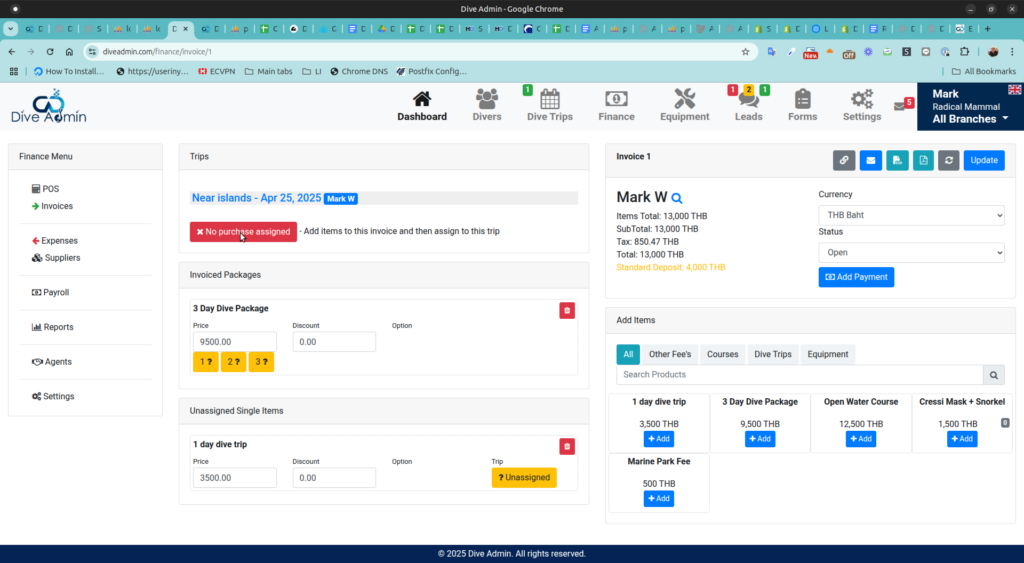
Integrated platforms provide a visual calendar showing all boats, staff, and rental equipment in one view. Automatic conflict detection stops you from assigning the same instructor to two different classes. Real-time availability updates mean no more morning panic about who's supposed to be on which boat.
<b>Seamless Customer Experience</b>
Your center stays open around the clock with 24/7 online booking functionality. Guests receive instant confirmation emails, complete digital waivers on their phones, and get automated payment reminders. You capture revenue while you sleep instead of playing email tag during business hours.
<b>Centralized Data</b>
A single dashboard tracks everything from customer certification levels to regulator maintenance logs. Any staff member can confidently help any customer because the information is universally accessible.
<b>Standardized Safety Procedures</b>
Digital checklists ensure no safety steps are forgotten during busy mornings. The software can automatically verify customer certification prerequisites before allowing them to book advanced trips. This protects both your guests and your business liability.
What's Happening in the Dive Industry in 2026?
<b>Industry shift:</b> The diving market has reached a massive turning point for digital transformation. Operators are rapidly abandoning isolated apps in favor of integrated ecosystems.
According to Phocuswright's Travel Forward 2026 report, digital adoption is completely reshaping how travelers research and purchase trips, with the global travel industry projected to hit $1.67 trillion in 2026. Their research shows that operators using AI-enabled planning and digital management tools report massive positive impacts on operational efficiency.
This shift means connecting student education records directly to daily boat operations and equipment tracking. If a student finishes their Nitrox certification, the system automatically updates their booking eligibility for future trips.
Forward-thinking centers are also using AI-enhanced tools for smart scheduling based on weather conditions and dynamic pricing for holiday weekends. With software handling the boring admin work, owners are returning their focus to their core mission. You get to spend your mornings connecting with guests on the dock instead of staring at a computer screen.
Is Switching From Spreadsheets Actually Worth It?
<b>Bottom line:</b> Yes. The average dive center easily recoups its software investment within the very first season through captured after-hours bookings and reduced staff time.
Think about the direct financial impact of returning 41% of your staff's time to actual customer service. A shop with three employees paying $20 an hour is losing thousands of dollars monthly to wasted labor. Software transforms that lost money into better guest experiences and more retail sales.
You also capture significant revenue simply by offering 24/7 booking. By eliminating scheduling conflicts, you dramatically reduce costly refunds and cancellations. The system allows you to scale up during peak season without needing to hire a dedicated administrator.
Beyond the raw financials, the switch reduces owner burnout. You gain a better work-life balance and lower staff turnover because your team is no longer frustrated by broken systems.
How Do You Make the Transition Without Disrupting Operations?
<b>Key takeaway:</b> Successful digital transitions happen in structured phases, not overnight jumps. You start with one function, maintain parallel systems briefly, and migrate fully within two to four weeks.
<b>Step 1: Preparation (Week 1)</b>
Choose a go-live date during a slightly slower period. Export your existing customer data and train one primary "champion" on your staff to learn the new system inside and out.
<b>Step 2: Soft Launch (Week 2)</b>
Start processing all brand-new bookings through the software. Keep your old spreadsheets accessible for reference only, and begin training the rest of the team on daily tasks.
<b>Step 3: Full Migration (Weeks 3-4)</b>
Import all historical data and upcoming reservations. Turn off update access to the old spreadsheets so staff must use the new platform. Monitor the workflow for any minor hiccups.
<b>Step 4: Optimization (Ongoing)</b>
Once the basics are running smoothly, start customizing advanced workflows. Implement automated reporting features to track your actual profitability and gear utilization.
Don't let the fear of change hold you back. Modern dive software is infinitely more intuitive than a tangled web of spreadsheets, and migration support teams ensure you won't lose your data.
Ready to Stop Fighting Spreadsheets?
<b>Next step:</b> Reclaim your time and reduce your operational risks by exploring modern solutions. Spreadsheets cost you time, money, and your sanity.
Imagine starting your morning looking at a clear, organized dashboard instead of hunting through five different files to figure out who needs a wetsuit. You can eliminate the chaos and focus entirely on what matters most: getting your guests safely into the water.
Visit <a href="https://diveadmin.com">DiveAdmin.com</a> to see exactly how an integrated platform works. See for yourself how easily you can transform your daily operations.
FAQ
How much does dive center management software typically cost?
Most dive center management platforms range from $100 to $500 per month depending on your required features and center size. Consider that spreadsheets cost you significant staff productivity. For a center with three employees at $20 an hour working on admin tasks, you're losing thousands monthly in wasted labor. This makes upgrading to software a highly profitable trade.
Can I import my existing spreadsheet data into dive management software?
Yes, most modern platforms offer robust data migration support. You can typically export your current spreadsheets to a CSV format and directly import customer records, booking history, and certification data. Many providers, including DiveAdmin, offer dedicated assistance during the onboarding process to ensure nothing gets lost.
What happens if my internet goes down?
Quality dive management software includes offline modes and mobile applications that seamlessly sync your data the moment your connection returns. Cloud-based systems are actually much more reliable than local desktop spreadsheets, which can easily corrupt or be permanently lost due to a simple hard drive failure.
Will my staff resist switching from spreadsheets they know?
Initial hesitation is completely normal, but modern dive software is designed to be highly intuitive. Most centers report that their staff fully prefers the new system within one to two weeks because it eliminates their most frustrating daily tasks. Proper training during a phased transition period easily prevents long-term resistance.
How long does it take to see ROI on dive management software?
Most dive centers recoup their software investment within one single season, usually three to four months. This rapid return comes through captured after-hours bookings, a sharp reduction in double-booking refunds, and massive time savings. Centers routinely see an immediate increase in booking volume the moment their 24/7 online portal goes live.