Why Your Dive Center Needs Management Software in 2026 (And the 7 Features That Actually Matter)
Modern dive center management software needs seven core features to compete in 2026: 24/7 online booking, centralized inventory tracking, integrated payment processing, automated CRM, digital waivers, staff scheduling, and analytics dashboards. With 89% of divers preferring online booking but 73% of centers still using manual methods, the right platform increases revenue by up to 45% while reducing administrative burden and massively improving customer experience.
Key Takeaways:
- 24/7 online booking can boost revenue by up to 45 percent
- 89% of divers want online booking, but 73% of shops still use manual methods
- Modern management software handles booking, inventory, payments, CRM, waivers, scheduling, and analytics
- Moving from hobbyist to data-driven entrepreneur is essential for beating the competition
Picture this. It’s 7 PM on a Saturday. You’re finally off the boat after three back-to-back dives, and your phone won’t stop buzzing. WhatsApp messages from potential customers asking about tomorrow’s availability. A text about a regulator conflict. Someone just emailed to say they forgot to send their certification card.
Sound familiar?
If you run your dive center on spreadsheets, WhatsApp groups, and a wing and a prayer, you’re definitely not alone. You’re also leaving serious money on the table.
The diving industry is right in the middle of a major digital shake-up. The gap between what customers expect and what most operators actually deliver gets wider every day. The good news? The right software platform bridges that gap and actually makes your life easier in the process. Let’s look at what really matters for your shop.
Why does dive center management software matter in 2026?
According to DivePlanner Pro’s 2026 industry report, 89% of divers now prefer to book their dives online before they even arrive at the destination. Yet that same report found that a staggering 73% of dive centers still rely on manual methods like spreadsheets and messaging apps.
This creates a massive digital expectation gap. Customers research and book dives just like they book hotel rooms or airline tickets. If your shop forces them to wait for an email reply on a Sunday morning, they’ll simply book with the shop down the street that has a live calendar.
Bottom line: The cost of manual systems includes lost bookings, embarrassing double-bookings, and a massive drain on your administrative time. Modern divers also fit the “mission diver” trend. They expect professional, conservation-minded operations that look polished from the first click to the final dive log. Moving from a reactive hobby shop to an intentional, well-designed business isn’t just a nice idea anymore. It’s absolutely required for survival.
The seven non-negotiable features for dive center management software
Not all dive center management software is created equal. After analyzing the 2026 market landscape and talking to operators worldwide, seven specific features stand out. These separate the platforms that actually work from the ones that just add extra headaches to your day.

Does your software have 24/7 online booking and real-time availability?
Key takeaway: Customers book when it’s convenient for them, which is usually evenings and weekends.
According to DivePlanner Pro’s 2026 data, shops see up to 45% higher revenue with 24/7 online booking enabled. You need a system that offers real-time synchronization across all your channels. This includes your website, walk-in tablets, phone reservations, and partner booking sites.
Live syncing prevents double-booking disasters. A mobile-friendly booking experience is absolutely essential since most travelers book trips from their phones. Proper calendar integration means you never accidentally overbook a boat.
Centralized inventory and equipment maintenance
Manual tracking leads to gear shortages and serious safety risks. Equipment failures aren’t just inconvenient for a dive shop. They’re incredibly dangerous.
You need real-time visibility for both your retail stock and your rental fleet. Your software should send automated low-stock alerts so you never run out of XL wetsuits in the middle of peak season.
Safety first: Scheduled maintenance reminders for tanks, regulators, and BCDs keep your operation compliant. Tracking equipment condition and usage hours prevents that dreaded “where did that regulator go?” scenario entirely.
What payment processing and POS features are essential?
Running separate systems for bookings and in-store purchases creates an absolute accounting nightmare. You need an integrated point-of-sale system.
Multi-currency support is essential for tourist-heavy destinations. Digital wallet compatibility for Apple Pay and Google Pay is a basic expectation from modern travelers.
Financial integration: Look for direct synchronization with your financial reporting and accounting tools. Reducing checkout friction leads directly to higher customer satisfaction. It also makes handling deposits for massive tech courses or liveaboard trips completely painless.
Automated customer relationship management (CRM)
Personalization builds deep loyalty. Repeat business is always cheaper than acquiring a brand-new customer.
Your CRM needs to track diver profiles automatically. This includes their exact certification levels, preferred gear sizes, and their entire dive history with your shop.
Smart triggers: Set up automated marketing triggers based on this data. Send out certification renewal reminders, birthday offers, and specific course progression follow-ups. You can even run automated “we miss you” campaigns for inactive divers.
How do digital waivers improve seamless onboarding?
Paper waivers cause massive bottlenecks at the shop counter. They create physical storage issues and are often completely illegible.
Digital waivers allow divers to finish their paperwork before they ever arrive. Pre-arrival completion means they walk in the door ready to grab gear and get on the boat.
Liability protection: Secure storage and easy retrieval are crucial for liability purposes. Good software links these forms directly to the customer’s profile. This handles medical form flagging and allows easy certification card uploads. This one feature easily reduces shop admin time by hours every day.

Staff and trip scheduling
Managing instructors, boat manifests, courses, and dive sites is like solving a puzzle where the pieces keep moving. Complex logistics can easily lead to instructor burnout.
Centralized calendar visibility helps you balance scheduling perfectly. You need a system that manages boat manifests and coordinates multi-location departures without confusion.
Conflict resolution: Good software handles instructor qualification matching. It ensures you never accidentally schedule a newly minted Divemaster for a 60-meter trimix dive. Mobile access allows your staff to check their exact schedules right from their phones.
What analytics and data-driven insights do operators need?
The professional operator makes decisions based on hard data, not gut feelings. What gets measured gets improved.
Your software should track revenue trends and identify your most popular courses. Booking pattern analysis helps you spot seasonal trends and understand how far in advance people actually book.
Performance metrics: Track staff performance metrics, customer lifetime value, and exact inventory turnover rates.
“The transition from a reactionary dive shop to intentional business design requires replacing guesswork with solid operational data. You cannot scale a business you cannot measure.” – Darcy Kieran, Dive Industry Strategist and contributor to Scuba Diving Industry Magazine
How much does dive center management software actually cost?
Pricing models vary widely across the industry. You’ll typically see subscription-based plans, one-time licenses, or transaction-based fees where the customer pays a small booking fee.
Typical subscription ranges sit between $100 and $300 per month depending on your shop’s size and required features. Watch out for hidden costs like setup fees, data migration charges, or mandatory hardware purchases.
ROI calculation: Look at the cost of NOT having software. Calculate your opportunity cost from lost after-hours bookings and the hourly value of your manual admin time. Those extra bookings often pay for the software entirely within the first week of the month. Always demand a free trial or a live demo before committing.
What’s the real cost of sticking with spreadsheets?
Quantifying your lost time is a very eye-opening exercise. Spending ten hours a week on manual admin work is a massive drain on your resources.
The real cost of doing nothing shows up in lost revenue from missed after-hours inquiries. A customer tries to book at 10 PM, gets frustrated by a contact form, and leaves. Double-booking a customer leads to an absolute experience disaster that usually ends in a brutal TripAdvisor review.
Growth limits: Spreadsheets completely ruin your ability to scale operations. They cause staff frustration, increase turnover, and pose serious data security risks. You simply look unprofessional to modern divers who expect a seamless digital experience.
Future-proofing your dive center
The industry trajectory points toward increasing complexity. Remote destination operations and enhanced safety compliance requirements are quickly becoming the standard.
Environmental impact tracking is a major selling point for conservation-minded divers. You also need software flexible enough to handle emerging technology.
According to a December 2025 report in Diver Right In Scuba magazine, the industry is seeing a massive shift toward “Smart Diver” integration. This involves using biometric data to create highly personalized decompression profiles. Your management software needs strong API integration capabilities to connect with these future tools. Frequent software update cadences ensure you never fall behind the technology curve.

Frequently Asked Questions
Do I really need dive center management software if I only run a few trips per week?
Yes, because customer expectations don’t scale down just because you’re a smaller shop. Online booking captures late-night inquiries that you would otherwise miss. The time savings compound quickly, and projecting a highly professional digital appearance matters regardless of your specific operational size.
How long does it take to implement dive center software?
A typical implementation timeline runs from one to four weeks. Setup complexity, data migration from your old systems, and staff training all factor into this timeline. A phased rollout often works better than flipping a switch all at once, allowing your team to master the core booking engine before tackling advanced CRM features.
Will my staff actually use the system, or will they resist the change?
Staff buy-in depends entirely on how you manage the change. Choose a highly user-friendly platform and involve your key instructors in the selection process. Proper training is critical. Once your staff sees how mobile access and automated scheduling actively save them time, adoption usually happens very quickly.
Can dive center software integrate with my existing accounting system?
Most modern platforms offer direct integrations with popular tools like QuickBooks or Xero. Strong API capabilities and basic export functions are standard. Always ask vendors about this specific feature before purchasing to completely avoid the nightmare of double-entry accounting.
What happens to my data if I switch software platforms later?
You must ensure the platform has standard data export capabilities before you sign a contract. Check for customer profile portability and the ability to export historical waiver records easily. Always ask vendors explicit questions about data ownership to ensure you can take your business history with you if you ever decide to leave.
Making the switch: Your next steps
Evaluating your current pain points is the best place to start. Use the seven core features listed above as your baseline requirements checklist.
Take a demo-heavy approach. Test multiple platforms and ask vendors hard questions about API access and offline capabilities. Plan out a realistic implementation timeline and actively work on staff buy-in strategies before the software goes live.
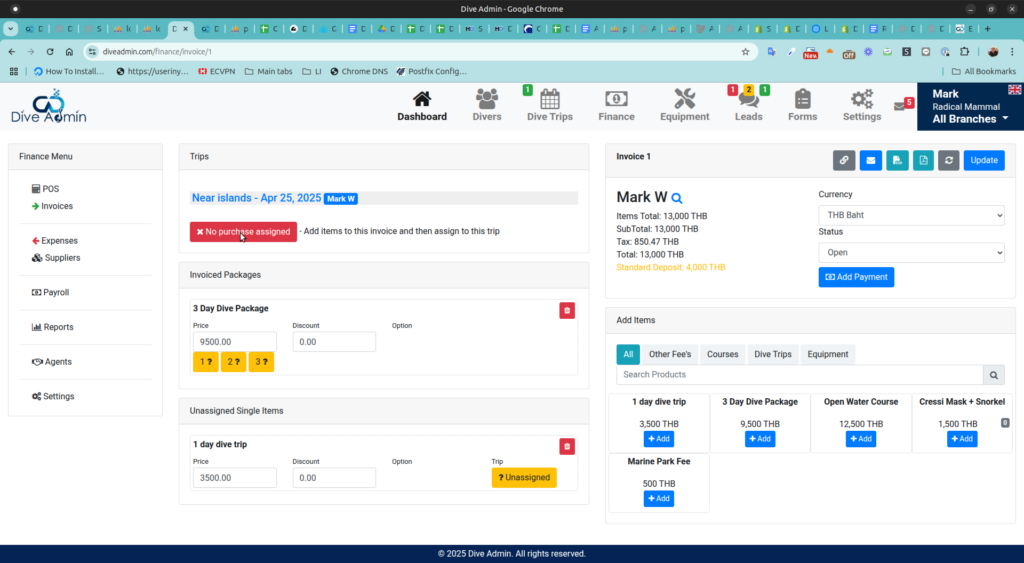
Step 1: View the software as a core investment in your growth rather than just another monthly expense. Modern platforms like Dive Admin are built specifically for these exact industry requirements. They take the friction out of the transition.
The shift from a reactionary hobbyist to a successful diving entrepreneur is completely achievable. Software is a powerful enabler, not a burden. Gaining a 45% revenue boost while getting your evenings back is absolutely worth the effort. Imagine checking your phone on a Saturday night just to see your schedule fully booked and paid for automatically.