The Essential Diving Courses You Need: From Beginner to Pro
Picture yourself sitting on the edge of a dive boat. The sun is warming your wetsuit. You just completed your final open water checkout dive and earned your very first certification card. The thrill of breathing underwater is still rushing through your veins. Now what?
Many new divers face this exact scenario. They don't realize that their beginner certification card is just the starting line. Getting certified is an incredible achievement, but the ocean is vast. It demands respect, ongoing practice, and specialized skills. If you want to transform from a nervous beginner into a confident underwater explorer, you need a plan.
This guide to essential diving courses will map out your exact progression. We'll show you how to become a skilled, safe, and adventurous diver. Whether your goal is to explore sunken battleships, glide effortlessly over delicate reefs, or plunge into the freezing depths of a Nordic fjord, the right training makes it all possible.
Why Continuing Your Diving Education Actually Matters
A common sentiment among new divers is the feeling that one certification is enough. You have the card. You can rent the gear. Why spend more money on training? Continuing your education provides immense benefits that go far beyond collecting plastic cards.
You'll Actually Be Safer, Not Just More Certified
Safety is the most important aspect of scuba diving. Basic training teaches you how to survive underwater. Advanced training teaches you how to thrive. Statistics consistently show that continuing education prevents accidents. You learn to handle challenging situations before they escalate into emergencies.
When you take advanced courses, you practice real-world scenarios. You might practice clearing a flooded mask while dealing with a strong current. You might learn how to assist a panicked buddy on the surface. Building these skills creates a deep sense of confidence. When you're confident, you make much better decisions underwater. You breathe slower, you think clearer, and you avoid panic entirely.
Your Dive Bucket List Just Got Bigger
Entry-level certifications come with strict limits. You're generally restricted to a depth of 18 meters (60 feet). You're supposed to dive only during daylight hours. You must stay in environments with direct access to the surface, meaning no caves and no wreck penetration.
These limits are necessary for safety, but they also mean you're missing out. Some of the best dive sites in the world sit deeper than 18 meters. Historic shipwrecks often rest at 30 meters (100 feet). Night diving reveals entirely different marine life that hides during the day. By advancing your training, you unlock a massive new world of accessible dive sites. The visual difference between what a beginner can see and what an advanced diver can explore is staggering.

You'll Stop Wasting Air and Annoying Your Buddy
Every new diver struggles with air consumption. You breathe heavily because you're excited, nervous, or constantly kicking to stay balanced. This means your dives are short. It also means you might be the diver who forces the whole group to surface early.
Continuing your education heavily focuses on buoyancy control and streamlining. You'll learn to use your lungs to fine-tune your position in the water. You'll stop kicking up the sandy bottom. You'll stop crashing into the reef. Eventually, you'll become the graceful, air-efficient diver that everyone else actually wants to dive with.
The Essential Diving Courses Roadmap From Newbie to Pro
Navigating the world of scuba certifications can feel overwhelming. Most major training agencies follow a very similar path. PADI is the most famous, but alternative agencies like SSI, SDI, NAUI, and RAID offer completely equivalent certifications. A card from any of these agencies will let you dive anywhere in the world.
Open Water Diver Is Your Foundation
This is where every journey begins. The Open Water Diver course teaches you the absolute fundamentals of life support underwater. You learn how to set up your gear, check your air, and communicate with your buddy.
During this course, you'll spend time in a classroom or online learning diving physics. You'll then head to a swimming pool or calm shallow water to practice skills. Finally, you'll complete four open water dives. This certification qualifies you to dive with a buddy to a maximum depth of 18 meters (60 feet).
A typical course takes three to four days to complete. Globally, you can expect to pay anywhere from $300 to $600. The biggest tip for this level is to take your time. Don't rush this foundational step. The quality of your instructor matters far more than finishing the course as fast as possible.
Advanced Open Water Diver Builds Your Confidence
The name of this course causes a lot of confusion. "Advanced" doesn't mean you need to be an expert. In fact, this course is designed specifically for recent graduates. It's a way to gain more experience under the direct supervision of an instructor.
During this course, you'll complete five specific adventure dives. You'll do a deep dive to experience the effects of pressure at 30 meters (100 feet). You'll do a navigation dive using a compass and natural landmarks. You also get to choose three elective dives, such as night diving, boat diving, or peak performance buoyancy.
This program usually takes two full days. It officially unlocks a new depth limit of 30 meters. It's considered an essential step because it acts as a tasting menu. It helps you discover exactly which types of diving you love most.
Rescue Diver Is The Ultimate Game Changer
Ask any diving professional about their favorite recreational course. The answer is almost always the Rescue Diver program. This course completely shifts your perspective. You move from focusing purely on yourself to actively watching out for your dive buddies.
The curriculum is intense. You'll learn accident prevention, stress management, and emergency response. You'll practice searching for a missing diver. You'll learn how to bring an unresponsive diver to the surface safely. You'll provide rescue breaths in the water while towing a victim to the boat.
To take this course, you need an advanced certification and a current CPR and First Aid credential. It takes three to four days of hard work. We need to be honest here. It's physically and mentally challenging. It's also the most transformative and rewarding experience you'll have in a wetsuit.

Divemaster Means Going Pro Or Simply Mastering Your Craft
The Divemaster certification is the first professional-level rung on the ladder. You should only pursue this if you want to work in the diving industry or if you're an incredibly committed hobbyist wanting to master your skills.
This program involves intensive dive theory. You'll study physics, physiology, equipment mechanics, and decompression theory in deep detail. You must be able to demonstrate basic skills so perfectly that new students can learn by watching you. You'll also complete stamina tests like timed swims and water treading.
A Divemaster program is a massive time commitment. It generally takes six to eight weeks of full-time training, or many months if done part-time. Once certified, you can assist instructors with classes, lead certified divers on underwater tours, and work at dive centers around the globe.
Specialty Diving Courses Worth Your Time and Money
Unlike the core progression, specialty courses allow you to choose your own adventure. You can focus purely on the environments and skills that excite you the most. Here are the most useful options available.
Enriched Air Nitrox Diver Is A No Brainer
This is the single most popular specialty course worldwide. When you dive with standard air, your tank holds 21 percent oxygen and 79 percent nitrogen. Your body absorbs that nitrogen under pressure. This absorption dictates how long you can safely stay underwater.
Enriched Air, or Nitrox, increases the oxygen percentage. Usually, tanks are filled with 32 or 36 percent oxygen. Because you're breathing less nitrogen, you absorb less nitrogen. This means you get a significantly longer bottom time. It also means you need shorter surface intervals between dives.
This course is absolutely perfect for liveaboard trips where you might dive four times a day. It's mostly a theory-based course that takes just a half day in a classroom. The real benefit is spending more time exploring the reef and less time waiting on the deck of the boat.
Peak Performance Buoyancy Levels Up Your Skills
If there's one course that separates beginners from truly experienced divers, it's this one. Buoyancy is the holy grail of scuba diving. It dictates your air consumption, your comfort, and your impact on the environment.
In this course, you'll master perfect hovering. You'll learn to adjust your trim so you glide horizontally through the water like a torpedo. You'll practice breathing techniques that allow you to rise and fall gently over obstacles without touching your inflator hose.
This course takes one day and includes two dives. The environmental impact of good buoyancy cannot be overstated. When you have perfect control, you stop kicking fragile coral. You stop stirring up sediment that ruins visibility for everyone else. Many experienced instructors quietly wish this course was mandatory for every diver on earth.
Deep Diver Takes You Beyond Eighteen Meters
The advanced certification lets you dive to 30 meters. The Deep Diver specialty pushes you to the absolute limit of recreational diving, which is 40 meters (130 feet).
At these depths, the environment changes dramatically. Colors disappear completely unless you bring a powerful flashlight. Your air gets consumed incredibly fast because the pressure is so high. You also face a very real phenomenon called nitrogen narcosis. This intoxicating effect alters your judgment and slows your reaction time.
During the two days and four dives of this course, you'll learn to manage narcosis. You'll learn advanced gas management and safety stop planning. You'll also learn how to use specialized gear like redundant air sources. This certification opens up access to deep walls, remote pinnacles, and perfectly preserved deep wrecks.

Wreck Diver Explores Underwater History
There's an undeniable cool factor associated with exploring sunken ships. Swimming through the hallways of a World War II destroyer is an unforgettable experience. However, wreck diving comes with serious, unique hazards.
Wrecks are often covered in sharp, rusty metal. They're prone to severe silt-outs, where one bad fin kick completely blinds you in a cloud of rust and mud. Wrecks are also overhead environments. If you have a problem inside a ship, you can't simply swim straight up to the surface.
This two-day course teaches you the techniques for safe wreck penetration. You'll learn how to deploy a guideline on a reel to find your way out in zero visibility. You'll learn risk management around unstable, collapsing structures. You'll also learn about historical preservation ethics, ensuring these artificial reefs remain intact for future generations.
Dry Suit Diver Unlocks Cold Water Destinations
Cold-water diving is exploding in popularity worldwide. To dive in cold water comfortably, you need a dry suit. Unlike a wetsuit that lets water in, a dry suit keeps you completely dry. You wear warm thermal undergarments beneath a waterproof shell.
Diving in a dry suit requires a completely new set of skills. You have to add air to the suit as you descend to prevent a painful squeeze. You have to vent that air as you ascend to prevent a runaway buoyant ascent. You also have to learn how to recover from a scenario where air rushes to your feet and turns you upside down.
This course usually takes one day with two open water dives. Mastering a dry suit unlocks incredible destinations. You can dive between tectonic plates in Iceland. You can explore perfectly preserved wooden schooners in the Great Lakes. You can swim with orcas in Norway. Cold water holds some of the best diving on the planet.
What's Trending in Scuba Training Right Now
The diving industry is constantly evolving. We're seeing shifts in diver priorities, technological advancements, and a changing global climate. If you're planning your diving education, you need to understand where the sport is heading.
Mission Diving is Taking Over
Modern divers want purpose. They want their dives to mean something beyond simple recreation. We're seeing record enrollment in environmental specialty courses. The community is combining recreation with active conservation.
Mission diving involves learning highly specific, impactful skills. Divers are taking courses in coral restoration, where they learn to clean algae off coral nurseries and plant fragments onto dying reefs. In the Caribbean, invasive lionfish culling courses are hugely popular. Divers learn safe spearfishing techniques to remove these destructive predators. Ghost net removal training is also surging, teaching divers how to safely lift heavy, discarded fishing gear off the ocean floor.
Smart Technology is Changing How We Dive
The days of bulky, confusing dive computers are fading. Smart technology is rapidly changing dive planning and execution. We now have dive computers that look like everyday smartwatches. They monitor your heart rate, skin temperature, and breathing rate underwater.
Artificial intelligence is powering new dive planning applications. These apps analyze current weather, tidal data, and your historical air consumption to suggest the perfect dive profile. Digital logbooks now feature automatic site recognition using GPS markers recorded the moment you surface.
The important catch here is that technology supplements training. It never replaces it. A smart computer can't save you if you don't understand the underlying physics of decompression theory.
Cold Water is the New Tropical
Environmental changes are making traditional tropical diving less predictable in certain seasons. Because of this, there's been a massive shift in diver tourism toward the Northern Hemisphere. Places like Norway, Scotland, and British Columbia are seeing unprecedented numbers of traveling divers.
This shift means that cold-water skills are no longer viewed as extreme or technical. Knowing how to dive in a dry suit is quickly becoming a mainstream requirement. Dive centers are adapting by offering premium cold-water rental gear and integrating dry suit training into beginner packages.
Quality Over Quantity Finally Matters
For a long time, the diving industry suffered from a certification collector mentality. Divers would boast about having twenty different plastic cards in their wallet, even if their actual skills in the water were terrible.
There's a massive industry pushback against this right now. Dive operators are focusing on actual skill competency, recent training, and dive frequency. A certification card earned five years ago means very little if you haven't been in the water since. Dive centers are increasingly demanding checkout dives before letting rusty divers join boat trips. The modern focus is entirely on being a proficient, active diver rather than a decorated one.
How to Choose the Right Course and Avoid Wasting Money
With so many options available, it's easy to spend money on courses you don't actually need. Making smart choices about your education requires a bit of strategy and a healthy dose of realism.
First, follow your own interests, not an arbitrary checklist. Don't collect certification cards just to have them. If you have no desire to ever take a camera underwater, don't waste your money on an underwater photography course. Take the courses that directly align with your personal diving goals.
Second, timing matters immensely. Don't rush through the core progressions back-to-back. Getting your advanced certification immediately after your open water course is fine. However, you should absolutely get twenty to thirty fun dives under your belt before attempting the Rescue Diver course. Proficiency always beats speed.
Third, understand that the instructor matters far more than the agency. All major agencies teach equivalent, standardized skills. A great instructor from a lesser-known agency will always beat a mediocre, burned-out instructor from the biggest agency. Look for an instructor with vast experience, a teaching style that matches your learning style, and an impeccable safety record.
Watch out for certification mills. These are dive centers that prioritize volume over quality. Red flags include guaranteed completion times, heavily rushed schedules, and rock-bottom prices. You're learning life-support skills. You're not shopping for budget deals. Quality training costs money because good instructors demand fair pay and small class sizes.
Finally, read reviews and ask detailed questions before booking anything. Check Google, TripAdvisor, and community forums like ScubaBoard. Call the dive shop and ask about their student-to-instructor ratios. Inquire about how much time is actually spent practicing skills in confined water versus rushing out to the ocean.
The Journey Never Truly Ends
Your diving journey certainly doesn't end with your first Open Water card. Every single essential diving course you take opens new doors. They unlock new environments, build your confidence, and make you a safer teammate underwater. The best investment you can make in your diving career is seeking out quality training from reputable professionals.
If you just got your open water certification, your next actionable step is booking an advanced course. If you already have that, consider taking on the rewarding challenge of the rescue course. If you're highly experienced, look into a mission diving specialty to give back to the ocean.
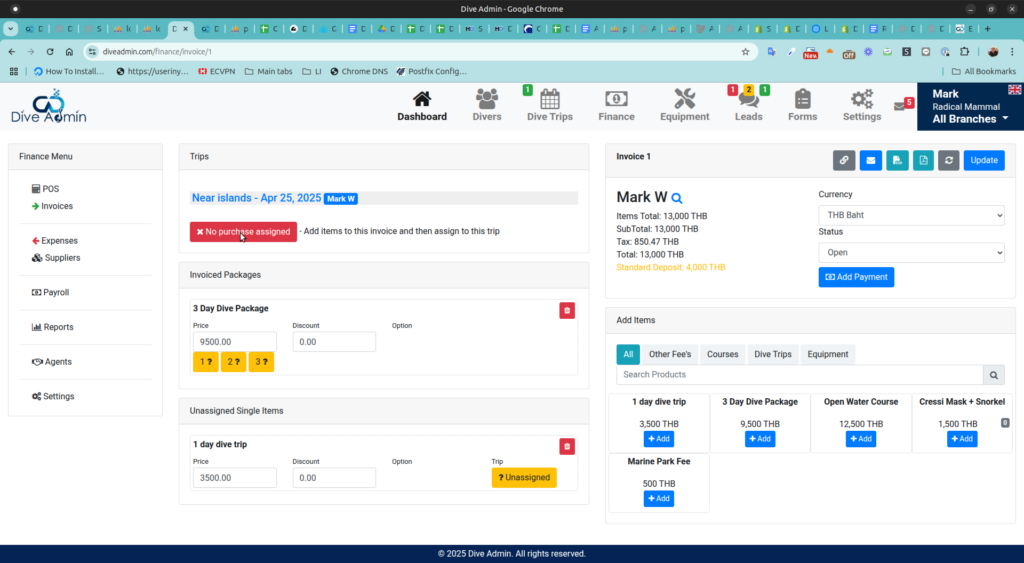
For dive centers looking to manage this diverse array of continuing education programs, software like Dive Admin helps streamline scheduling and track student certifications efficiently. It keeps the focus on teaching rather than paperwork.
The underwater world is vast and constantly changing. Keep learning, keep exploring, and stay safe down there.
<i></i>*