Managing Seasonal Dive Staff: A Practical Guide to Hybrid Workforce Models
Managing seasonal dive staff doesn’t have to drain your energy. Build a hybrid workforce that pairs permanent core staff with seasonal specialists. Use centralized scheduling tools, standardized onboarding, and treat temporary workers like valued team members. The right approach cuts administrative time by up to 60% while maintaining safety and quality year-round.
Key Takeaways:
- Build a hybrid workforce that mixes permanent core staff with seasonal specialists for stability during surges
- Centralize scheduling with digital tools to eliminate double-bookings and slash admin time
- Recruit from your alumni network because former high-performers onboard faster
- Treat seasonal staff like core team members to boost return rates and cut turnover costs
- Use the off-season to audit bottlenecks, maintain equipment, and train all staff
The January Panic: When Your Best Instructor Just Quit (Again)
It’s peak season. You’re fully booked for the next three weeks. Then your lead instructor gives 48-hour notice.
Managing seasonal dive staff often feels like a constant scramble. WhatsApp chaos. Double-booked boat trips. Instructors assigned to courses they aren’t certified to teach.
These headaches are common, but they’re entirely preventable. Here’s how the best-run dive centers handle rotating crews without losing their minds.
Why Is Managing Seasonal Dive Staff So Challenging for Dive Centers?
Tourism demand creates massive feast-or-famine staffing needs. Unlike retail shops, dive centers can’t afford to compromise safety with undertrained temporary workers.
You’re juggling multiple certifications, medical clearances, and liability waivers across different languages. Many dive centers sit in isolated locations where last-minute hiring becomes nearly impossible.
According to the U.S. Bureau of Labor Statistics in 2024, the broader leisure and hospitality sector experiences annual turnover rates around 75%. In diving, replacing just one instructor costs serious money. Research from the Cornell Center for Hospitality Research estimates the average direct cost of replacing a single frontline employee at $5,864. That includes recruitment, training, and lost productivity.

What’s the Solution? The Hybrid Workforce Model
The most effective way to maintain control is balancing permanent staff with seasonal specialists.
Your core team handles day-to-day operations, equipment maintenance, high-level training, and company culture. They provide the consistency that return customers expect. You rely on them for institutional knowledge and year-round quality control.
The seasonal layer comes in during peak holiday rushes or dry seasons. They provide capacity scaling, language skills, and niche certifications.
For example, a center might run four core staff members year-round and scale to ten during the December to March rush. Once you have the right team structure, the next challenge is keeping everyone on the same page.
How Do You Actually Schedule Seasonal Instructors Without Losing Control?
Manual scheduling leads to burnout, errors, and the dreaded last-minute scramble. WhatsApp threads and paper calendars fail when weather shifts or boats break down.
Step 1: Centralize your data. Track instructor qualifications, active certifications, availability, and language skills in one unified dashboard.
Step 2: Automate conflict detection. Software flags double-bookings, unqualified instructor assignments, and expired medical clearances before you confirm a trip.
Step 3: Provide real-time visibility. Both land and sea staff need access to the current schedule from their mobile devices. Instant updates prevent confusion when plans change.
According to a 2026 industry report by Medozai, service organizations that implement automated scheduling assistants achieve a 300% to 500% return on investment within 10 to 18 months. They reduce administrative errors and recover countless hours of lost productivity.
How Should You Hire and Onboard Seasonal Staff?
Common mistake: Hiring based on certifications alone.
You need a reliable pipeline. Reach out to your seasonal alumni network two to three months before peak season. Previous high-performers know your systems, culture, and safety protocols. This results in near-instantaneous onboarding.
Standardize your processes with a digestible employee handbook. Staff arriving from different training backgrounds and countries need strict alignment. Include emergency procedures, customer interaction standards, and equipment handling protocols.
Always run practical evaluations. Observe a candidate’s teaching style in a real-world setting. Assess their communication skills, adaptability, and patience with nervous divers before letting them lead a paid trip.
“The PADI Divemaster course is where you get to learn the dive sites of a location. I always suggest that someone do their divemaster course and IDC at the same place. We are always going to hire people who know the local dive sites well before we hire someone who doesn’t.” – (Will Welbourn, PADI Course Director at Coconut Tree Divers)
Why Do Good Seasonal Staff Never Come Back?
High turnover means constant re-training. Many dive centers shoot themselves in the foot by treating temporary workers poorly.
Don’t treat seasonal hires as mere task fillers. Connect them to your mission and vision. When contractors understand the big picture, they show significantly higher motivation and return rates.
Offer clear growth opportunities. Use the slow season to train seasonal staff on compressor maintenance or specialty certifications. This increases their value to your business and gives them a reason to return next year.
Create an inclusive culture. Invite temporary staff to company events. Provide frequent, constructive feedback. Treat them like core members from day one.
What Should Dive Centers Do During the Off-Season?
Reframe quiet months as a strategic opportunity rather than dead time.
Audit your bottlenecks: Map out where operations broke down during the rush. Look at tank filling, gear handling, and check-in processes. Document what worked and what failed.
Deep equipment maintenance: Service your compressors, buoyancy compensators, regulators, and tanks. This prevents mid-season breakdowns that cost you bookings later.
Update tech and SOPs: If the last season exposed scheduling or booking flaws, fix them now. Digitize paper processes and train your staff on new systems while you have the time.

How Does Technology Solve the Seasonal Staffing Puzzle?
When should you use this? Whenever manual paperwork takes up more than an hour of your day.
Your tech should be a force multiplier. Automate scheduling based on instructor availability and specific certifications. Digitize compliance documentation by using electronic medical and liability forms with e-signatures. Link your payroll directly to the actual trips worked.
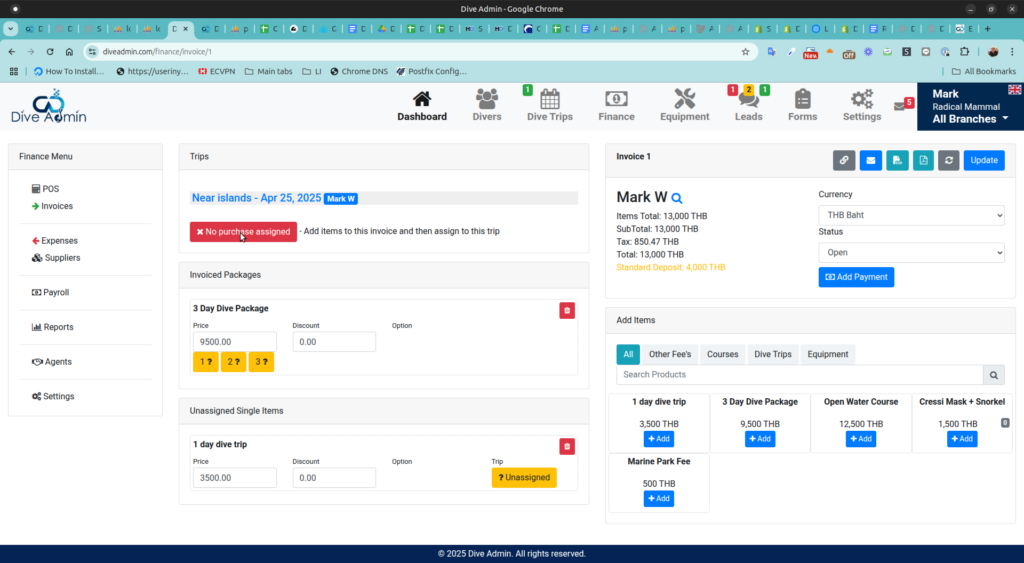
Centralize booking, trip planning, and staff management into one system. This eliminates manual errors and tedious data entry. Modern platforms like Dive Admin handle these exact pain points. They act as a unified solution so owners can stop acting like dispatchers and get back to growing the business.
Dive centers transitioning to digital management often report up to 60% less time spent on manual administrative tasks.
Real-World Example: A Caribbean Success Story
Consider a busy Caribbean operation that used to rely entirely on manual scheduling. They suffered from high turnover and a constant administrative scramble every December.
They changed their approach by implementing a hybrid workforce model. They digitized their scheduling and compliance forms. They built an alumni network of seasonal instructors and started an off-season training program.
The results were transformative. The center reduced administrative time by 60% and achieved an 80% return rate for seasonal staff. The owner regained operational control and eliminated the daily stress of plugging scheduling holes.
FAQ
How many permanent staff should a dive center keep year-round?
It depends on your baseline demand. Most successful centers maintain enough core staff to handle 60% to 70% of low-season bookings comfortably. This typically means three to five permanent instructors or divemasters who handle operations, maintenance, and training. You then scale up with seasonal hires to cover the remaining surge during peak months.
When should I start recruiting seasonal dive instructors?
Begin outreach two to three months before your peak season starts. Contact your seasonal alumni first. These previous high-performers already know your systems. If you need additional staff, post positions at least eight to ten weeks out to allow for visa processing, travel arrangements, and proper onboarding.
What certifications do seasonal dive instructors actually need?
At minimum, they need a valid instructor certification, current first aid and CPR, professional liability insurance, and medical clearance. Check that they have the specialty instructor ratings you need, such as Nitrox or deep diving. Always verify that certifications are current before their first dive.
How do digital scheduling systems prevent double-booking instructors?
Modern management software maintains a live calendar that cross-references each instructor’s availability, qualifications, and assigned trips. When you try to schedule someone who’s already booked or lacks the required certification, the system automatically flags the conflict before you confirm the assignment.
Should I pay seasonal staff between peak seasons to ensure they return?
Most centers can’t afford off-season retainers. Instead, offer other incentives. Provide free specialty certifications during the off-season, guarantee first-choice scheduling when they return, or offer small bonuses for consecutive season returns. Staying in contact year-round makes them feel valued.